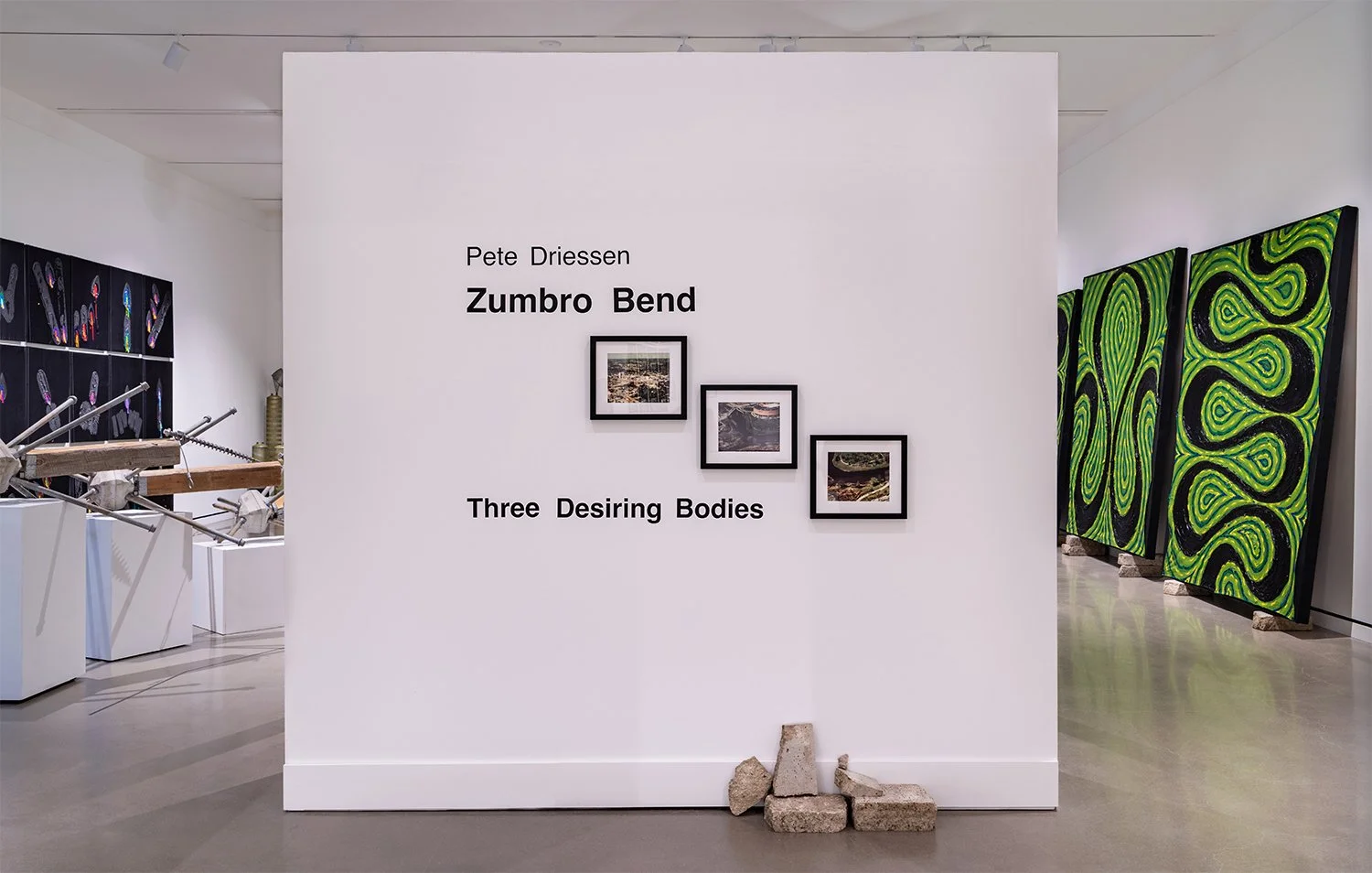
Zumbro Bend/Main
Zumbro Bend Main Gallery Entry. From Zumbro Bend/Three Desiring Bodies, Rochester Art Center, Rochester, MN 2023-24. Modified digital prints, dolomite limestone, multiple installation components, choreographed sound. Images 12 × 14 inches. Research photos courtesy the artist & History Center of Olmsted County. Install sizes vary.
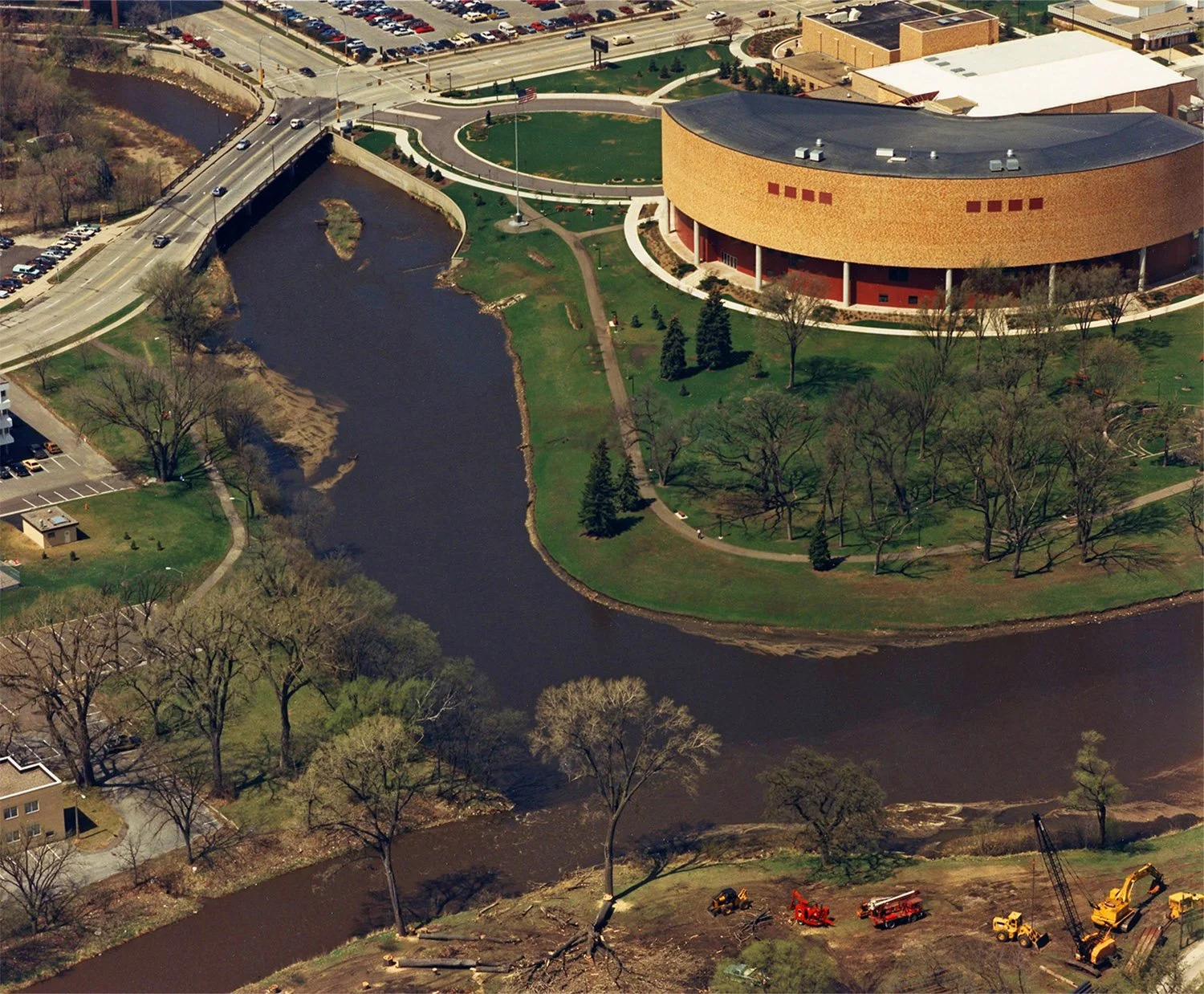
Zumbro Bend Main Gallery Entry - Detail Mayo Park. From Zumbro Bend/Three Desiring Bodies, Rochester Art Center, Rochester, MN 2023-24. From grouping of 3 collages. Mixed media, collage on digital photographic print. 12 x14 inches ea. Images courtesy History Center of Olmsted County.
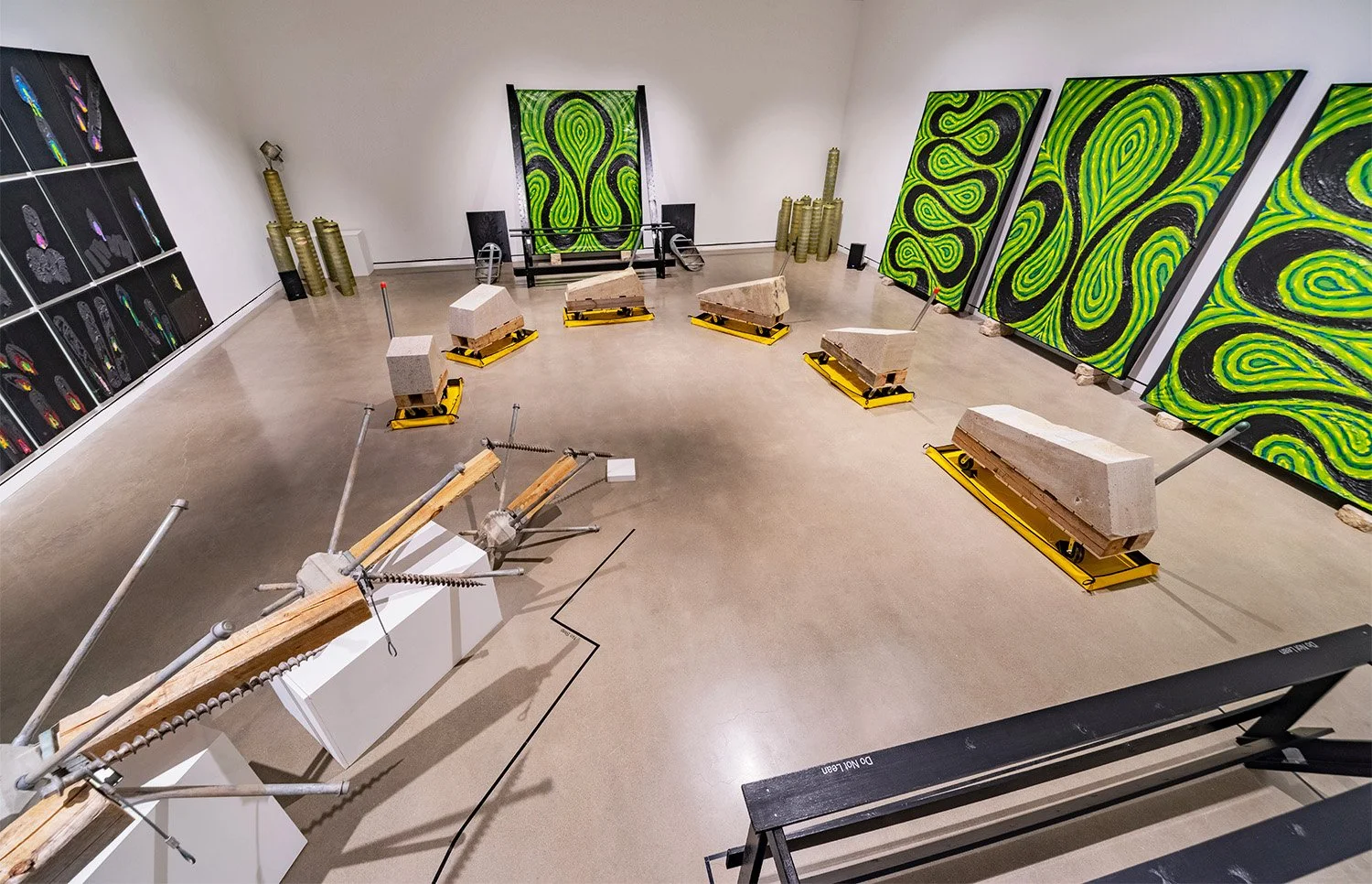
Sinuous Bend View. From Main Gallery, Zumbro Bend/Three Desiring Bodies, Rochester Art Center, Rochester, MN 2023-24. Multiple 2 & 3D installation components, modified digital prints, dolomite limestone, choreographed sound. Install sizes vary.
Sinuous Bend View. From Main Gallery, Zumbro Bend/Three Desiring Bodies, Rochester Art Center, Rochester, MN 2023-24. Multiple 2 & 3D installation components, modified digital prints, dolomite limestone, choreographed sound. Install sizes vary.
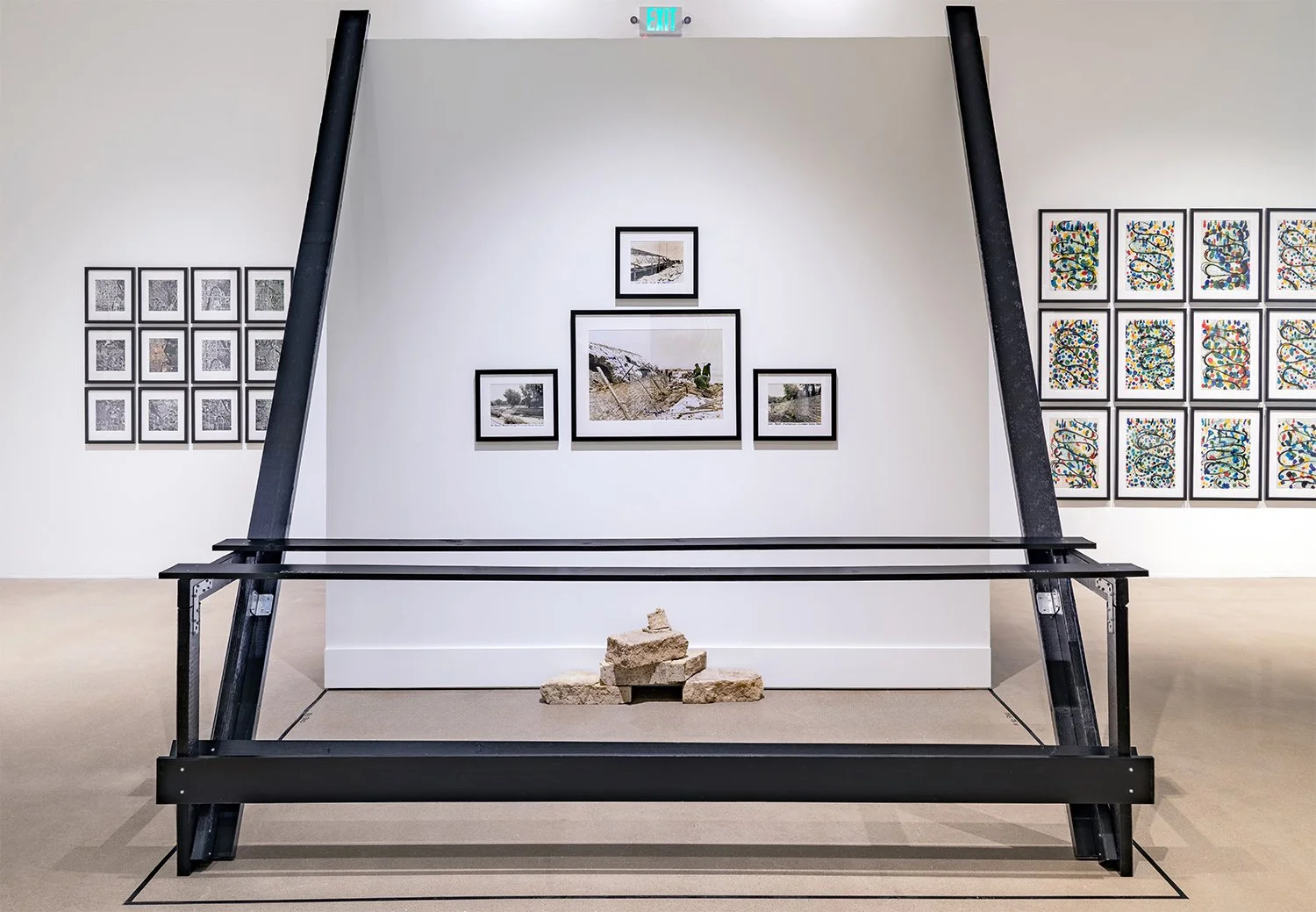
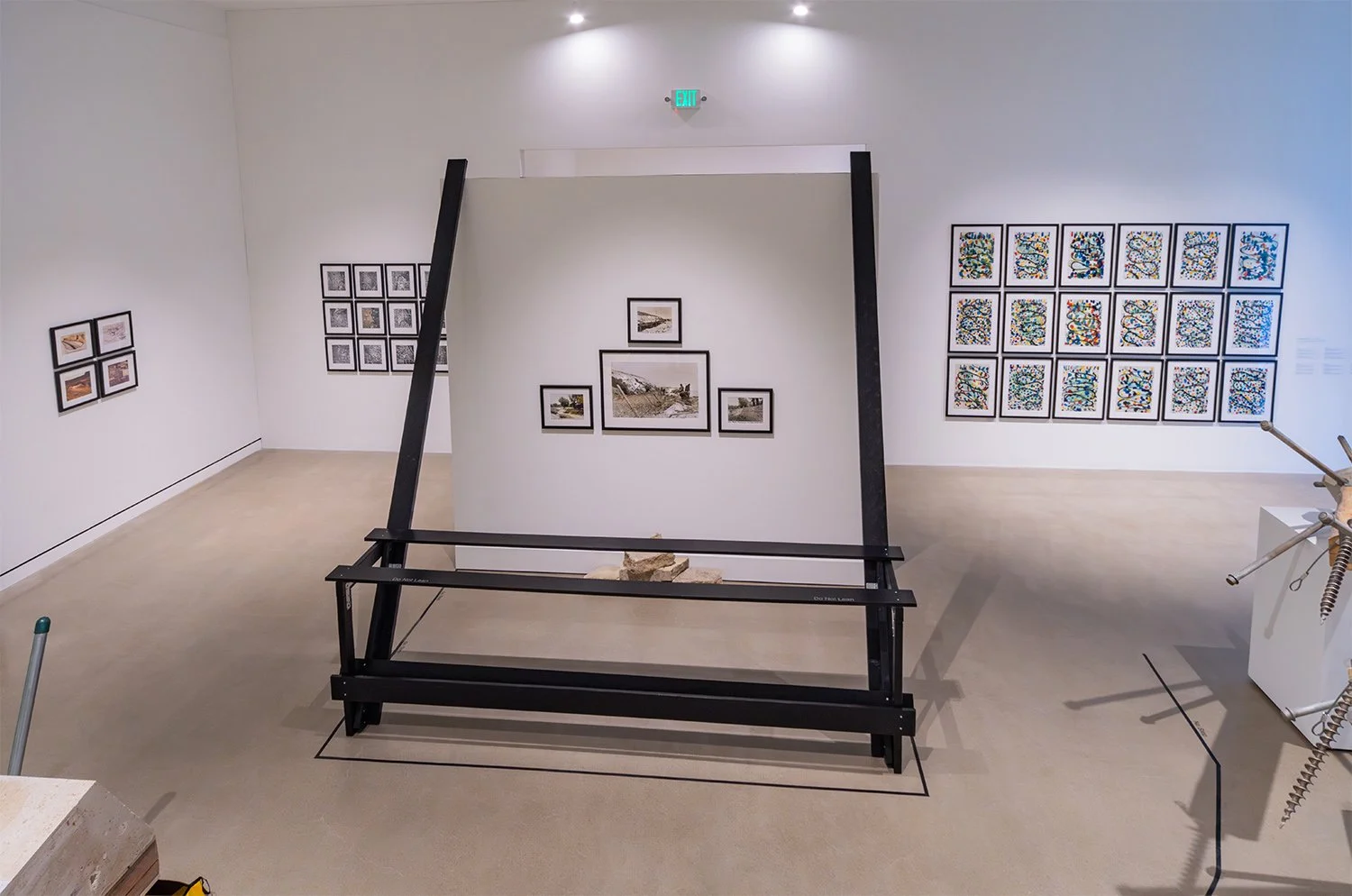
Line/Template. From Main Gallery, Zumbro Bend/Three Desiring Bodies, Rochester Art Center, Rochester, MN 2023-24. Grouping of 4 images, collage on modified digital prints, black gesso, polyurethane on pine wood, Chilton & Kasota wall stones, limestone pieces. Installation 12 x 10 x 6 feet. Center & Side Images: Line/Template river bend channel construction. Mixed media, collage on digital photographic print. 27 x 33, & 12 x14 inches. Images courtesy History Center of Olmsted County.
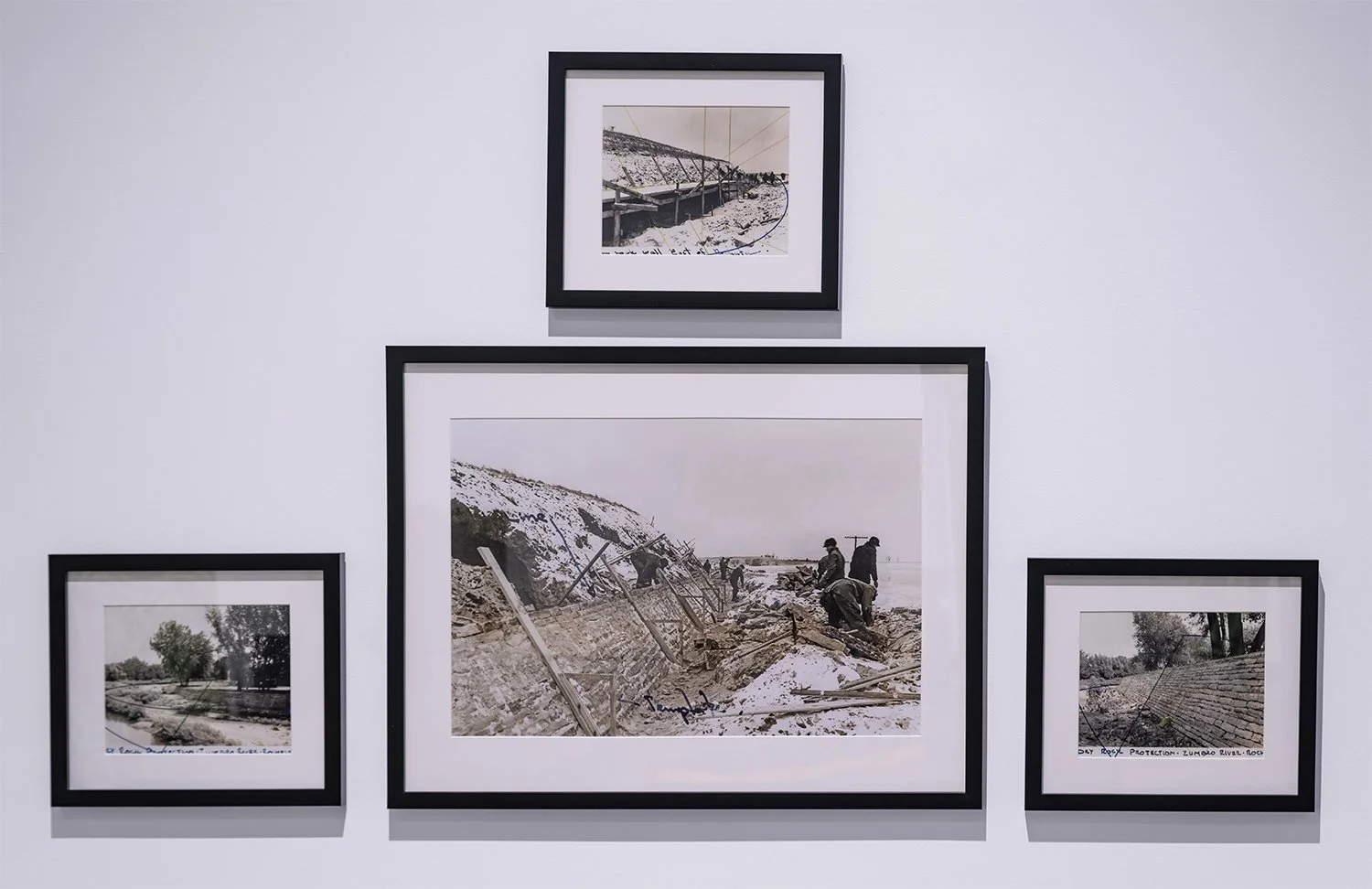
Line/Template – Images. From Main Gallery, Zumbro Bend/Three Desiring Bodies, Rochester Art Center, Rochester, MN 2023-24. Grouping of 4 images: Line/Template river bend channel construction. Mixed media, collage on modified digital photographic prints. 27 x 33, & 12 x14 inches. Images courtesy History Center of Olmsted County.
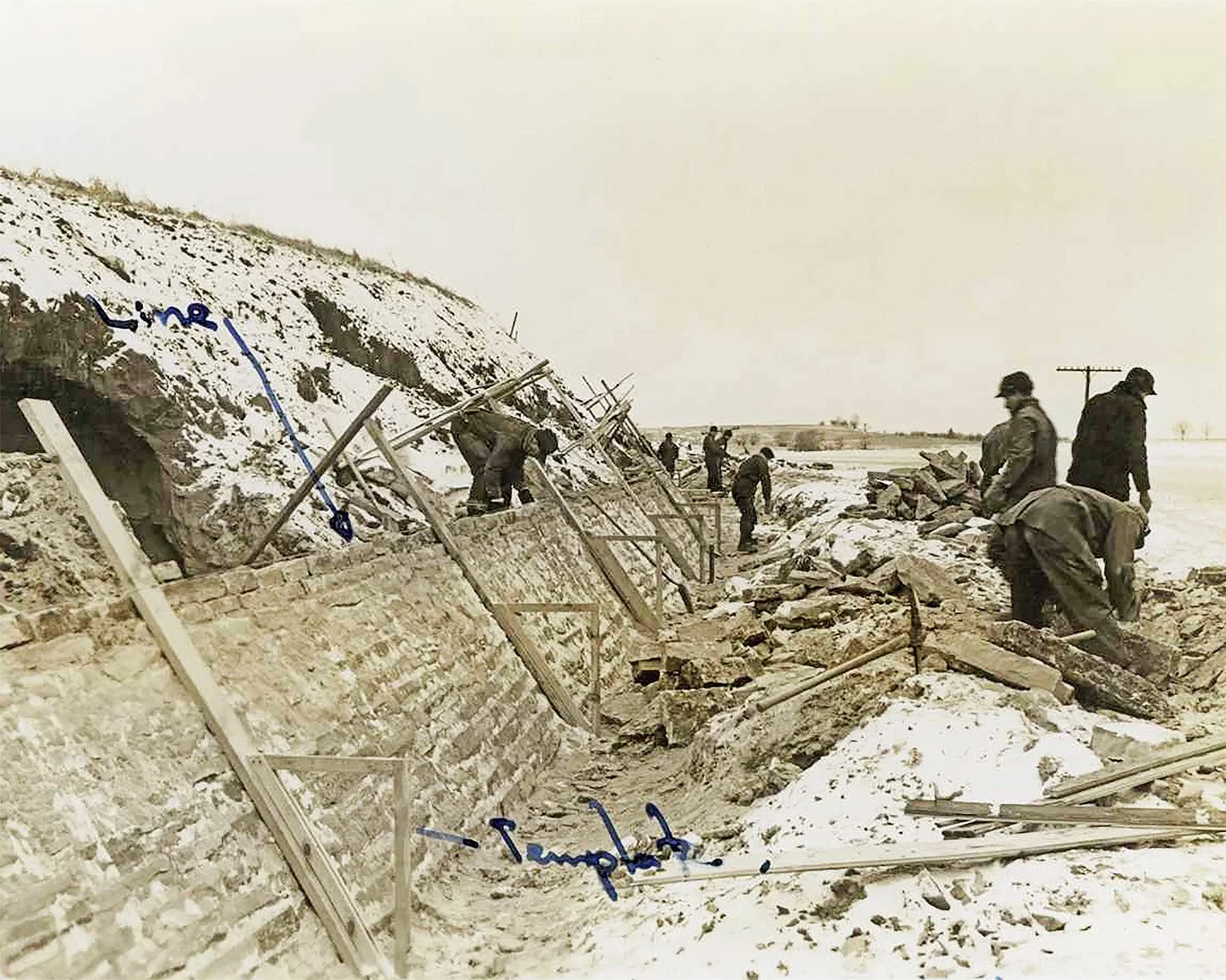
Line/Template. Zumbro Bend Main Gallery. From Zumbro Bend/Three Desiring Bodies, Rochester Art Center, Rochester, MN 2023-24. Dry rock protection wall construction on river east of Rochester, MN. Photographer unknown. Collage on modified digital print. 27 x 33 inches. Image courtesy the Olmsted County Historical Society & Museum.
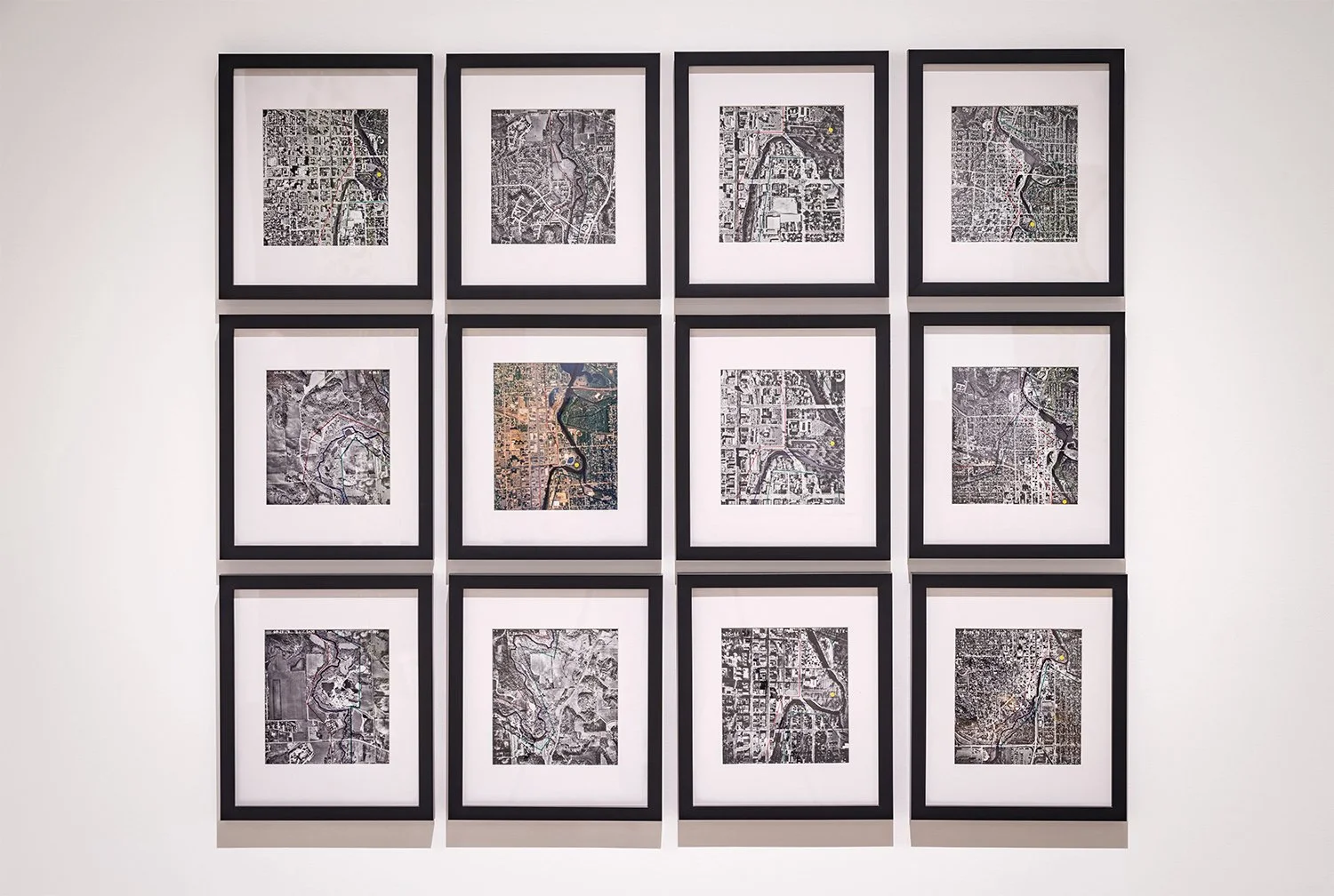
Zumbro River Aerial Grid. From Main Gallery, Zumbro Bend/Three Desiring Bodies, Rochester Art Center, Rochester, MN 2023-24. Grid of 12 photo collages. Mixed media, collage on digital photographic print. 12 x 14 inches ea. Images courtesy History Center of Olmsted County. Dates vary.
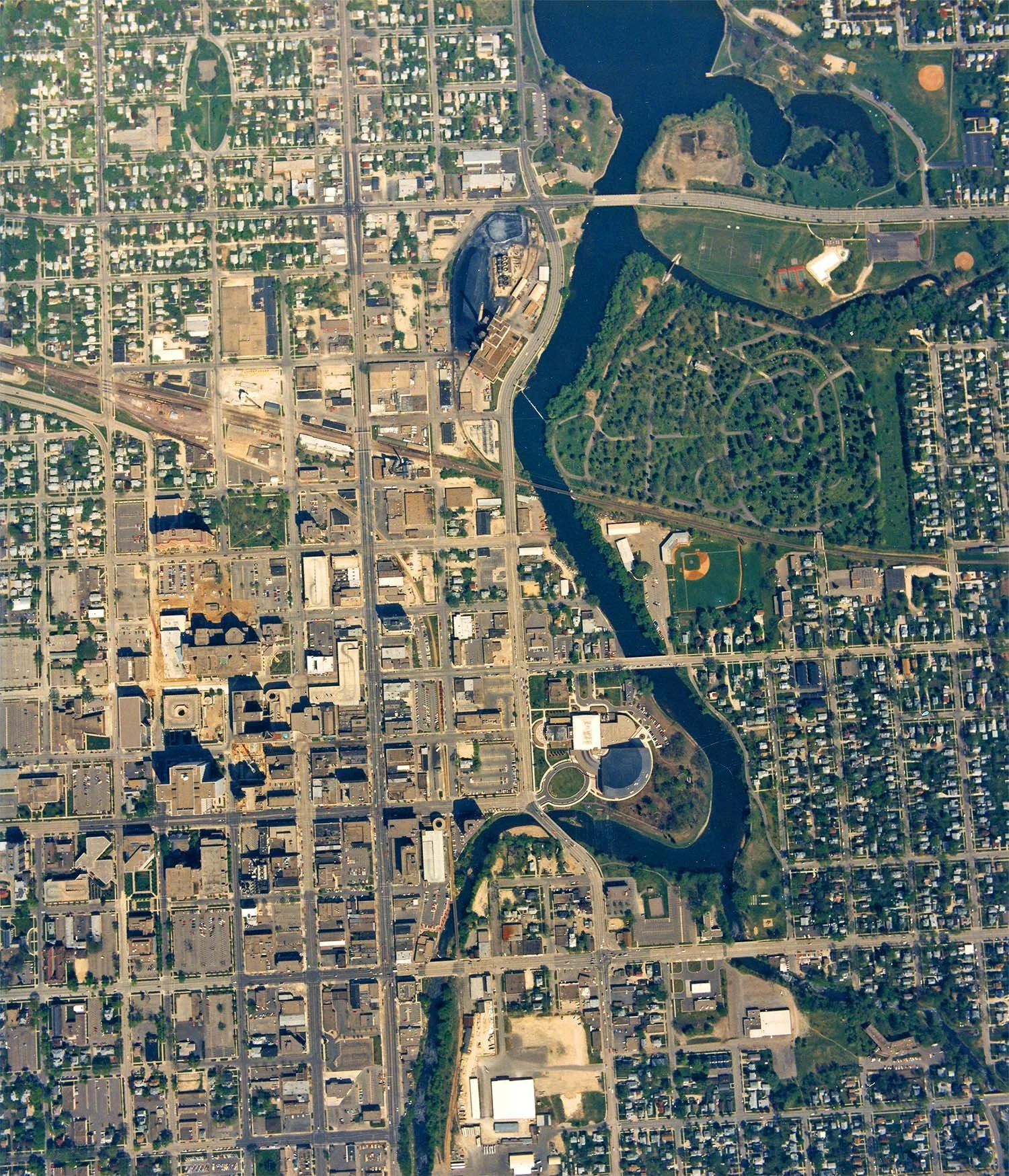
Zumbro River Aerial Grid - Detail. From Main Gallery, Zumbro Bend/Three Desiring Bodies, Rochester Art Center, Rochester, MN 2023-24. Grid of 12 collages. Mixed media collage on digital photographic print. 12 x 14 inches ea. Image courtesy History Center of Olmsted County. Dates Vary.
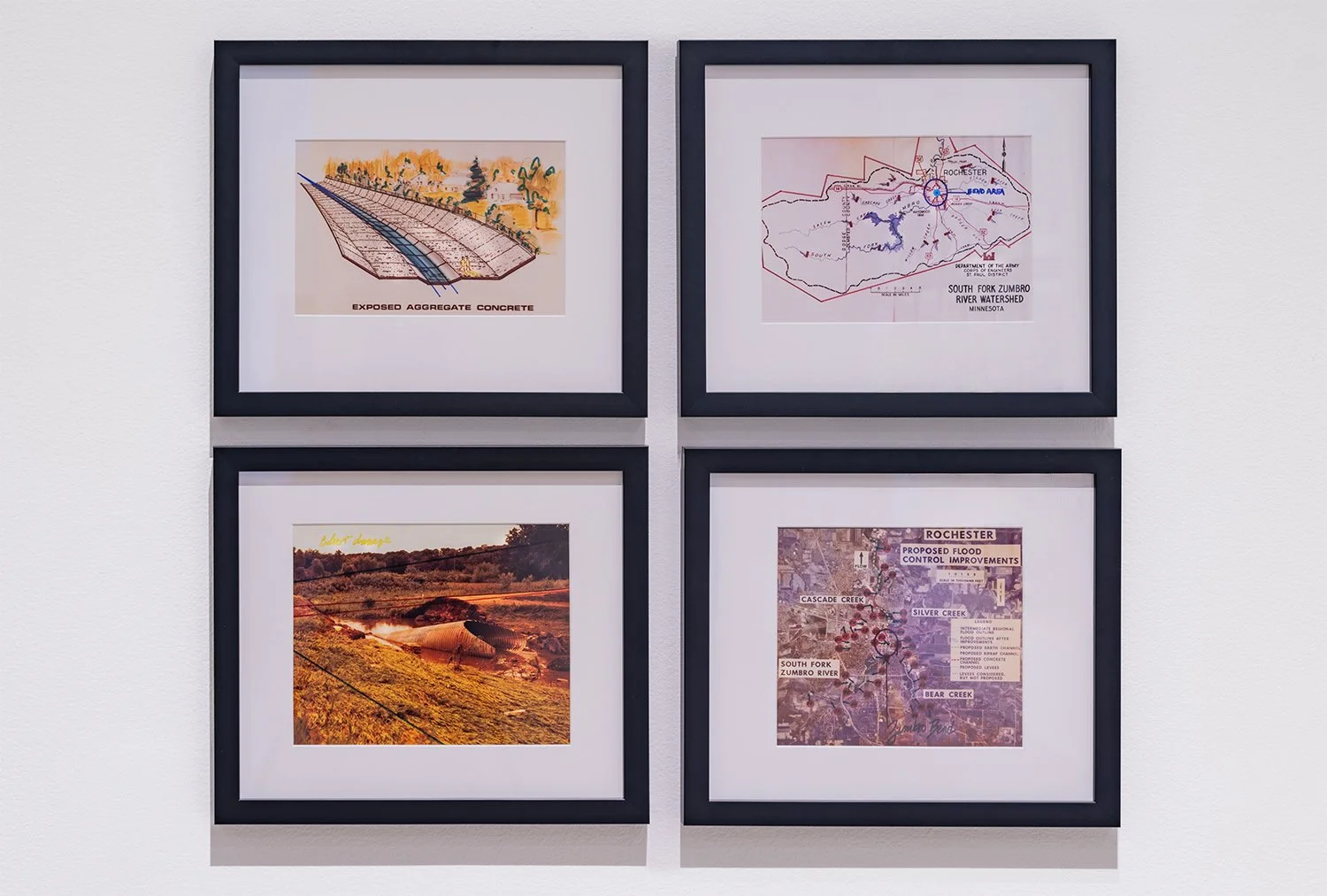
Zumbro Flood Damage & Watershed Control Maps. From Main Gallery, Zumbro Bend/Three Desiring Bodies, Rochester Art Center, Rochester, MN 2023-24. Grid of 4 collages. Mixed media collage on digital photographic prints. 12 x 14 inches ea. Images courtesy History Center of Olmsted County. Dates vary.
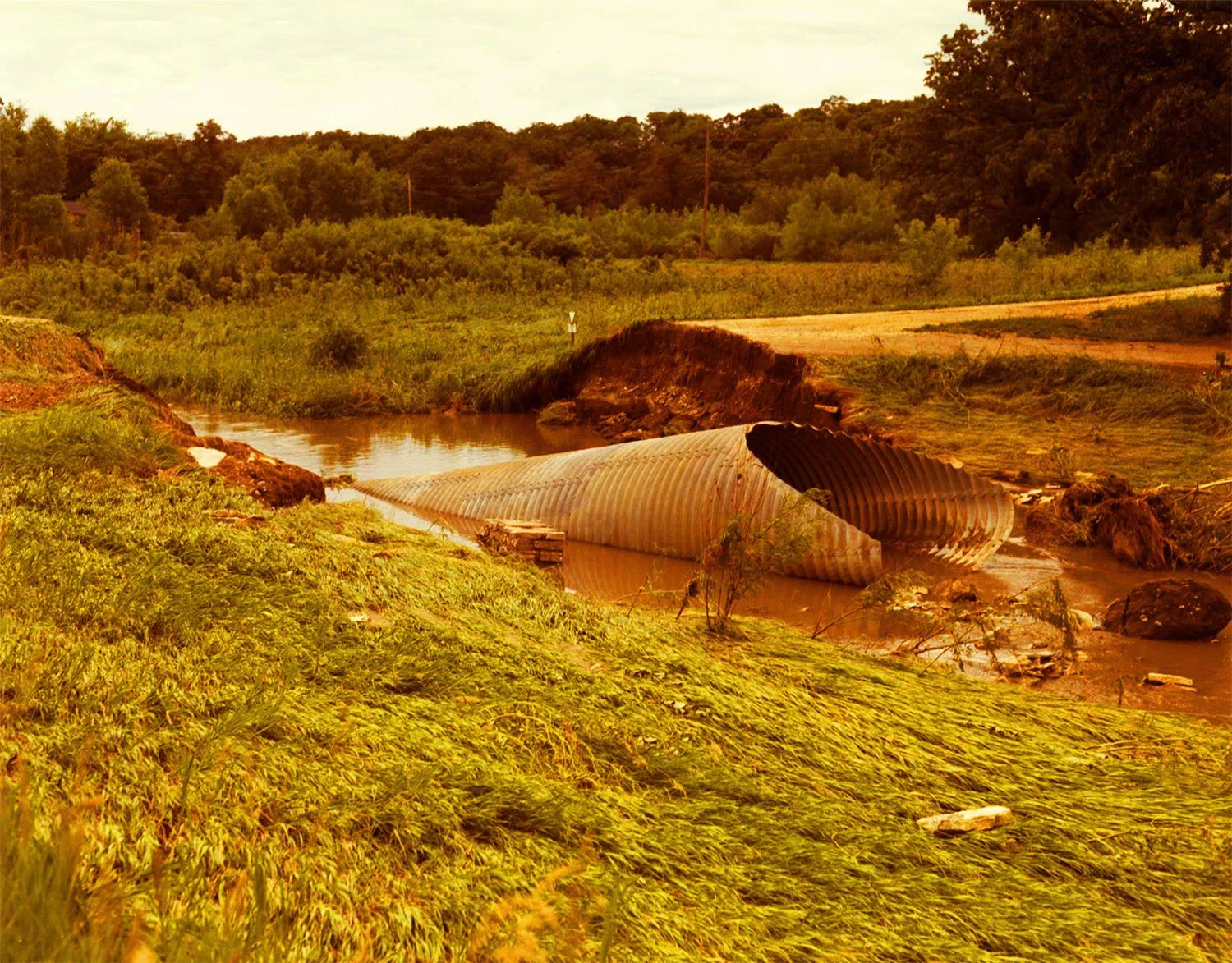
Zumbro Flood Damage – Culvert Detail. From Main Gallery, Zumbro Bend/Three Desiring Bodies, Rochester Art Center, Rochester, MN 2023-24. Grid of 4 collages. Mixed media collage on digital photographic print. 12 x 14 inches ea. Images courtesy History Center of Olmsted County. Dates vary.
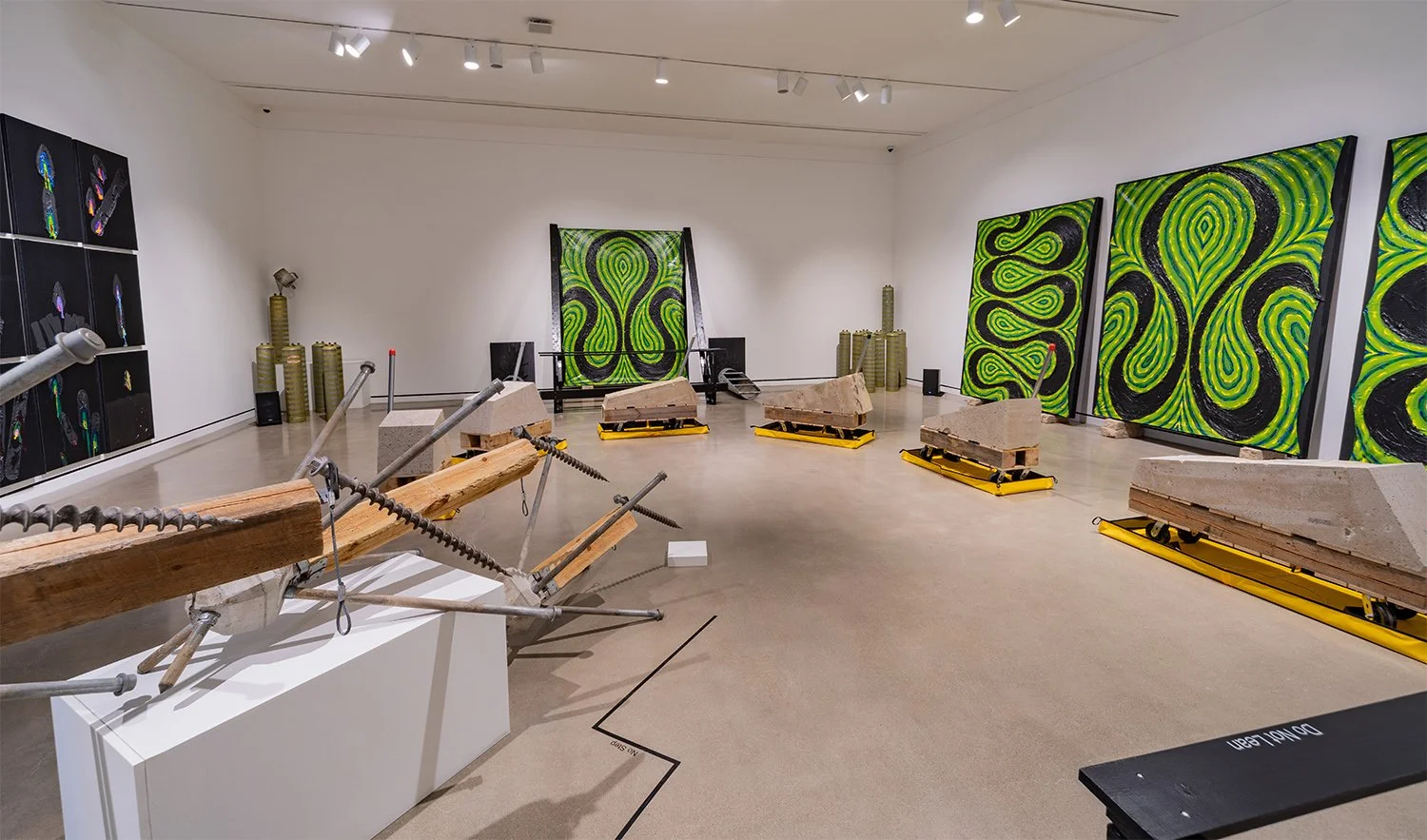
Sinuous Bend View. From Main Gallery, Zumbro Bend/Three Desiring Bodies, Rochester Art Center, Rochester, MN 2023-24. Multiple 2 & 3D installation components, modified digital prints, dolomite limestone, choreographed sound. Install sizes vary.
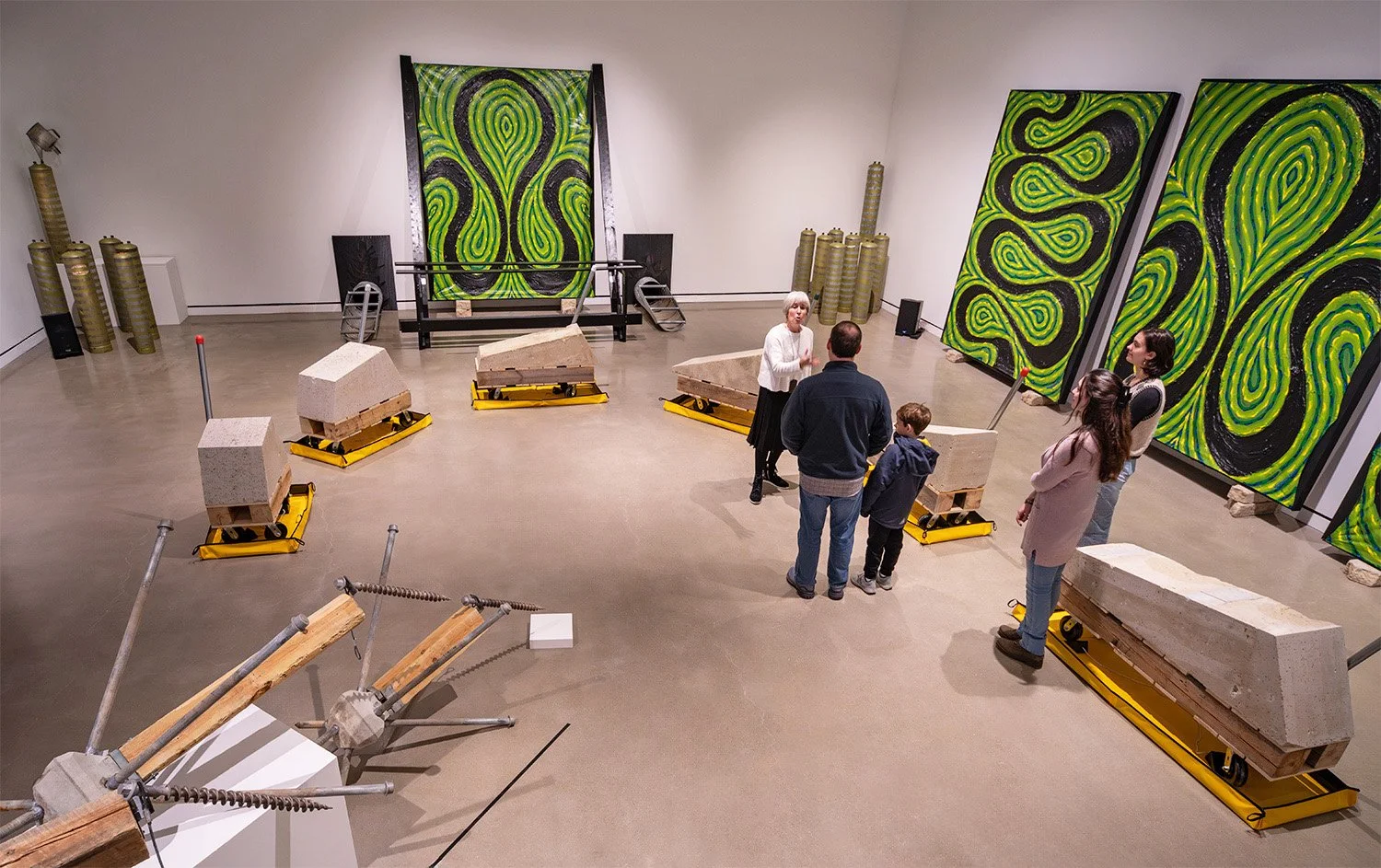
Sinuous Bend View – Human Scale. From Main Gallery, Zumbro Bend/Three Desiring Bodies, Rochester Art Center, Rochester, MN 2023-24. Multiple 2 & 3D installation components, modified digital prints, dolomite limestone, choreographed sound. Install sizes vary.
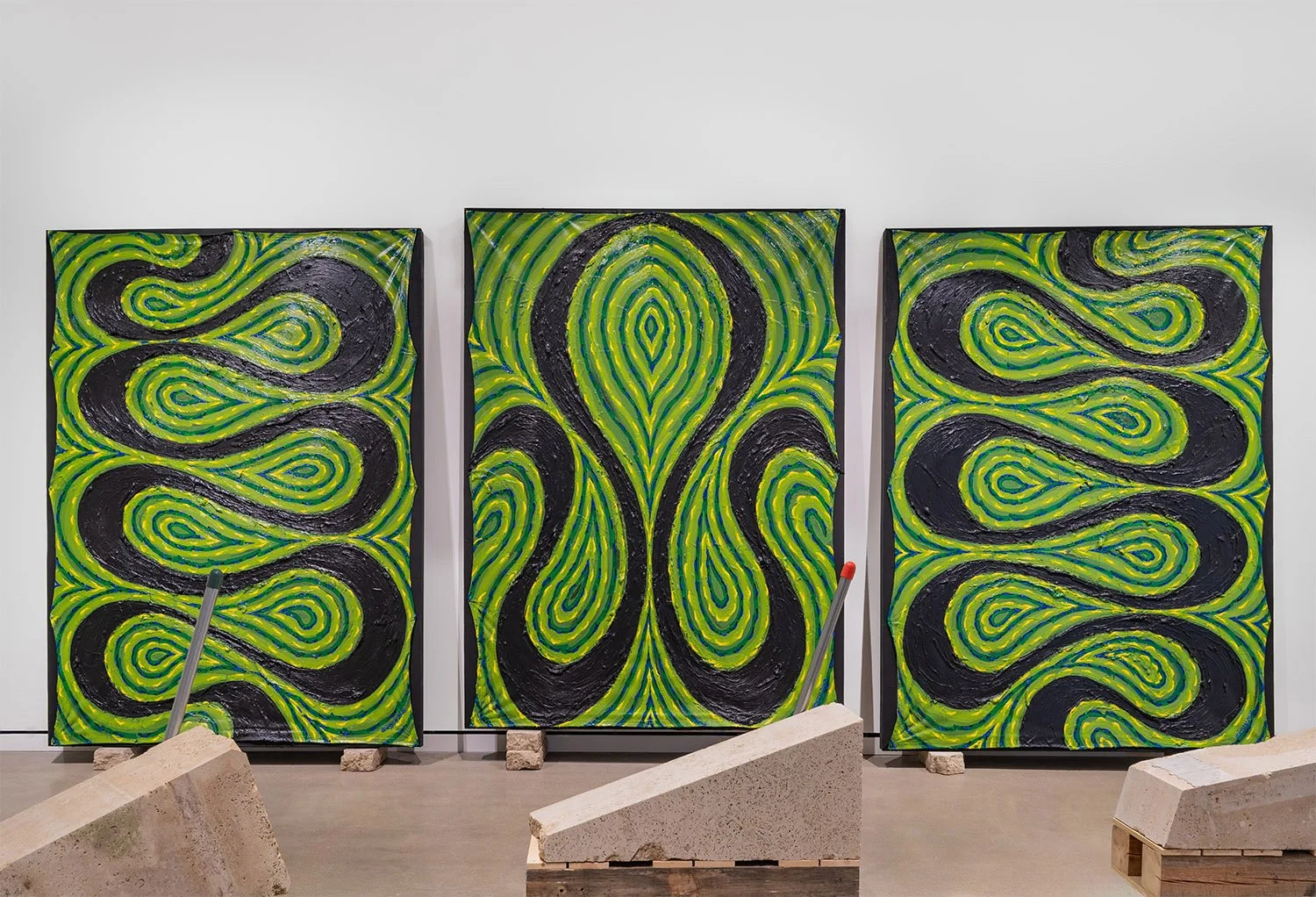
Sinuous Meander #1, Oxbow #2, Sinuous Meander #2 (Left to Right). From Main Gallery, Zumbro Bend/Three Desiring Bodies, Rochester Art Center, Rochester, MN 2023-24. Acrylic & house paint, gloss acrylic gel & iridescent tinting medium, black texture paste, black gesso, over unstretched black cotton canvas. Hang from grommets. Sits on Chilton & Kasota wall stones. Appx. 120 x 96 x 5 inches ea. Overall 120 x 324 feet x 5 inches.
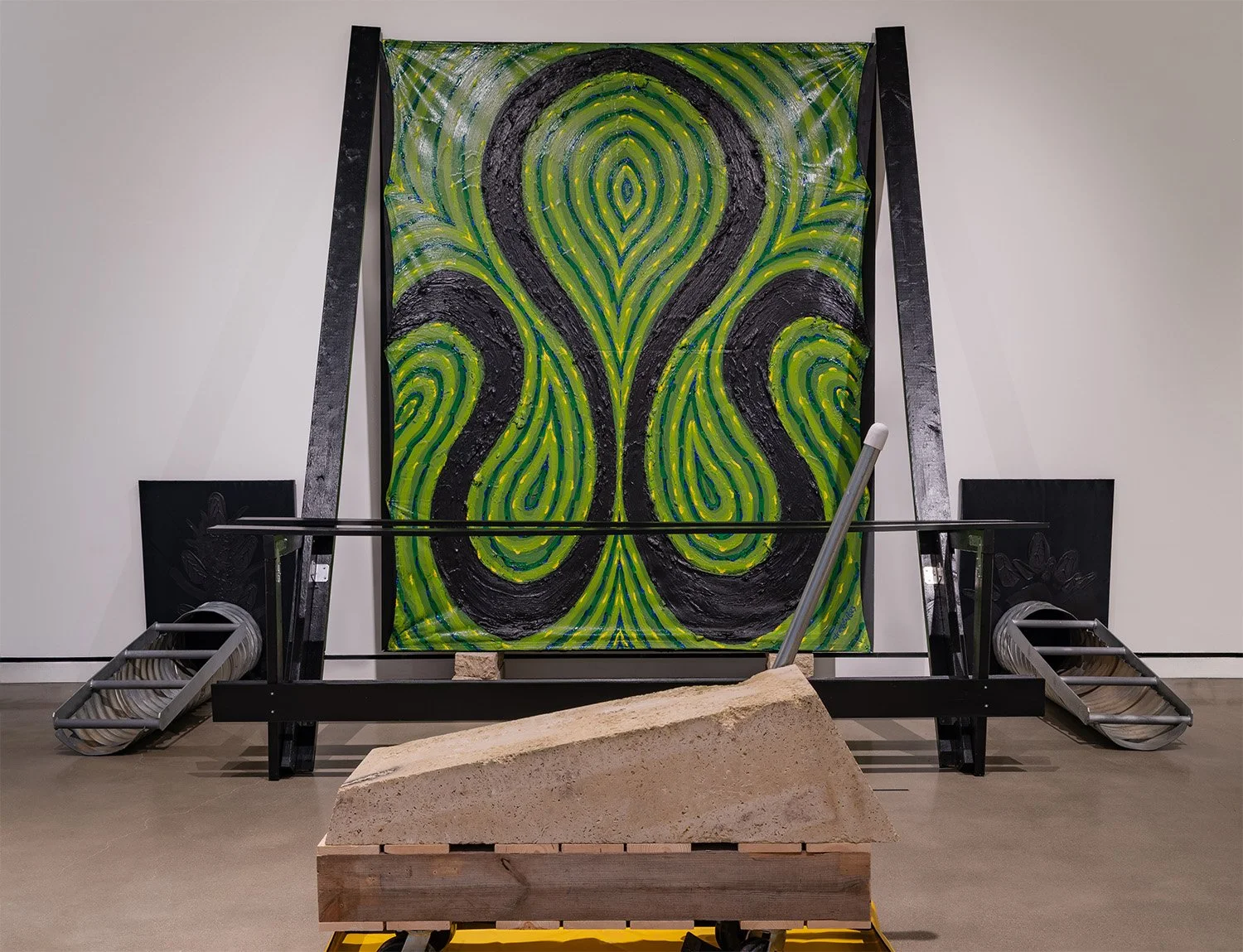
Oxbow #1, River Wall Channel Template, & Truth Coming Out of the Culverts. From Main Gallery, Zumbro Bend/Three Desiring Bodies, Rochester Art Center, Rochester, MN 2023-24. Oxbow: Acrylic & house paint, gloss acrylic gel & iridescent tinting medium, black texture paste, black gesso, over unstretched black cotton canvas. Hangs from grommets. Sits on Chilton & Kasota wall stones. Appx. 120 x 72 x 5 inches. Template: Black gesso & polyurethane on pine wood. 12 x 8 x 6 feet. Culverts: Two steel culverts with safety grates: 15-inch diameter x 5 feet, 6:1 slope. Two unfinished paintings, black texture paste & black gesso on black satin, stretched over cotton canvas. 40 x 30 inches ea.
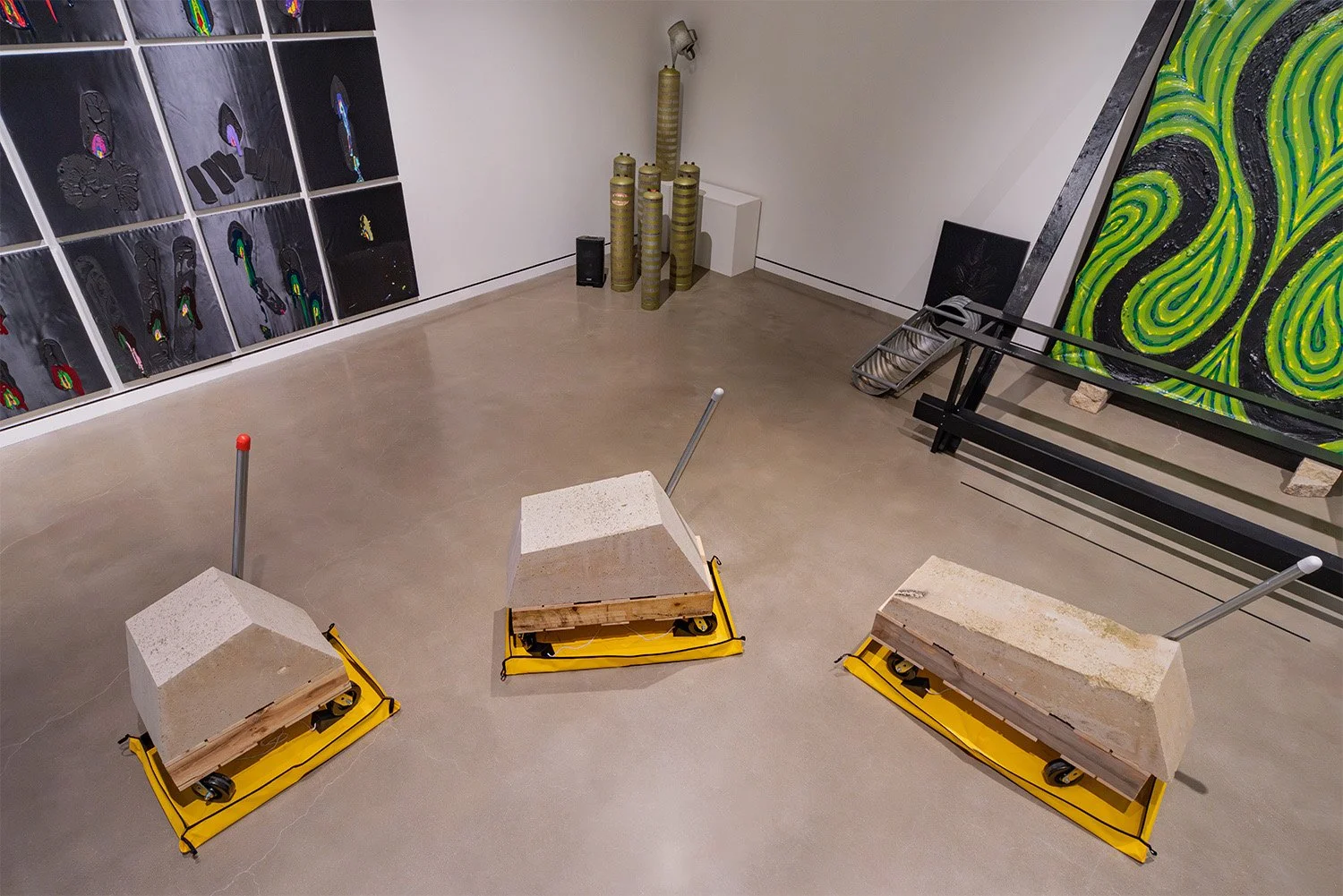
Limestone Extraction Carts. From Main Gallery, Zumbro Bend/Three Desiring Bodies, Rochester Art Center, Rochester, MN 2023-24. Six recycled Dolomite limestone offcuts on rough sawn red & yellow pine, standard grade pine, medium duty swivel phenolic casters, Simpson StrongTies, hex & lag screws, steel pipes, hardware, plastic caps, rubber wheel chocks with cord, sitting in custom sized Portable Polyvinyl Go-Go Berms. Stone sizes vary. Largest 60.75 x 17.75 x 16 inches, sitting on 60.25 x 15 x 16 inch cart, within 68 x 24 x 4 inch berm.
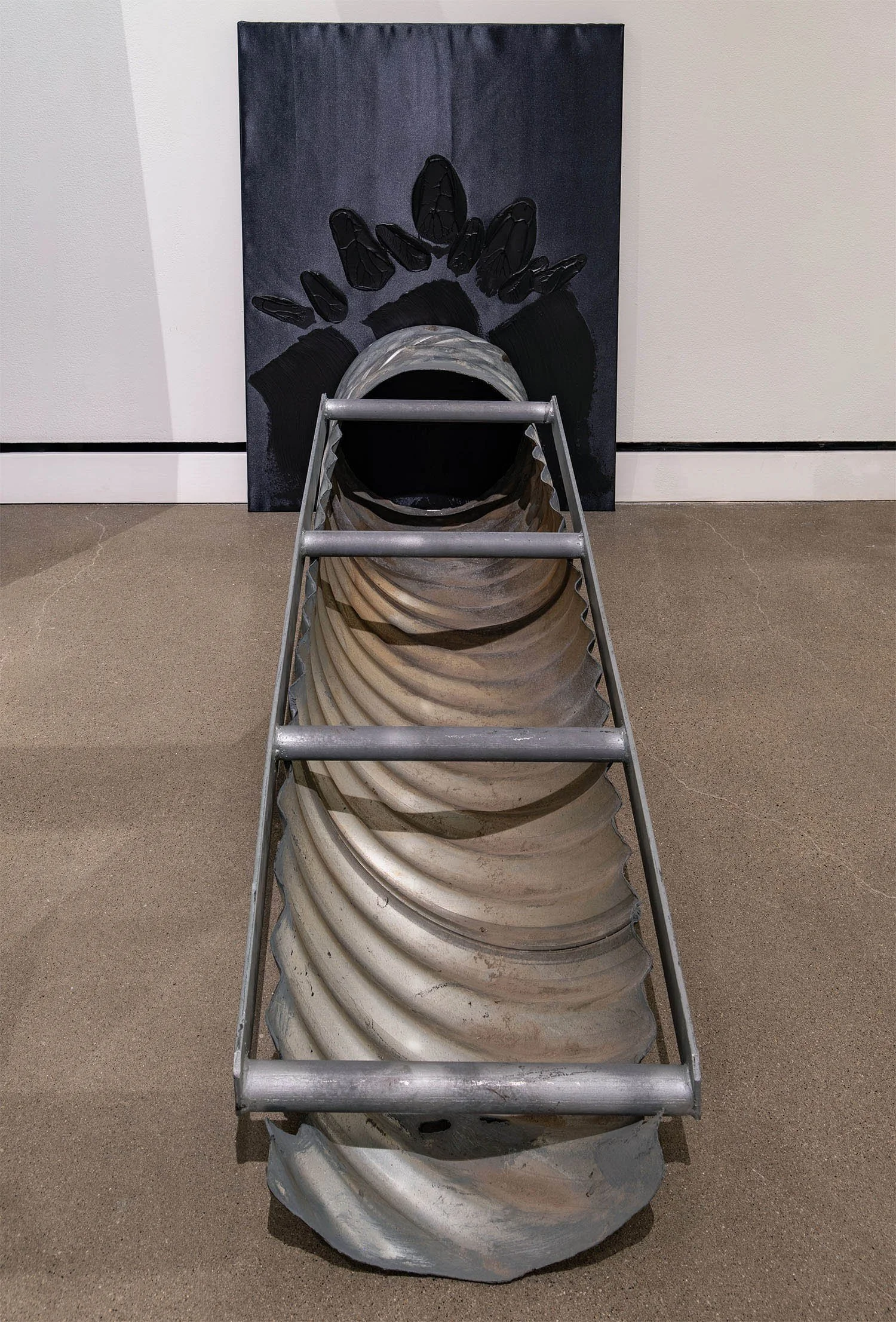
Truth Coming Out of the Culverts. From Main Gallery, Zumbro Bend/Three Desiring Bodies, Rochester Art Center, Rochester, MN 2023-24. Two steel culverts with safety grates: 15-inch diameter x 5 feet, 6:1 slope. Two unfinished paintings, black texture paste & black gesso on black satin, stretched over cotton canvas. 40 x 30 inches ea.
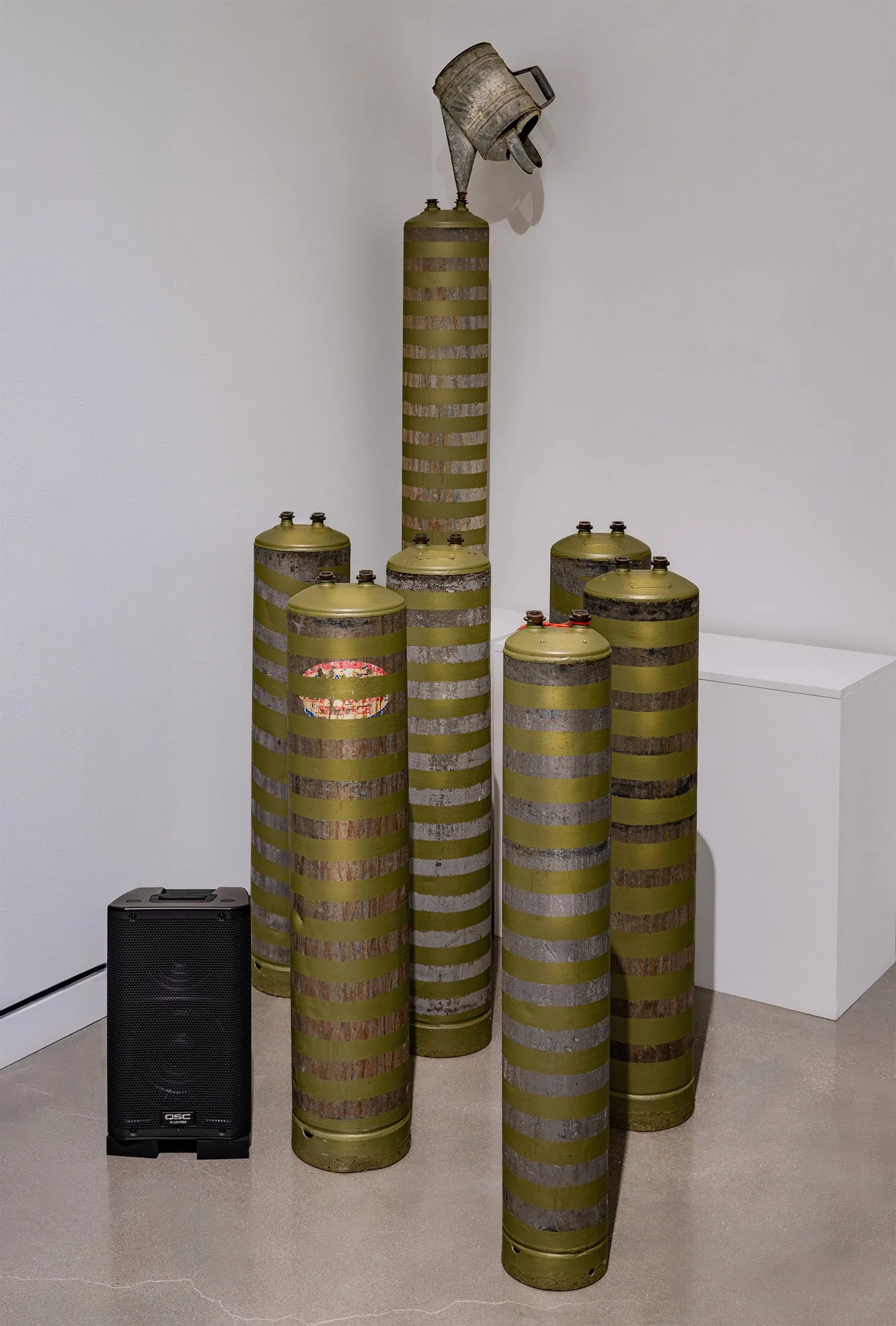
Dead Tanks/When Johnny Comes Marching Home. From Main Gallery, Zumbro Bend/Three Desiring Bodies, Rochester Art Center, Rochester, MN 2023-24. Install of 15 tanks in two squads. House paint on recycled portable steel Culligan soft water tanks, mixed media. 48 inches x 7- & 9-inch diameters ea. Install arrangements vary.
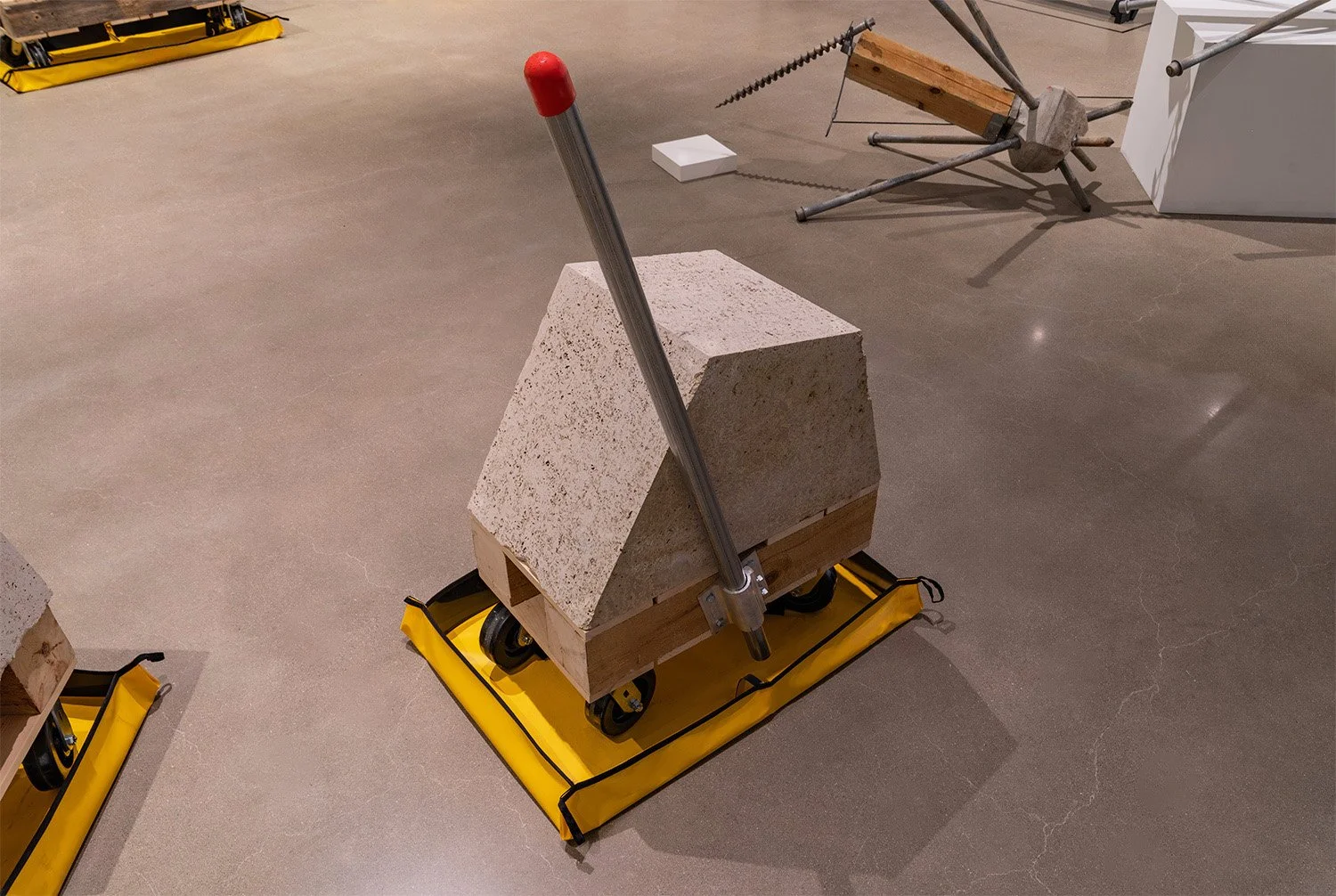
Limestone Extraction Cart. From Main Gallery, Zumbro Bend/Three Desiring Bodies, Rochester Art Center, Rochester, MN 2023-24. From group of six. Recycled Dolomite limestone offcut on rough sawn red & yellow pine, standard grade pine, medium duty swivel phenolic casters, Simpson StrongTies, hex & lag screws, steel pipes, hardware, plastic caps, rubber wheel chocks with cord, sitting in custom sized Portable Polyvinyl Go-Go Berms. Stone sizes vary. Largest 60.75 x 17.75 x 16 inches, sitting on 60.25 x 15 x 16 inch cart, within 68 x 24 x 4 inch berm.
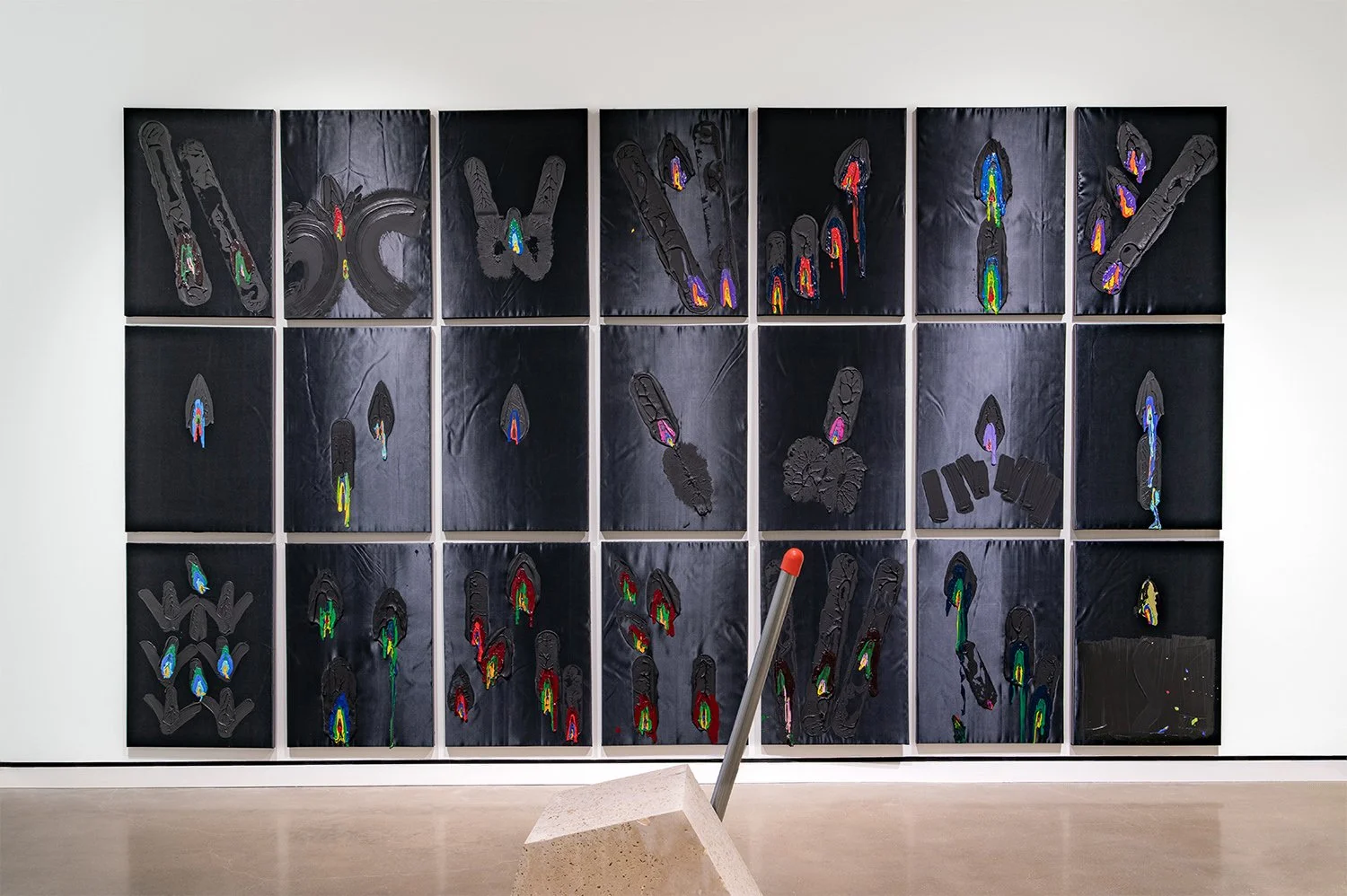
Thicket. From Main Gallery, Zumbro Bend/Three Desiring Bodies, Rochester Art Center, Rochester, MN 2023-24. Grid of 21 paintings. Acrylic & house paint, gloss acrylic gel & iridescent tinting medium, black texture paste, black gesso on black satin, stretched over cotton canvas. 40 x 30 inches ea. Overall 130 x 240 inches.
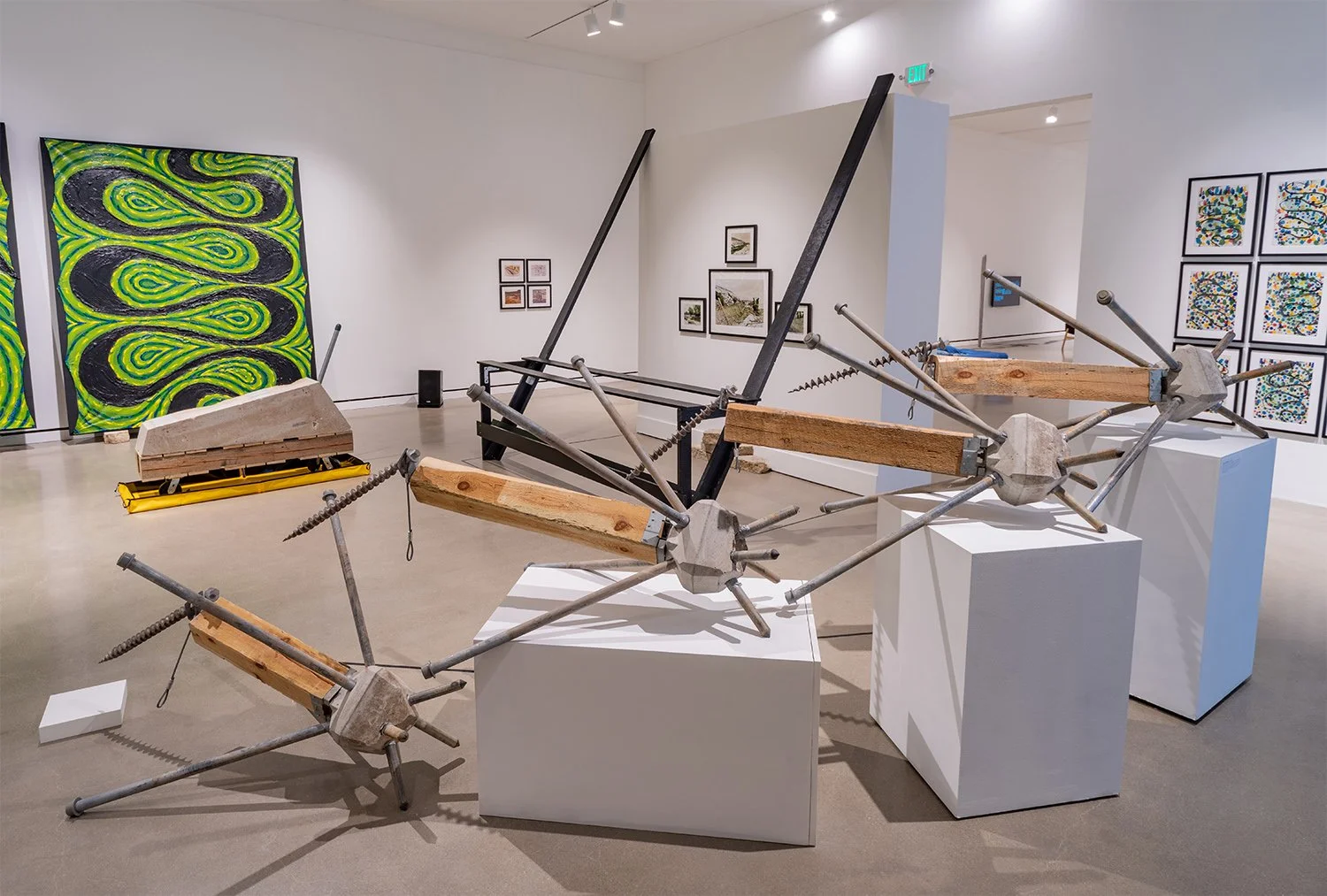
Sinuous Bend View. From Main Gallery, Zumbro Bend/Three Desiring Bodies, Rochester Art Center, Rochester, MN 2023-24. Multiple 2 & 3D installation components, ungrounded footings, modified digital prints, dolomite limestone, choreographed sound. Install sizes vary.
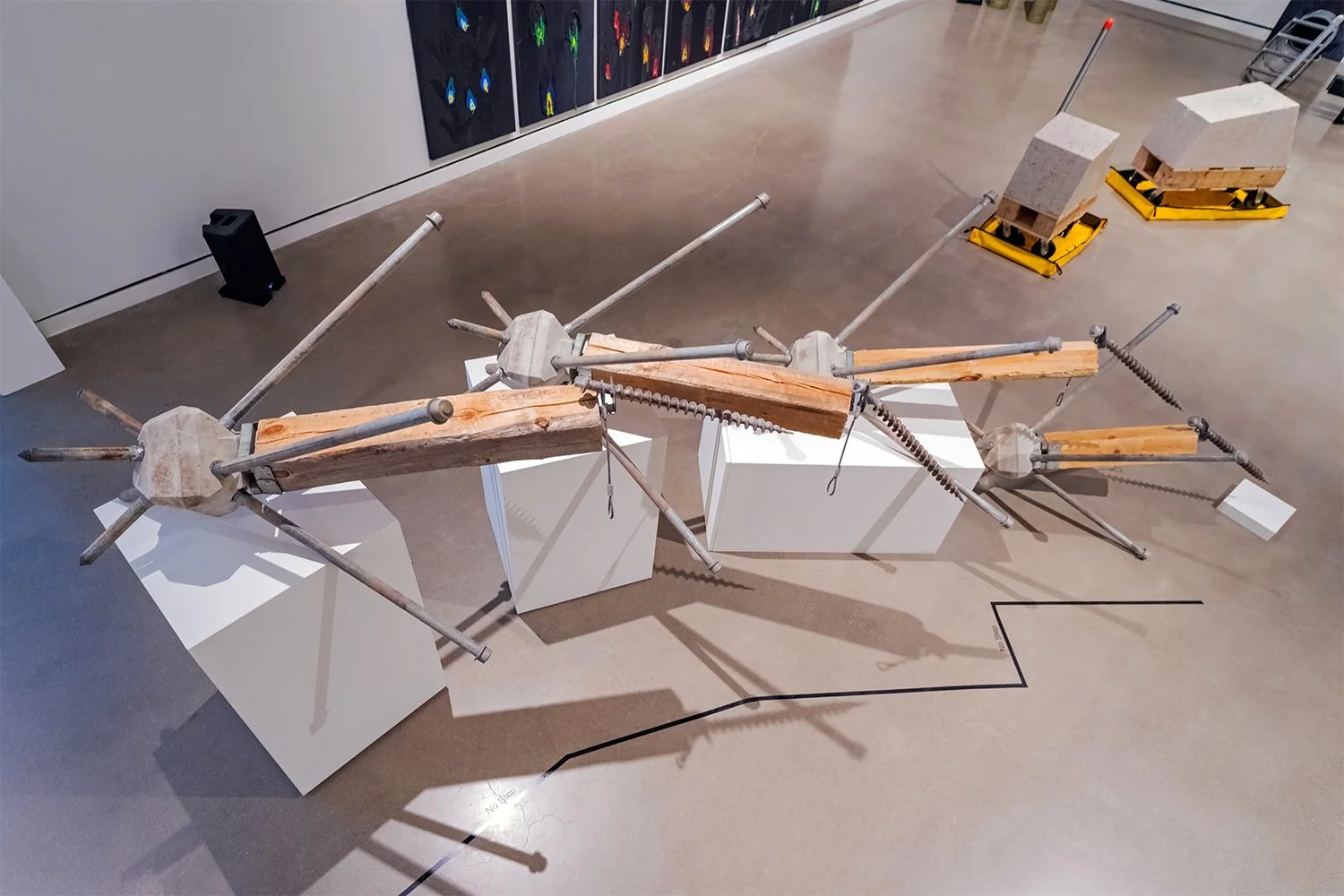
Ungrounded Footings Top View. From Main Gallery, Zumbro Bend/Three Desiring Bodies, Rochester Art Center, Rochester, MN 2023-24. Grouping of 4. Reclaimed ungrounded 50 lb. Diamond Pier concrete footings, 48-inch galvanized metal poles, 26-inch Penetrator aluminum earth anchors, Simpson Strongtie adjustable metal footing base, rough sawn yellow pine, plastic pins & caps, metal bracket, wire, crimped sleeve, hex screws, earth residue. Appx. 58 x 60 x 60 inches ea. Install size varies.
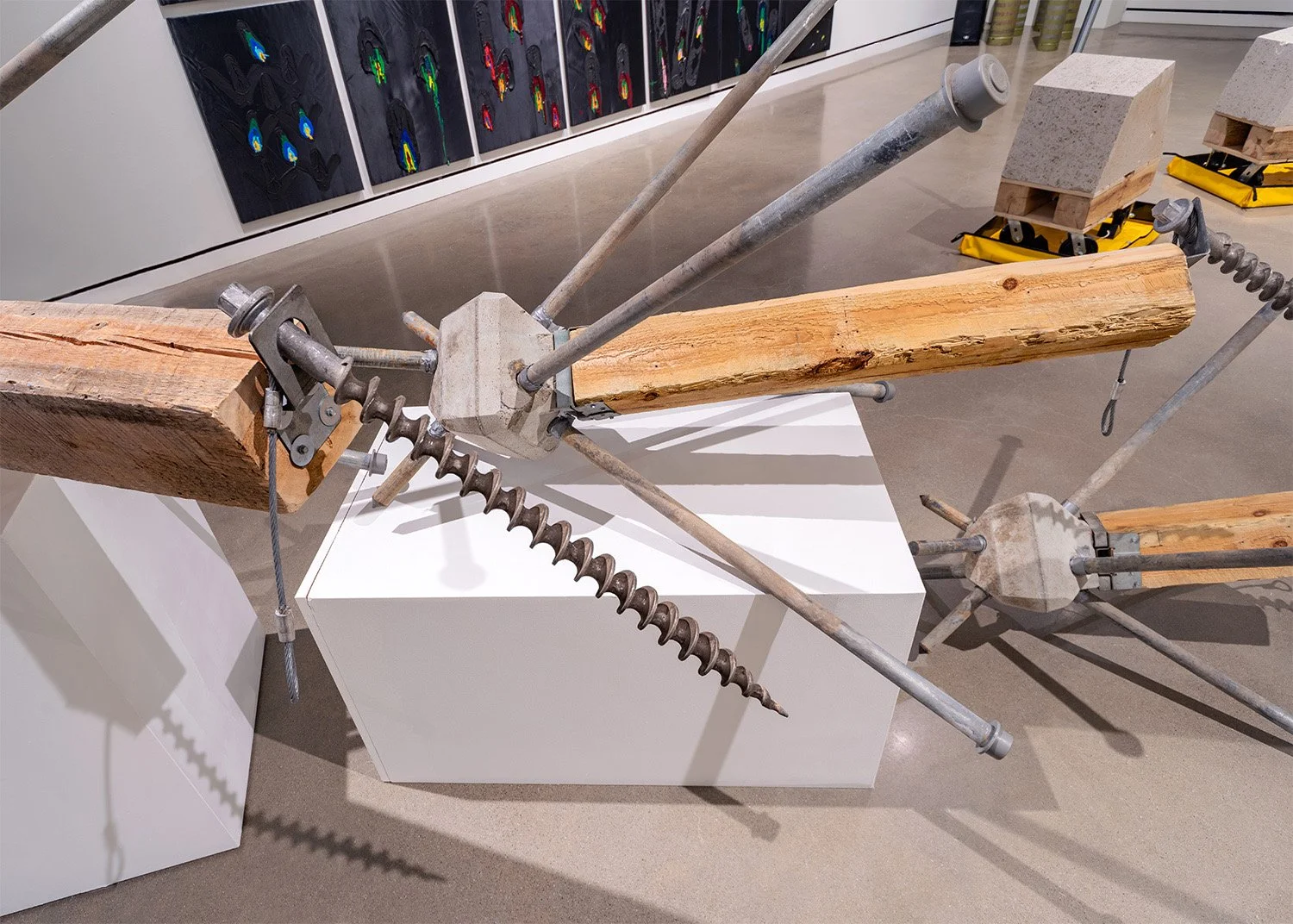
Ungrounded Footings - Detail. From Main Gallery, Zumbro Bend/Three Desiring Bodies, Rochester Art Center, Rochester, MN 2023-24. Grouping of 4 reclaimed ungrounded 50 lb. Diamond Pier concrete footings, 48-inch galvanized metal poles, 26-inch Penetrator aluminum earth anchors, Simpson Strongtie adjustable metal footing base, rough sawn yellow pine, plastic pins & caps, metal bracket, wire, crimped sleeve, hex screws, earth residue. Appx. 58 x 60 x 60 inches ea. Install size varies.
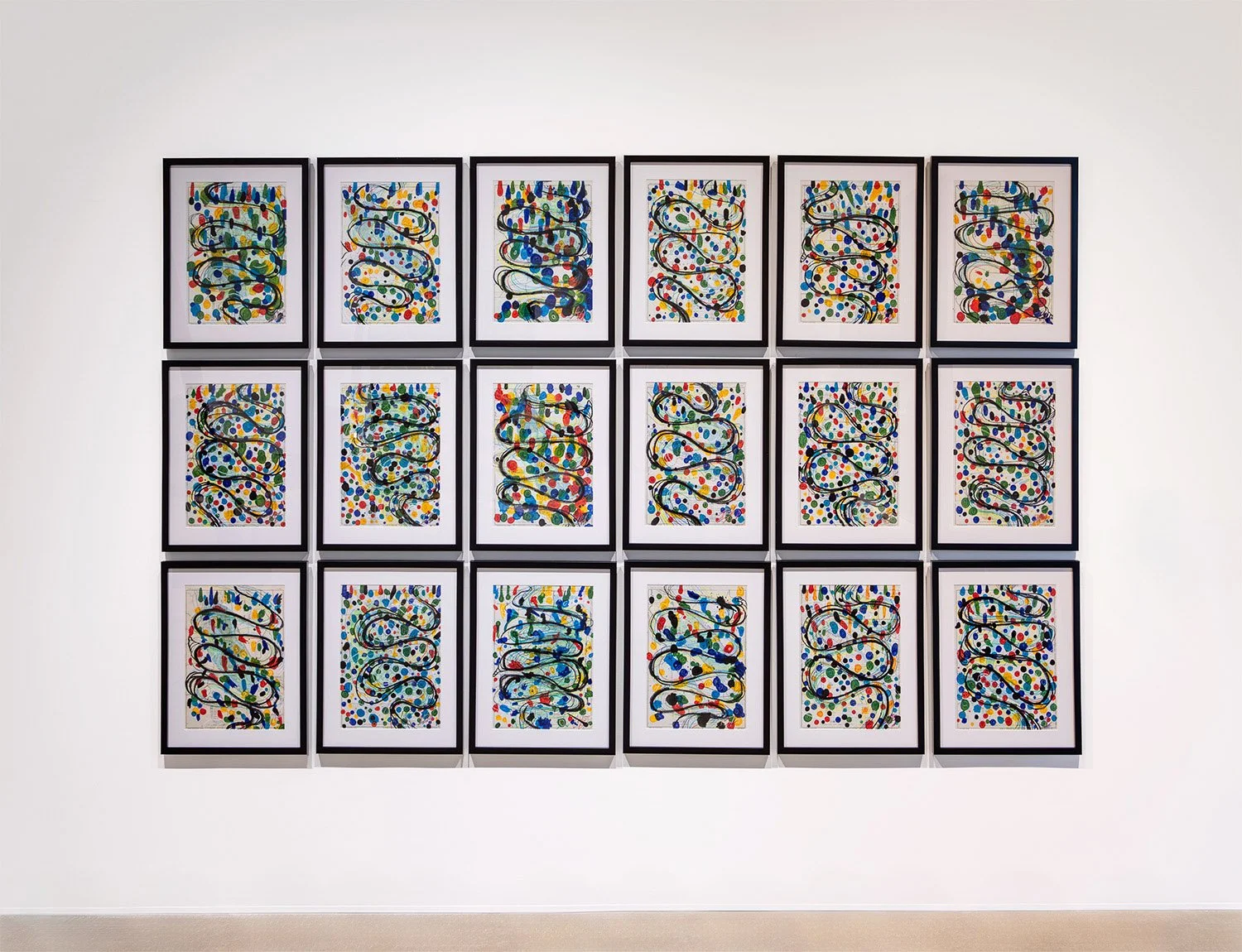
Thalweg & Sinuosity Studies. From Main Gallery, Zumbro Bend/Three Desiring Bodies, Rochester Art Center, Rochester, MN 2022-23. Grid of 18 drawings. Mixed media on vintage 1968 U.S. Army Corp of Engineers Upper Mississippi Navigation Charts, Miles 549 to 868. Charts vary from No. 102 to 161, and No.’s 1 of St. Croix & Minnesota Rivers. 19.5 x 13.5 inches ea. Note: Zumbro River enters Mississippi River at Mile #750 on Chart #141.
In Zumbro Bend: Three Desiring Bodies, Minneapolis based visual artist Pete Driessen installs three separate site-specific works, each a different abstracted fork in the river ecosystem. Titled after the South Fork Zumbro River that winds around the Rochester Art Center, the artist illuminates meandering sociopolitical variants on the river as creative life force, terrain erosion and deposition, land extraction and water channeling.
Driessen’s inventive constructed environments, both self-contained and/or site specific, often fuse painting, sculpture, mixed media, sound, and installation, frequently based in site, land, architecture, historical research, and community exchange. In past and current work, the artist orchestrates a collaborative ensemble of creative relationships with sound artist, sign painter, frame maker, and other civic, artistic and business communities.
Through the language of painting, form and space, Driessen investigates river system topology, land erosion and sediment deposition structures, and the animate quality of flowing water systems. The Zumbro River, a Mississippi River tributary with three separate forks, offers three exhibit positions with distinct material situations. The Dakota name for the river is Wapka Wazi Oju (Pines Planted River), referencing the grove of great white pines at Pine Island on the middle fork of Zumbro River.
The first fork, Zumbro Bend, presented in the large Onofrio Gallery, reflects upon the river environments meandering erosion and deposition, with wood, limestone, and mixed media painting. The gallery floor serves as a floodplain, with work arranged around the curvilinear structure of a river bend. In the second fork, the Gel Lab, located in the Davies Gallery, the artist experiments with gloss acrylic gel medium, positioning the river via our human bodily connections to innate desire, creative production, and reproduction qualities. The third fork, the Bait Shop, outside Davies Gallery, nostalgically reflects upon the artist's locational identity within the water culture of the Minnesota & Upper Midwest through recreational and tinkering structures.
A river bend or meander can be defined as water flowing in a curvy, bendy path, like a serpent or snake. As a river makes its way through topography that is low or flat, it develops bends as it erodes its way through the path of least resistance via gravity to the sea. A river bend actively creates multiple natural formations such as oxbows, incised meanders, scroll and point bars, slip and cut slopes, meander scars, and floodplains.
The artist views the river as a living body with animistic qualities. All rivers are sources of creative life, production, and reproduction. The river has healing and resourceful properties, forms natural bonded alignments, and co-creates with the larger ecosystem that it winds through. Driessen’s painting style, developed over four decades, reflects this animistic quality, and the belief that everything, including inanimate objects, has a living presence.
Within the broad river bend theme, the artist addresses three types of desire for each gallery. Our human desires for connection (Bait Shop), creativity (Gel Lab), and control (Sinuous Bend). These three human desires abstractly probe the nuances of the sinuous, the sensual, and our bodily tensions within the spatiality of river watersheds and river bend sites. Driessen references the origins of the word erosion, from eros in Greek, meaning desire or the act of self-preservation; and deposition, from Latin for the laying to rest or burying.
With the artist as curator, the river is envisioned as a thriving power source that is subject to negotiation and confrontation. Both organic and synthetic contrasts of power reveal themselves, whether between river, human, and mother nature, or with artist, curator/museum and audience. Parallel to the variable ebb and flow of the Zumbro, the status of the art object, space and spectator perpetually shifts.
Driessen sets up three asynchronous, nonsingular, and nonlinear viewing spaces that stone skip outside of the traditional white cube to more full spatial environs. There is no one way to view the river. River viewing requires multiple oculi, multiple parallels, and multiple horizons. River time, though seasonal, is also nonlinear and viewing the site-specific river space is multidimensional and ever shifting. Along with the addition of Chooch Karton’s sound art, the space of display and presentation develops ever-changing audio, visual and creative frequencies.
Sinuous Bend
A theatrical space is visually and physically set up with high river bluff thicket vista, low river floodplain, circling river forms, boulderesque objects, and wave(length) crests. The extracted stones, held in place via commercial rubber chocks and portable containment berms, visually implore that if one removes a river stone, you also move the other parts within the whole river ecosystem. A series of twenty-one thicket paintings on black satin gently shimmer as a whispering river bluff. The center of the gallery becomes a low water level, curvilinear alluviation or sedimentation bar.
The Sinuous Bend installation touches upon many forms of water, biological, and geological sciences, and how human behavior interacts, extracts, assimilates, and/or shifts the local and global environment. With visual cues from helical shapes, molecular forms, wave frequencies, liquid resonance, and mathematical sinuosity, the artist expresses that our feeble human attempts at hydrological control of river systems are at best temporary.
Sinuosity within river structures is based on the calculation of multiple oscillating curves. To interpret sinuosity, one begins at an inflection point to consider the curvilinear length (actual path) divided by the shortest path length (straight line) of a curving river, and how it becomes a “dimensionless quantity.” The rhythmic wavelength, frequency and resonance of river bends are ever fluctuating and recalibrating. Zumbro Bend affirms that humans play a transformative role in the continuous nurturing, cultivation, or modification of river systems.
For the exhibition, Driessen directly utilized erosion and deposition methods as a strategy in generating his Sinuous Bend and Oxbow paintings, map drawings, and sculptural elements. Erosion is the geological process in which earthen materials are worn away and transported by natural forces such as wind or river water. Deposition is the depositing of eroded river rock and soil, leaving it as sediment and debris. The dynamic energy within a river bend and its water current is ever coevolving and constantly moving sediments, in turn restructuring the river habitat. Driessen reclaims previously quarried stone remnants and former sculpture components to exemplify the extraction waste, placing the artist/viewer/gallery as extractors.
The exhibition is filled with local Rochester and regional Southeast Minnesota touch points. The artist referenced historical river, flood, flood damage, river maps, hydrology, water treatment and watershed archives at the History Center of Olmsted County, which informed the artworks in Zumbro Bend: Three Desiring Bodies. Black and white aerial utility photographs from Northwestern Bell in the late 1970’s springboard a grid of twelve topographic river collages. Four historical sepia-toned river stone wall construction images became footings for two large wooden Line/Template sculptures referencing river channeling. A newspaper flood image of a broken culvert and bridge emerged into an actual three-dimensional steel culvert and safety grate with painting composition. Lastly, the Thalweg & Sinuosity Studies have been created on the artist's thrift shop find of a 1968 U.S. Army Corp of Engineers Upper Mississippi Navigational Charts.
Gel Lab
In the Gel Lab, Driessen utilizes the glass walls and transparency of the Davies Gallery to question the river bend as an inner/outer creative body, space and environment. At their core, the river and gloss acrylic gel medium are liquid and chemical in nature. The overlapping chemical processes, such as adhesion, binding, flow, filtration, straining, or wicking are all rheological properties for both the river and gel medium. Opaque technological objects smeared with gloss acrylic gel medium become glued into a murky bodily stasis. Hanging industrial chemical drum filters begin to blur our view with the translucent gel substance. With natural light transitioning throughout the glass gallery, the Gel Lab brings forth an emanating ethereal and experimental realm.
Formally, Driessen interprets the river, the river bend, and the act of creation, painting and artistic production as an innate sensual activity. The acrylic gel medium imprints in varying surface and textile applications begin to imply bodily, biological and sexual references. Like acrylic gel medium, a river has adhesion qualities that bring life systems together. Gel medium acts as a binder whereas the river bend sites tend to bind humans together in social and community groups, similar to clumping groups of organisms. Gel medium equates to glue of life.
Through the river body analogy in the Gel Lab, the artist questions the act of painting about the nature of the painting process itself. Illuminated within the translucent works is a critical dialogue that questions the role of non-canvas, non-stretcher, non-pigmentation methods, and reductive techniques resulting in non-narrative and non-figurative works. The artist's viscous gel medium explorations of painting techniques, adhesion and binding questions methods and applications that amplify the inherent abstract and conceptual nature of paint and its dissolving boundaries. Like the seasonal ebb and flow of rivers, the artist has provided works that will be in different states of curing, drying, hardening and yellowing throughout the duration of the exhibition.
Bait Shop
In the Bait Shop the artist references the eponymous 1970 Herter’s Wholesale Catalog No. 80, printed in his hometown of Waseca, MN, along with a local 1978 Rochester bait shop flood image. The Herter’s ad curatorially emphasizes the oil shop owner to place a “Standard Fishing Lures Half Price!” sign in the front window for enhancing lure sales. During the 1960s and 70s flood periods, many regional high school students went to Rochester to help sandbag and volunteer with the local nonprofits.
Driessen illuminates a nostalgic and romanticized small town bait shop. The site is a liminal dreamlike scenario, paralleling a surreal David Lynch movie set, with multilayered and unfixed broken components. Amidst an angled fishing dock, galvanized minnow buckets, vintage outboard engine and an anonymous romantic fall riverbend painting, the space engages a simpler time of melancholy. With glimpses and reminiscences of local fishing history and regional and cultural underpinnings, the space is an oculus on what local homogenous values develop within a capitalist society.
Christian Chooch “Pooch” Karton Audio Work
Sinuous Bend Sounds
The composition of these sounds derives from the sinusoidal flow of rivers and are made from near continuous sounds with slow bends or meanders, in timbre and tone. These sounds are made from a group of four interrelated oscillators which bear a conceptual link to the flow of water and its movement over earth and landscapes.
Mixing into the river sounds is a set of loops composed of discontinuous sounds that shift in rhythm, density and timbre. These sounds are made from shift registers, time stretching, sampling and resampling, and other digital processes, and bear conceptual links to erosion / deposition and the detritus of the human made world carried by river currents.
Gel Lab Sounds
These sounds are composed from the continuous shuffling and random scanning of 48 audio files containing synthesized sounds. These sounds are derived from ideas of sinusoidal flows, helixes, neural activity, cellular structures and inner corporeal rivers. Like the Gel medium work, they are smears, drips, mirrored textures and globs. As the sounds shift into new combinations they emerge as taxonomies, or growing collections.
The artist credits the Rochester Art Center, History Center of Olmsted County, Herter’s Sporting Goods, Airie Environmental, Biesanz Stone, Brown Dog Stretchers, Culligan Soft Water, Dusty’s Signs, Make Do Books, NE Sculpture, Network Accountability Group, Nisswa Dock, SmartSet, Springboard for the Arts, True North Steel, Pamela Hugdahl, Pooch Karton, Justin D. Allen, Dan Madsen, Jessica Nelson, and many other generous individuals for their physical and financial support of this site-specific exhibition. Photos by Steven Lang, Pete Driessen, & History Center of Olmsted County.
Links: