Vector Sector: A Dispositif in Field, Studio & Gallery
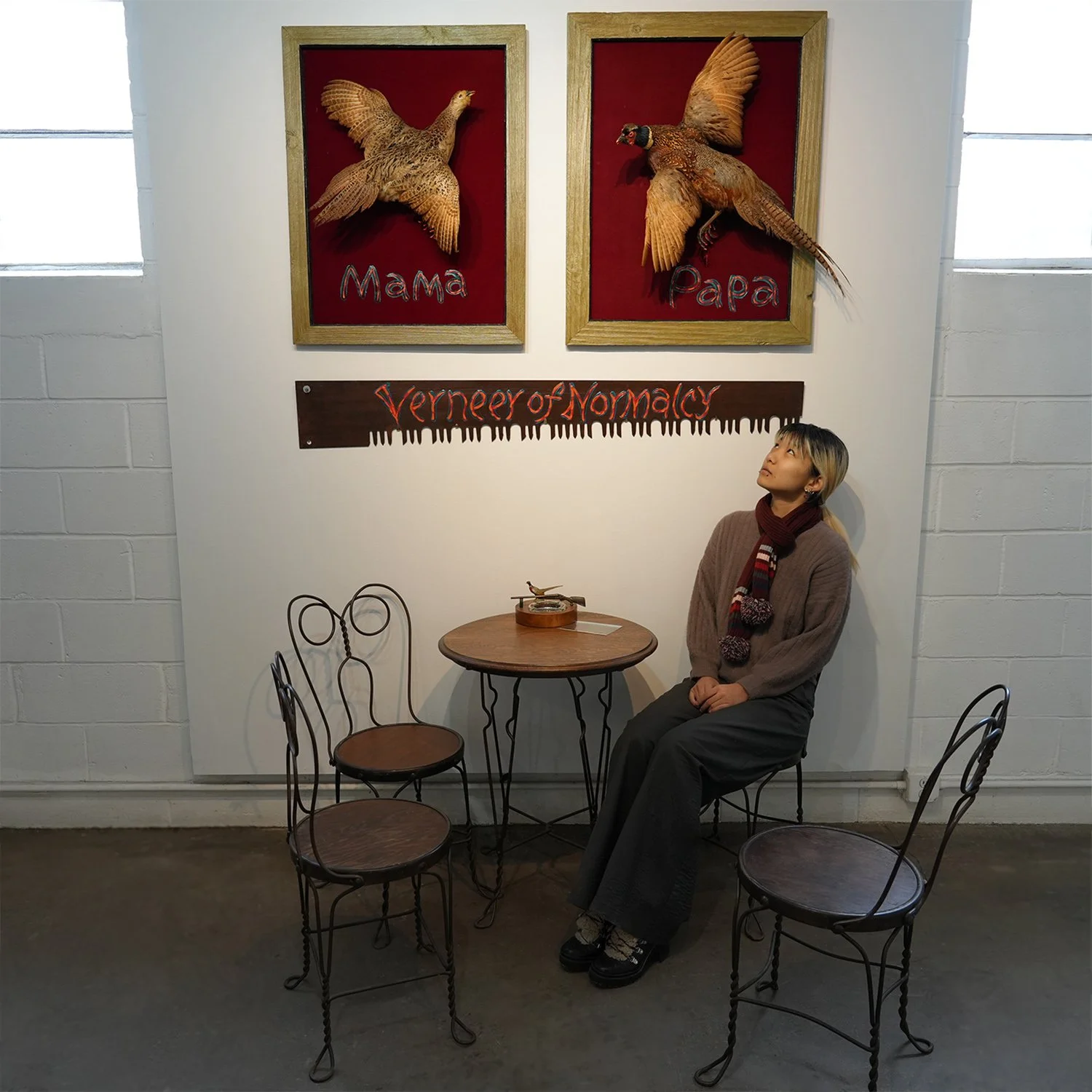
Pheasant Café. From Vector Sector, NE Sculpture Gallery, Minneapolis, MN. Found vintage ice cream parlor table & chairs, vintage logging saw, vintage pheasant ashtray, found mounted taxidermy male/female pheasants on velvet over wood frames, postcard, acrylic paint & gel medium, polyurethane. Size varies.
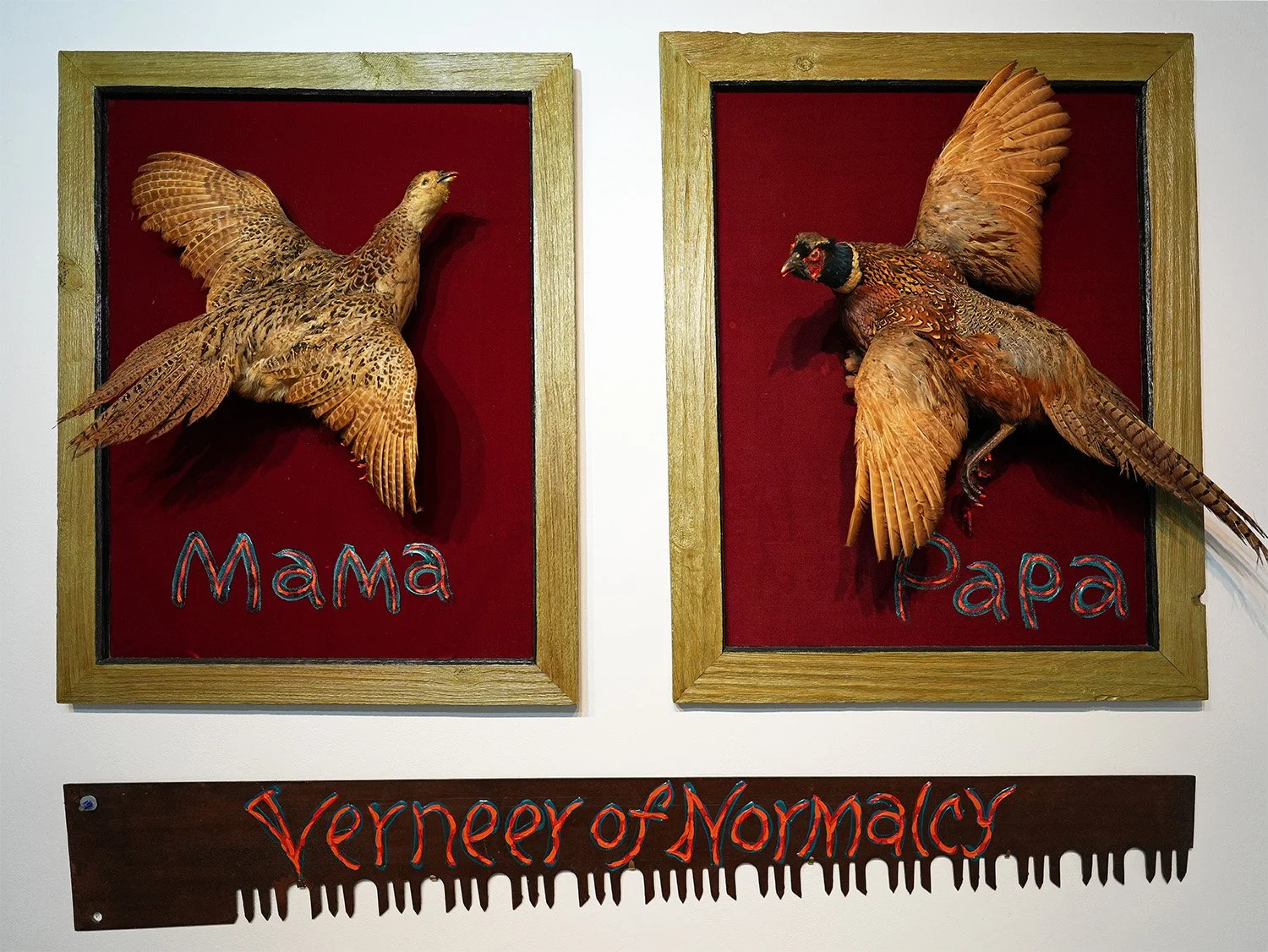
Pheasant Café – Verneer of Normalcy. From Vector Sector, NE Sculpture Gallery, Minneapolis, MN. Found vintage ice cream parlor table & chairs, vintage logging saw, vintage pheasant ashtray, found mounted taxidermy male/female pheasants on velvet over wood frame, acrylic paint & gel medium, polyurethane. Size varies.
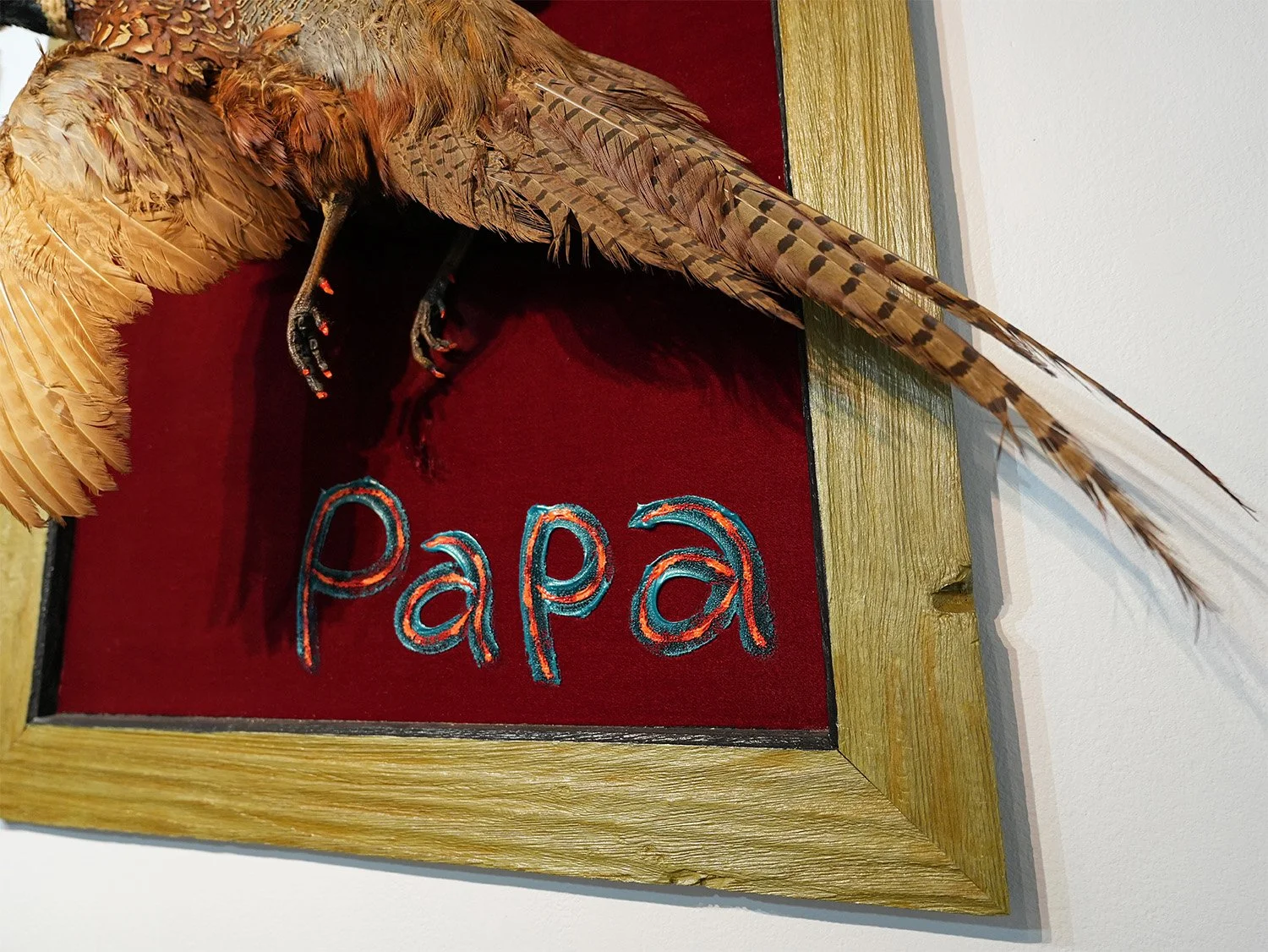
Pheasant Café – Papa Detail. From Vector Sector, NE Sculpture Gallery, Minneapolis, MN. Found vintage ice cream parlor table & chairs, vintage logging saw, vintage pheasant ashtray, found mounted taxidermy male/female pheasants on velvet over wood frame, acrylic paint & gel medium, polyurethane. Size varies.
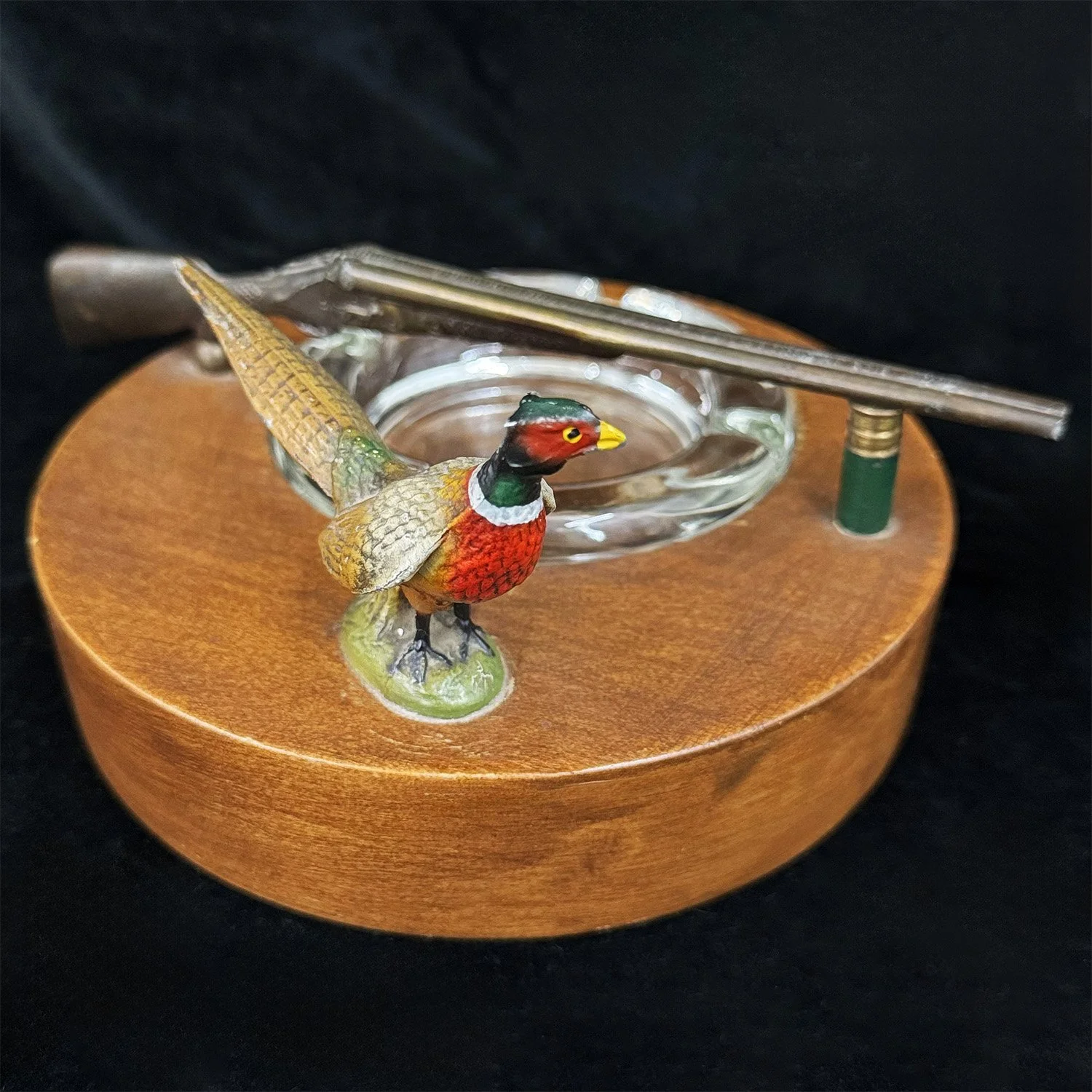
Pheasant Café – Vintage Pheasant Ashtray. From Vector Sector, NE Sculpture Gallery, Minneapolis, MN. Found vintage ice cream parlor table & chairs, vintage logging saw, vintage pheasant ashtray, found mounted taxidermy male/female pheasants on velvet over wood frame, acrylic paint & gel medium, polyurethane. Size varies.
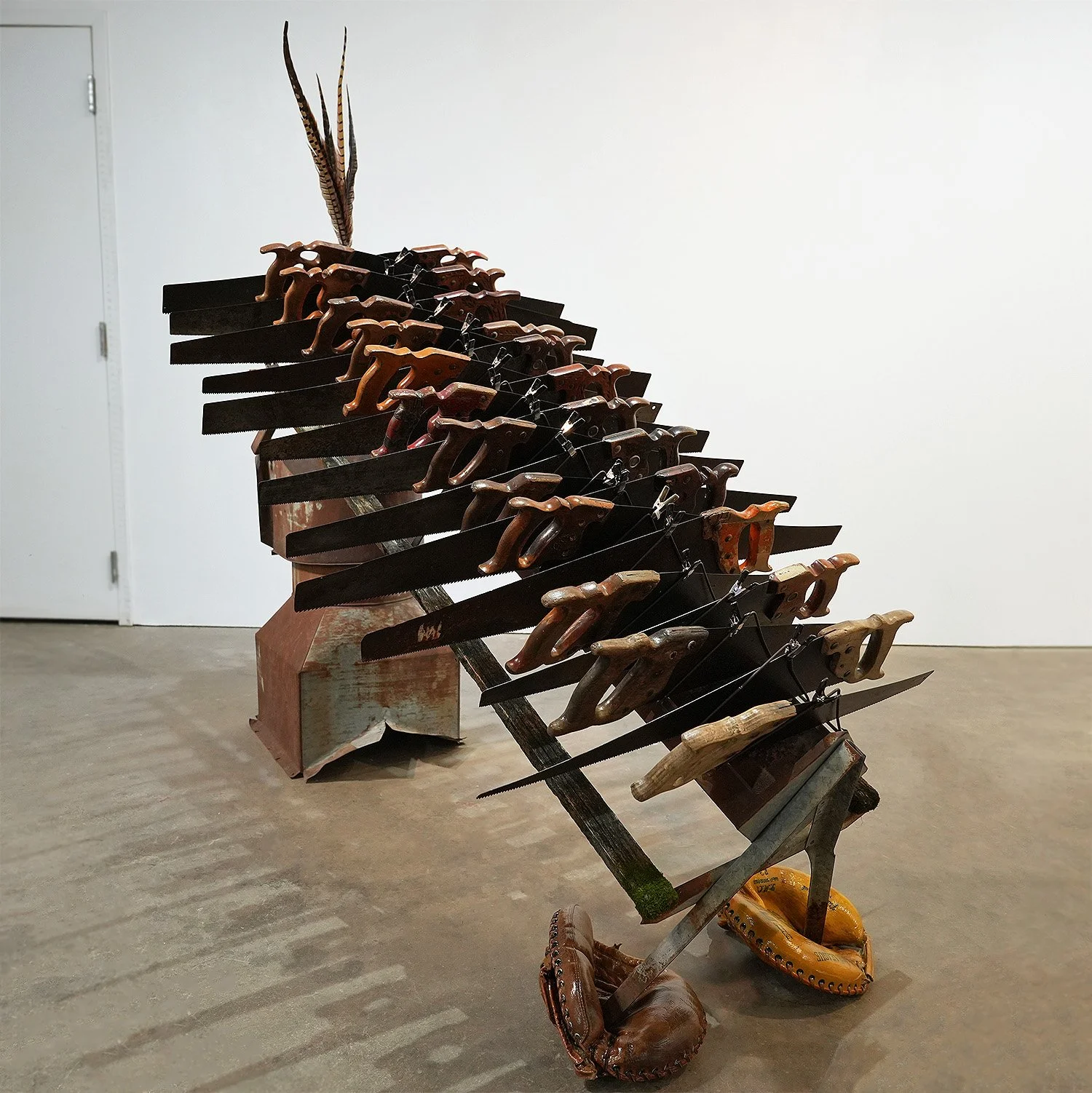
Saw Feeding Trough. From Vector Sector, NE Sculpture Gallery, Minneapolis, MN. Found vintage carpenter saws, vintage metal chicken feeder, polyurethane, metal barn cupola, catchers mitts, mini clamps, pheasant feathers. 4 x 8 x 6 feet.
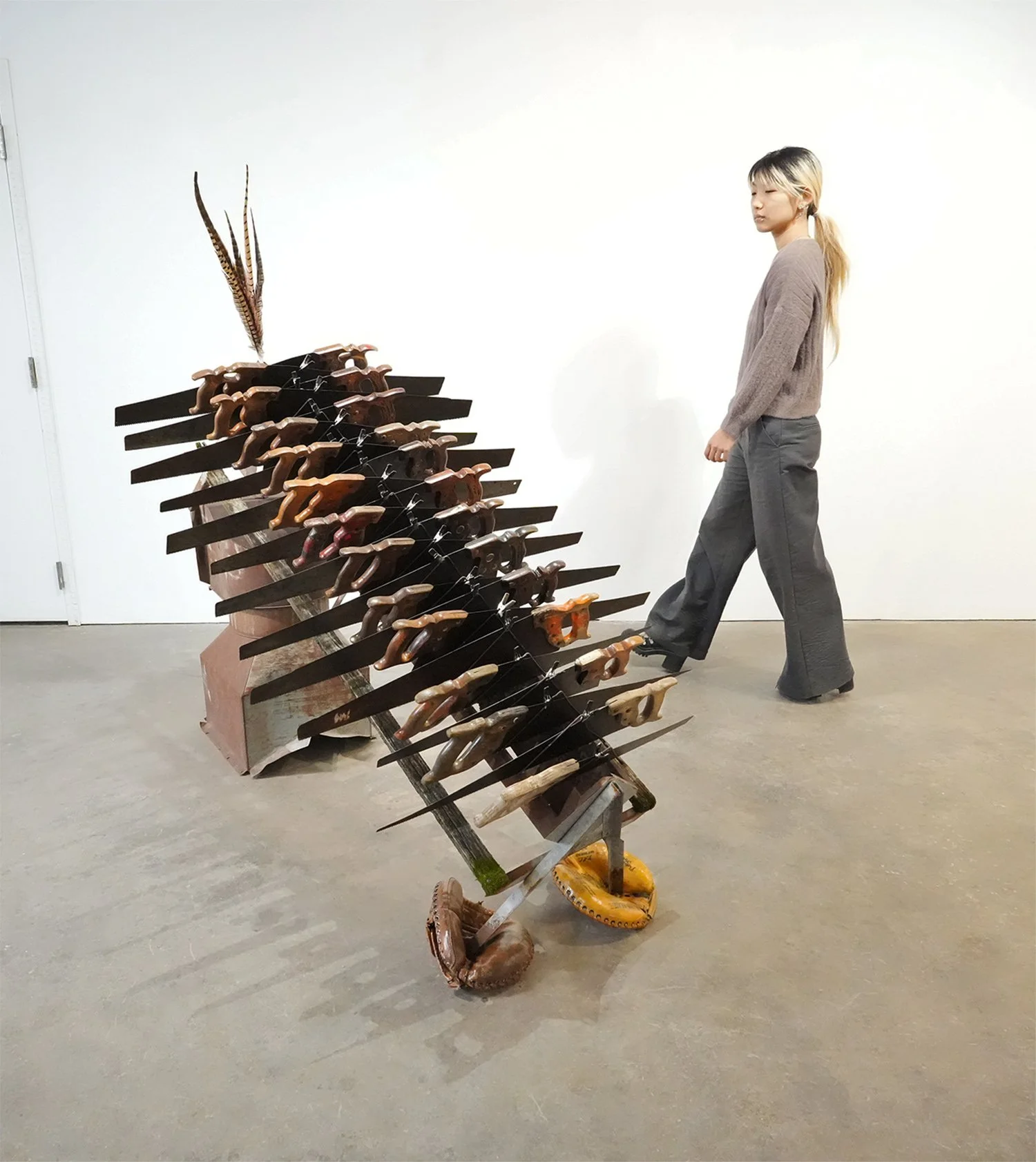
Saw Feeding Trough – Human Scale. From Vector Sector, NE Sculpture Gallery, Minneapolis, MN. Found vintage carpenter saws, vintage metal chicken feeder, polyurethane, metal barn cupola, catchers mitts, mini clamps, pheasant feathers. 4 x 8 x 6 feet.
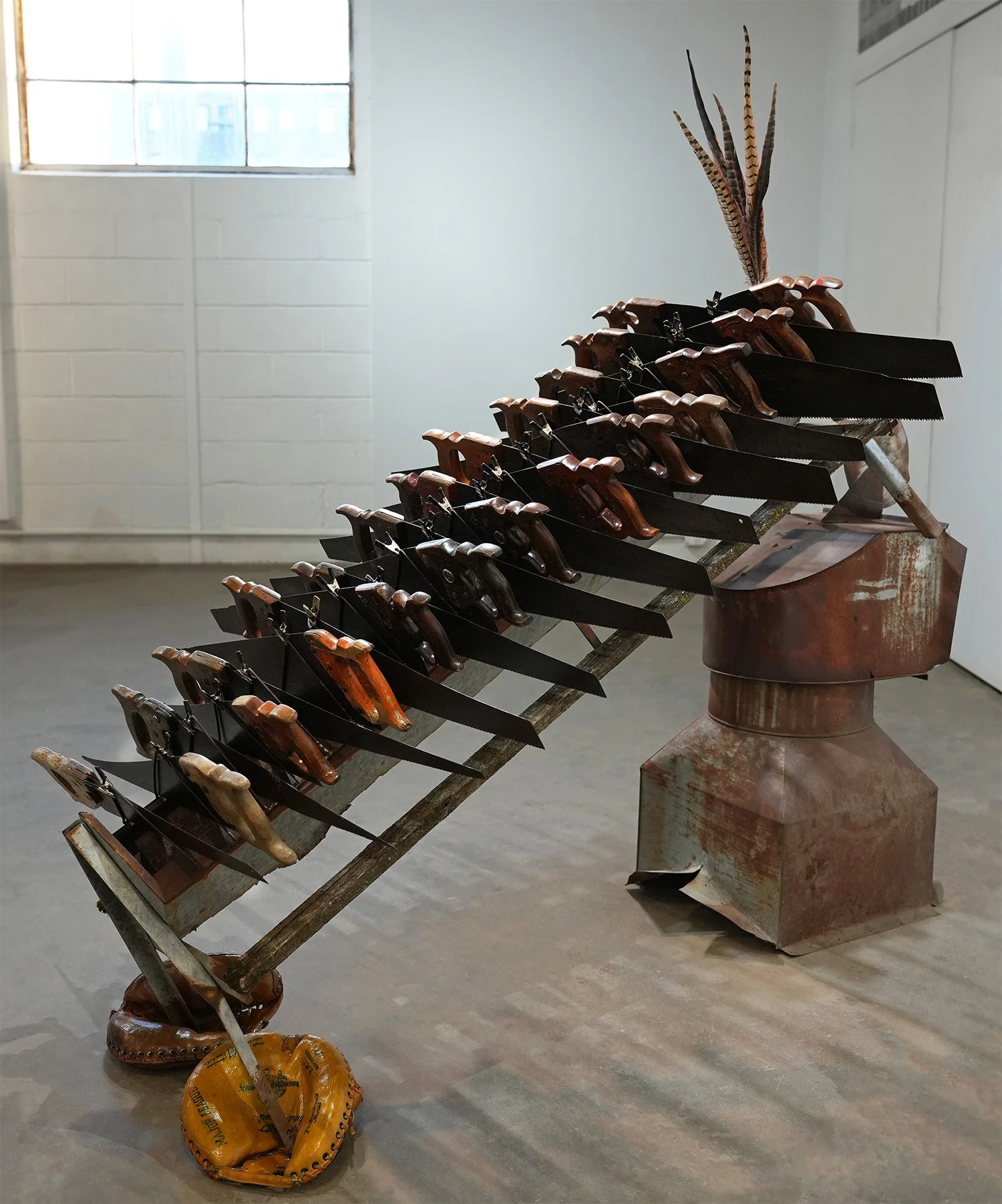
Saw Feeding Trough – Right Side. From Vector Sector, NE Sculpture Gallery, Minneapolis, MN. Found vintage carpenter saws, vintage metal chicken feeder, polyurethane, metal barn cupola, catchers mitts, mini clamps, pheasant feathers. 4 x 8 x 6 feet.
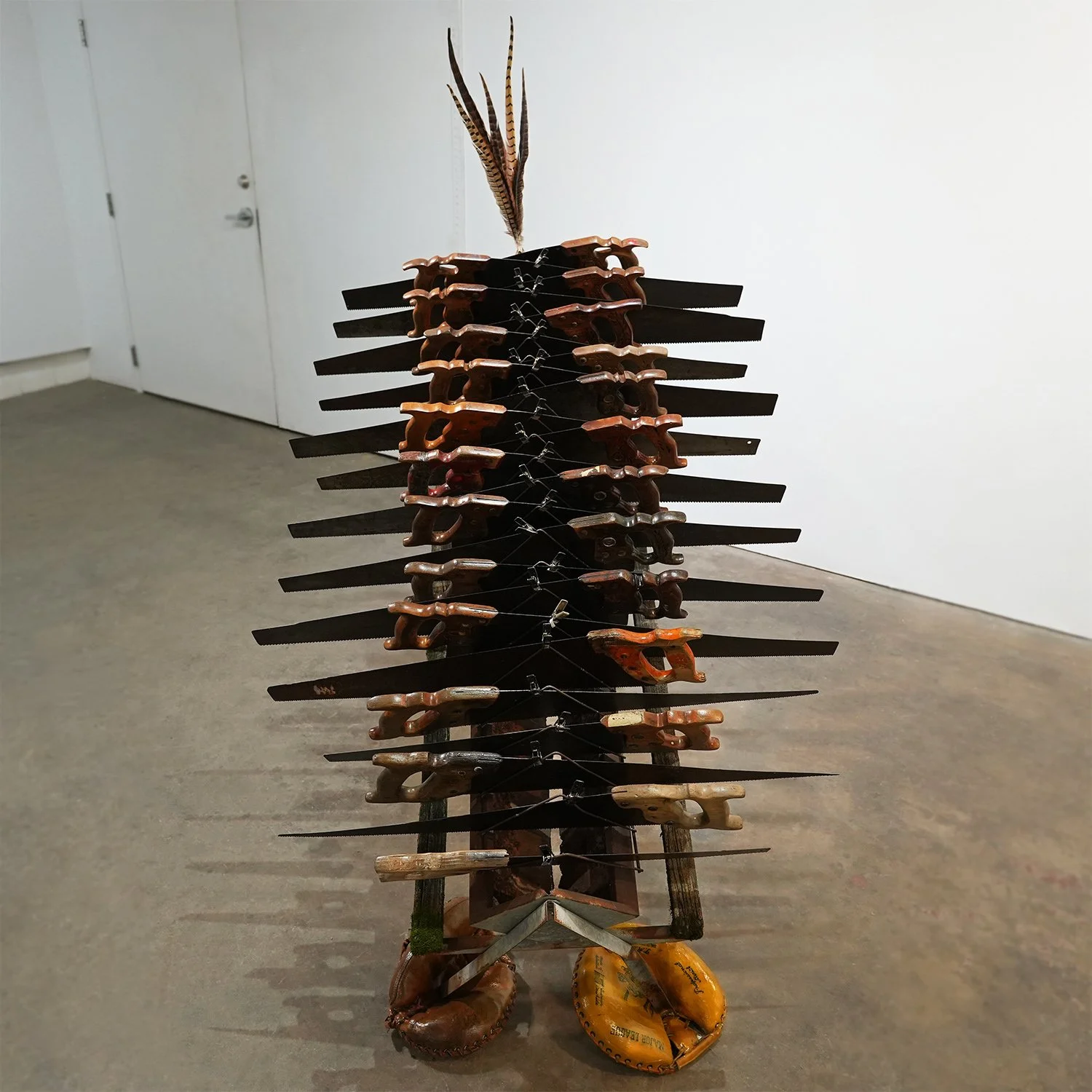
Saw Feeding Trough - Front. From Vector Sector, NE Sculpture Gallery, Minneapolis, MN. Found vintage carpenter saws, vintage metal chicken feeder, polyurethane, metal barn cupola, catchers mitts, mini clamps, pheasant feathers. 4 x 8 x 6 feet.
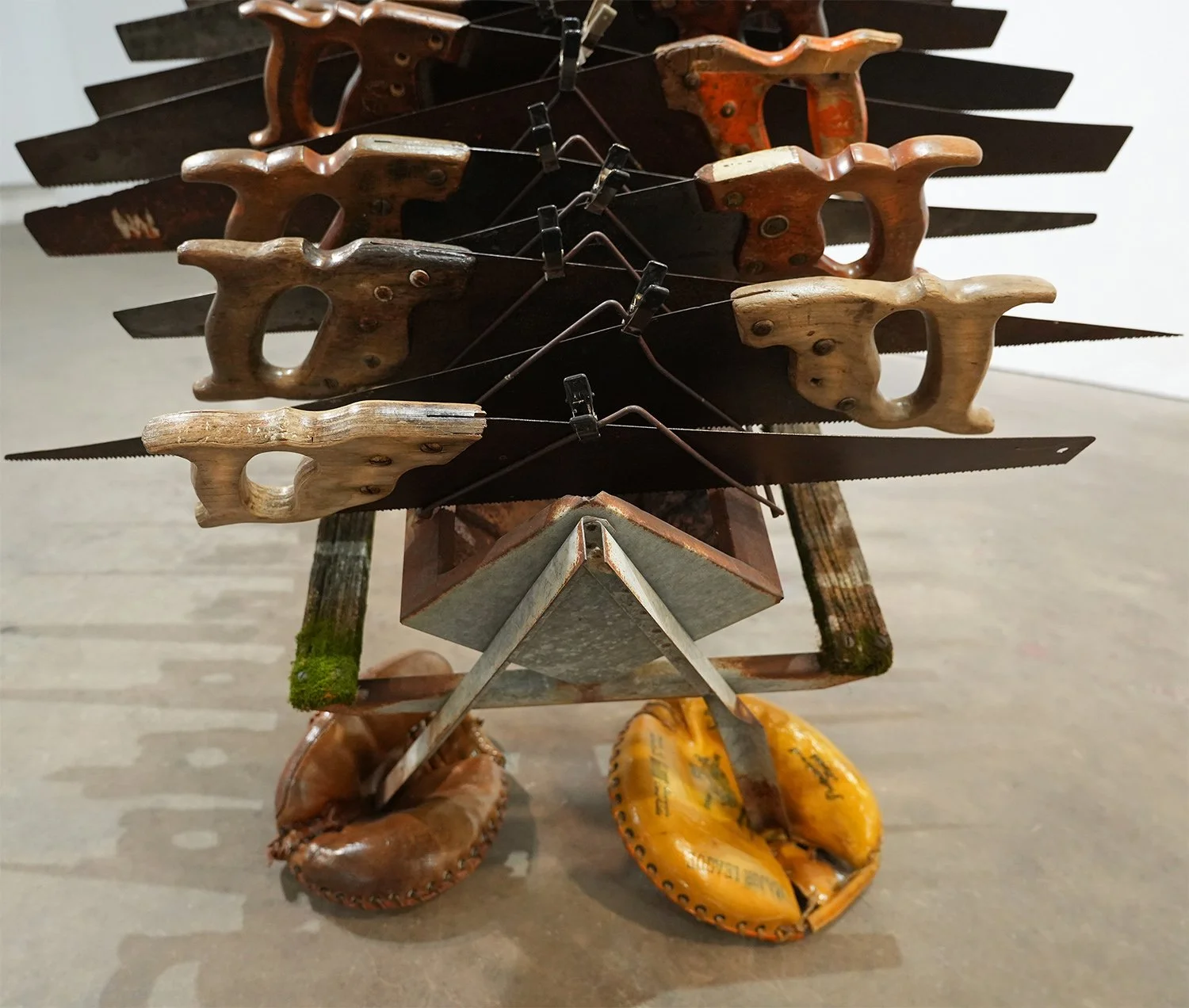
Saw Feeding Trough - Detail. From Vector Sector, NE Sculpture Gallery, Minneapolis, MN. Found vintage carpenter saws, vintage metal chicken feeder, polyurethane, metal barn cupola, catchers mitts, mini clamps, pheasant feathers. 4 x 8 x 6 feet.
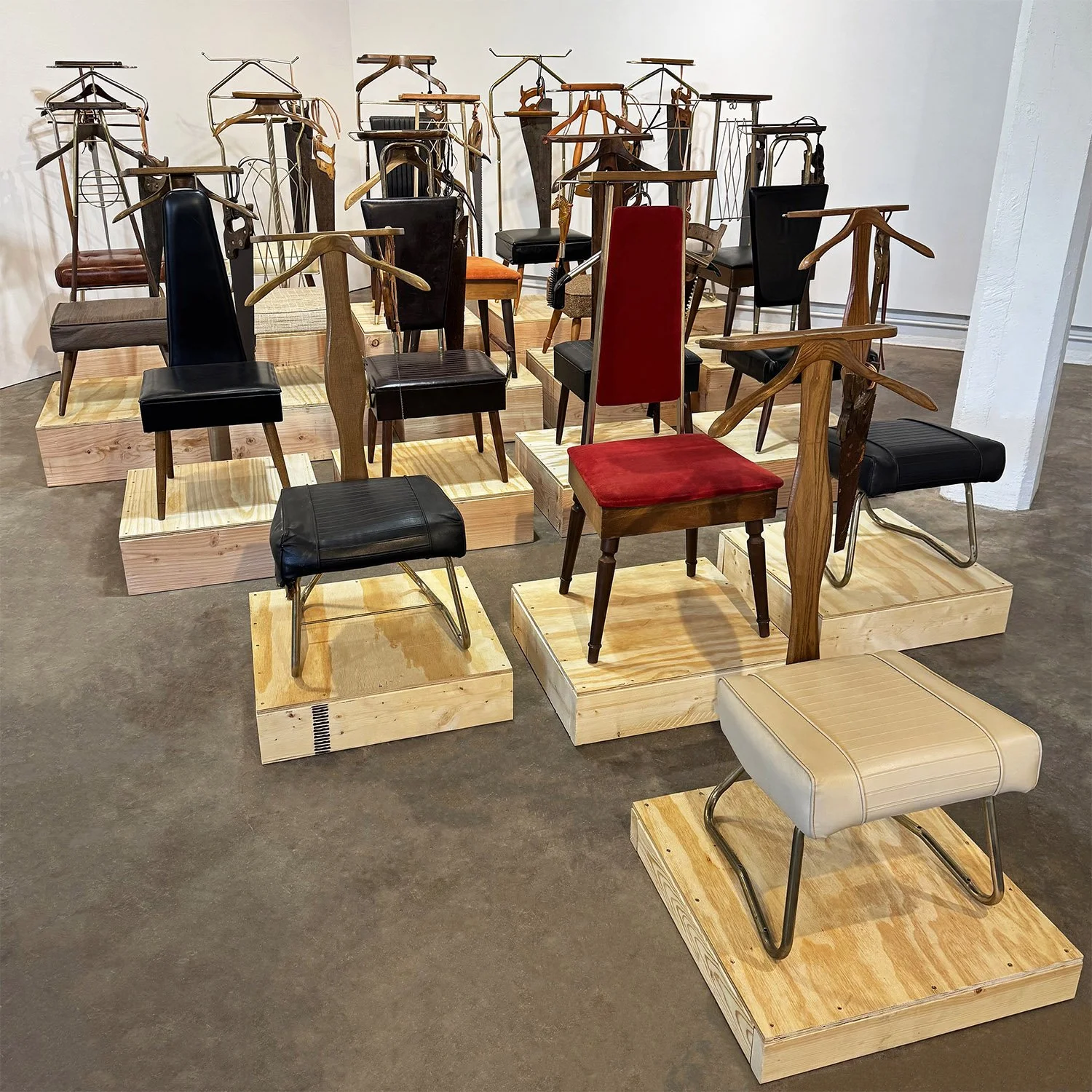
Marching Stewards – Front Left. From Vector Sector, NE Sculpture Gallery, Minneapolis, MN. Found vintage gentleman’s butler valet chairs, vintage carpenter saws, leather straps, pine wood, plywood, metal hardware. Size varies.
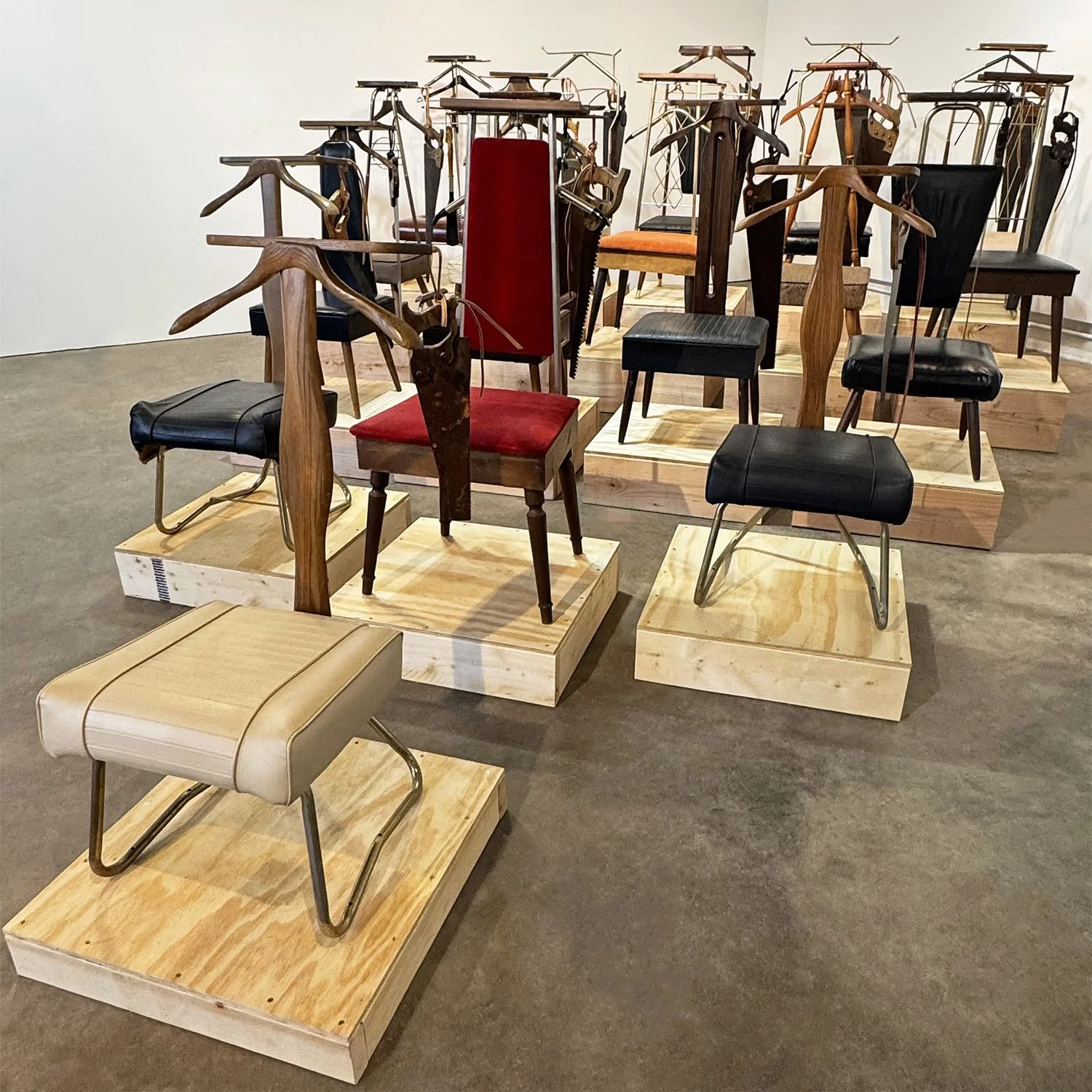
Marching Stewards – Front Right. From Vector Sector, NE Sculpture Gallery, Minneapolis, MN. Found vintage gentleman’s butler valet chairs, vintage carpenter saws, leather straps, pine wood, plywood, metal hardware. Size varies.
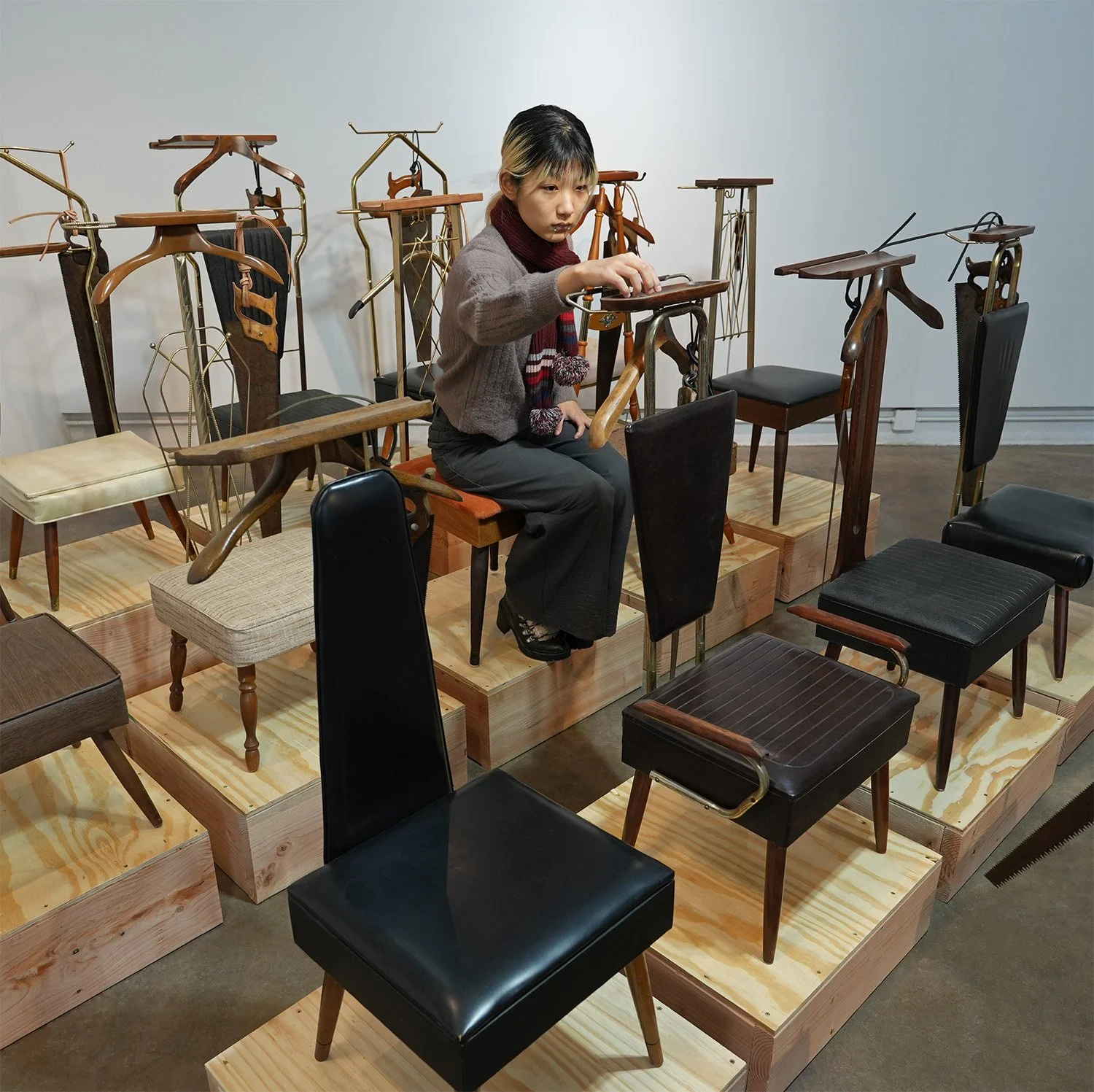
Marching Stewards - Human Scale. From Vector Sector, NE Sculpture Gallery, Minneapolis, MN. Found vintage gentleman’s butler valet chairs, vintage carpenter saws, leather straps, pine wood, plywood, metal hardware. Size varies.
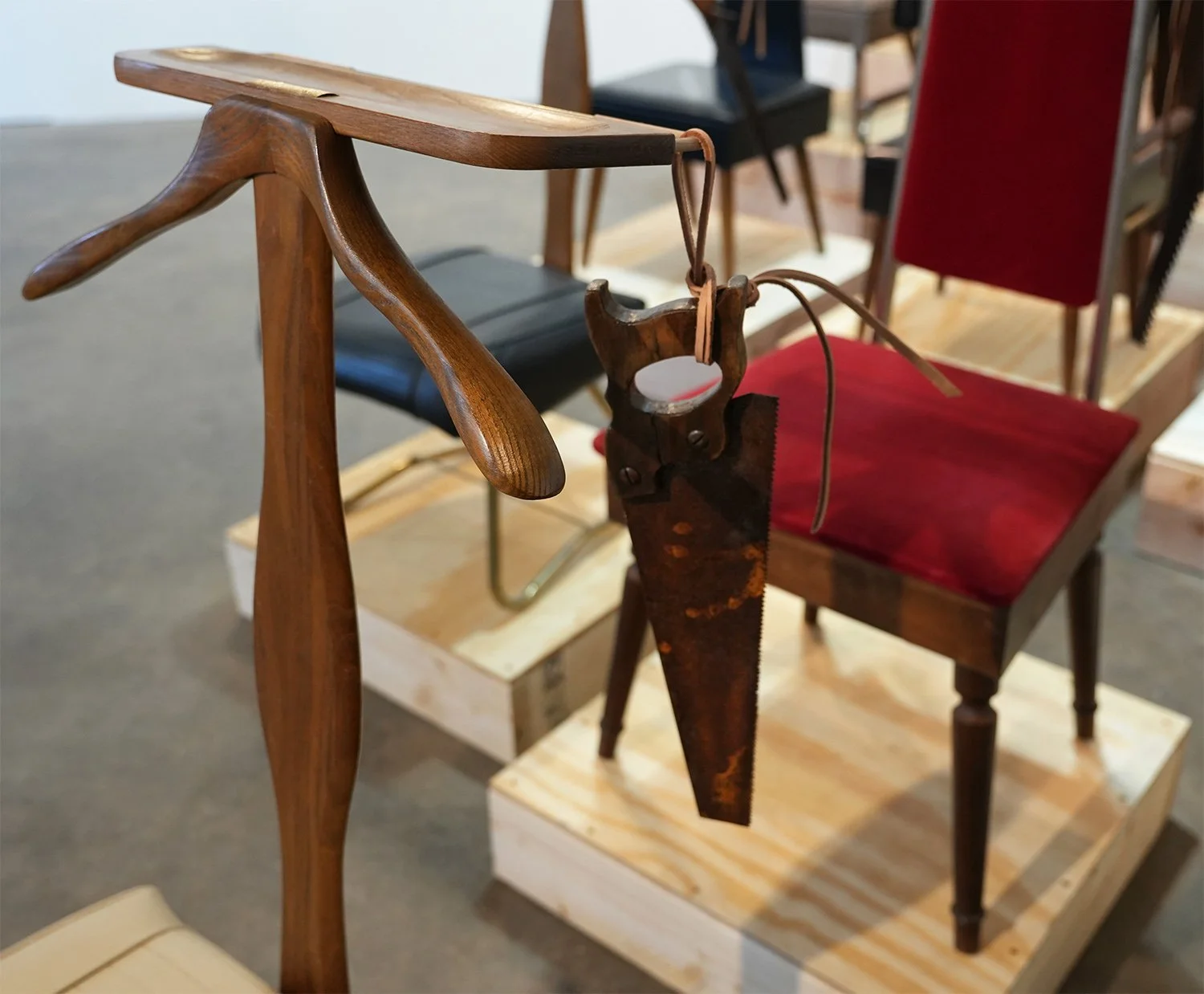
Marching Stewards - Detail. From Vector Sector, NE Sculpture Gallery, Minneapolis, MN. Found vintage gentleman’s butler valet chairs, vintage carpenter saws, leather straps, pine wood, plywood, metal hardware. Size varies.
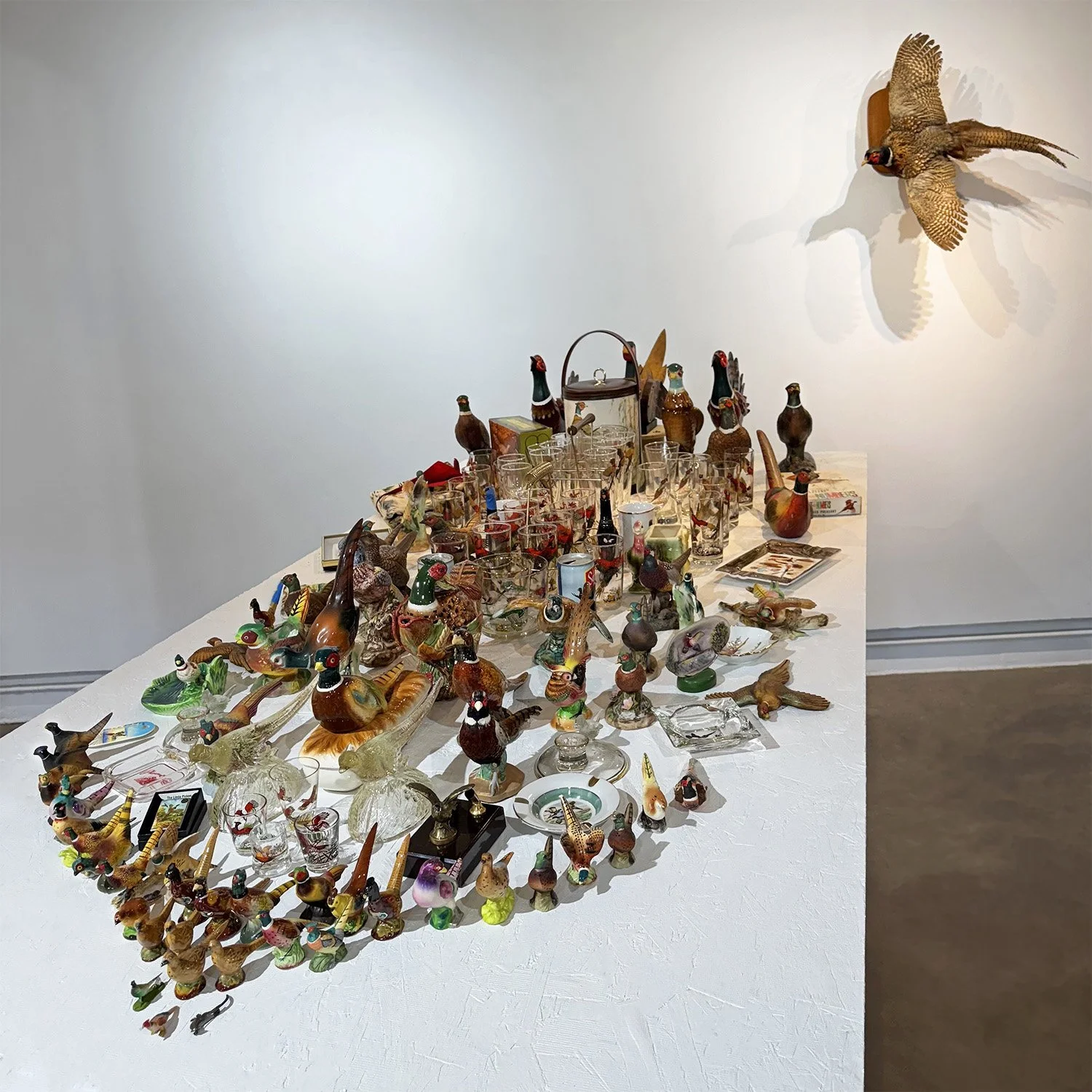
Flushing Fascism Fleet. From Vector Sector, NE Sculpture Gallery, Minneapolis, MN. Found vintage pheasant figurines & ephemera, pine wood, plywood, ceramic, textile, plastic, metal, glass. Platform 4 feet x 8 feet x 18 inches. Component sizes vary.
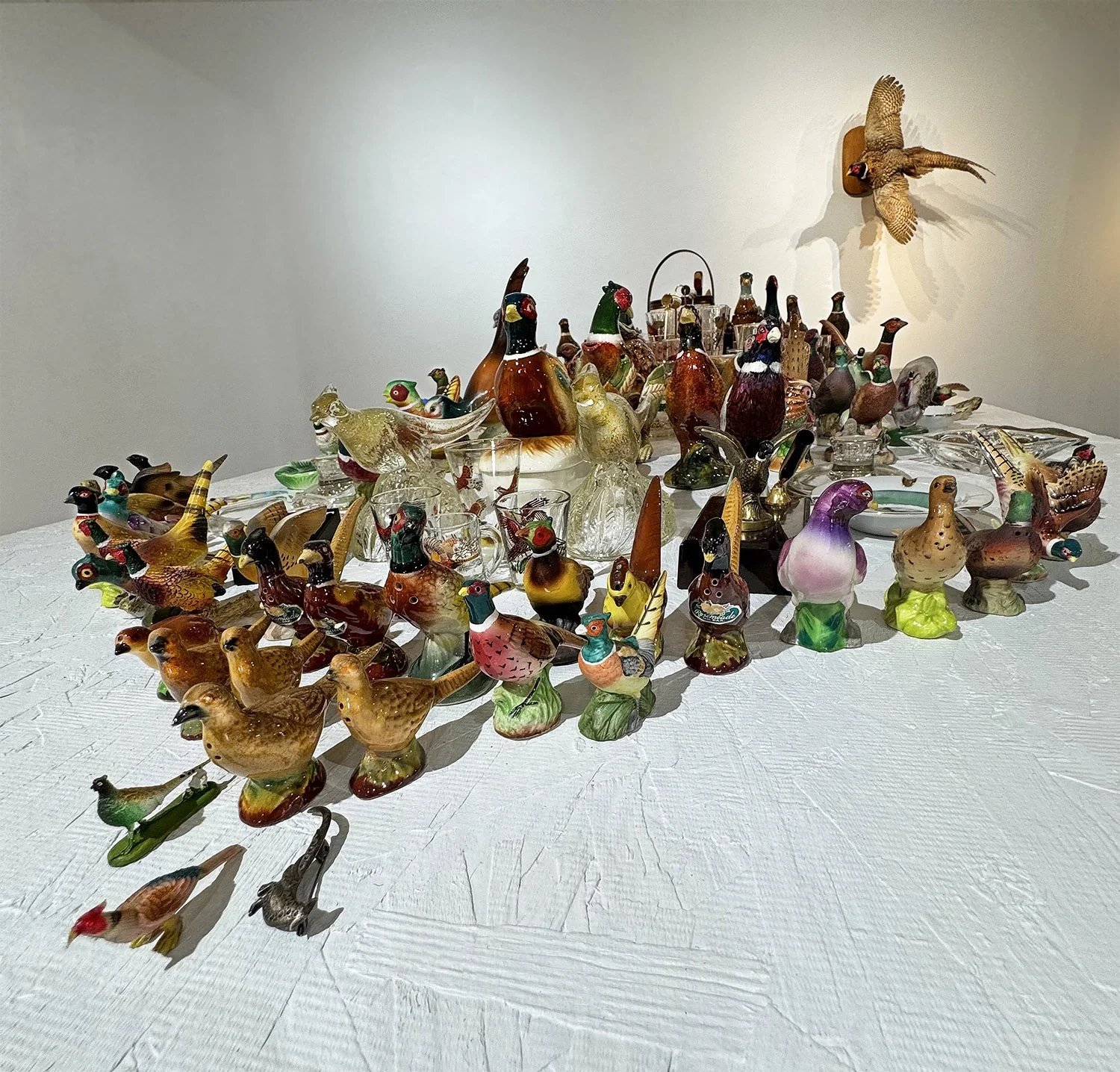
Flushing Fascism Fleet – Worms Eye View. From Vector Sector, NE Sculpture Gallery, Minneapolis, MN. Found vintage pheasant figurines & ephemera, pine wood, plywood, ceramic, textile, plastic, metal, glass. Platform 4 feet x 8 feet x 18 inches. Component sizes vary.
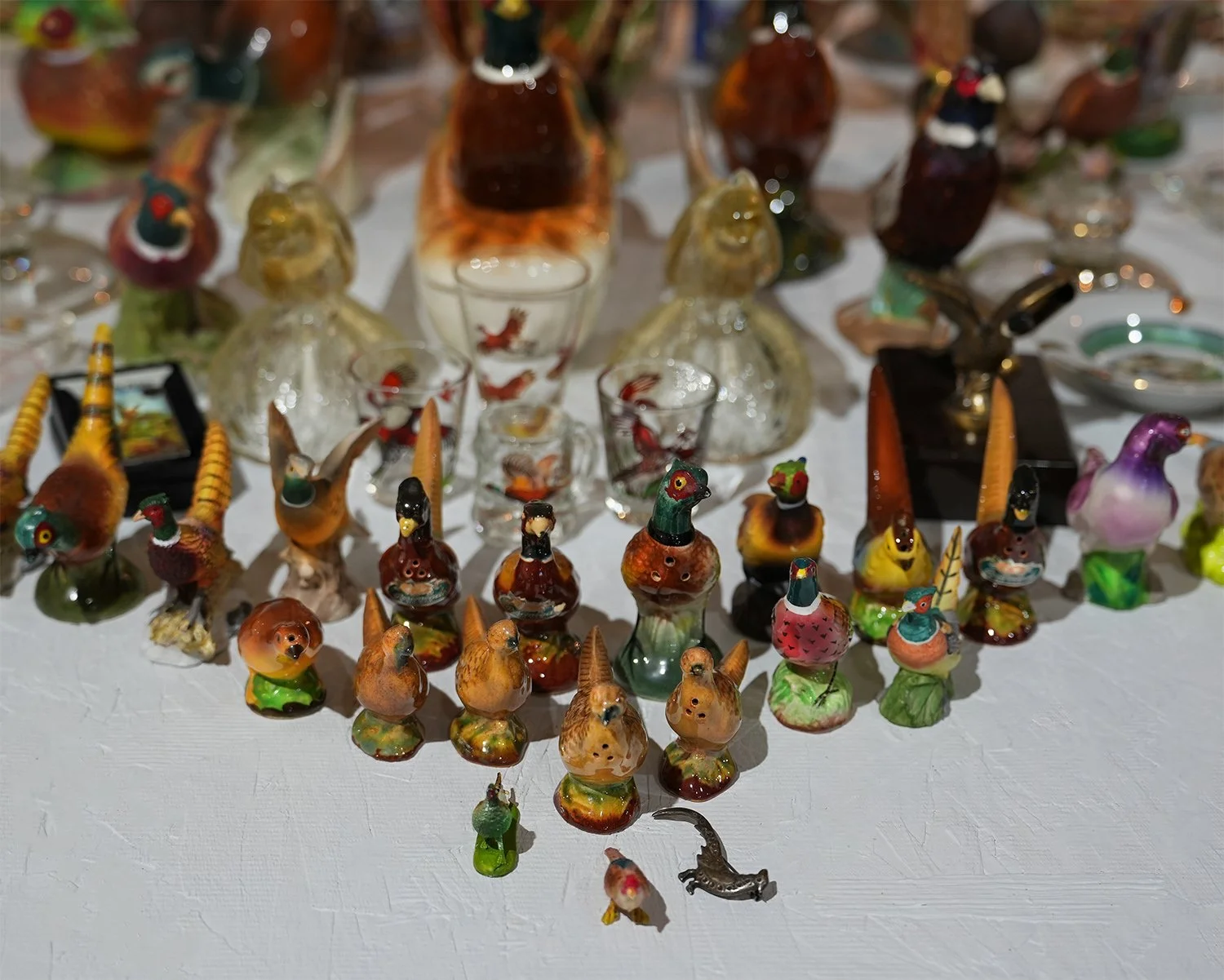
Flushing Fascism Fleet – Front Detail. From Vector Sector, NE Sculpture Gallery, Minneapolis, MN. Found vintage pheasant figurines & ephemera, pine wood, plywood, ceramic, textile, plastic, metal, glass. Platform 4 feet x 8 feet x 18 inches. Component sizes vary.
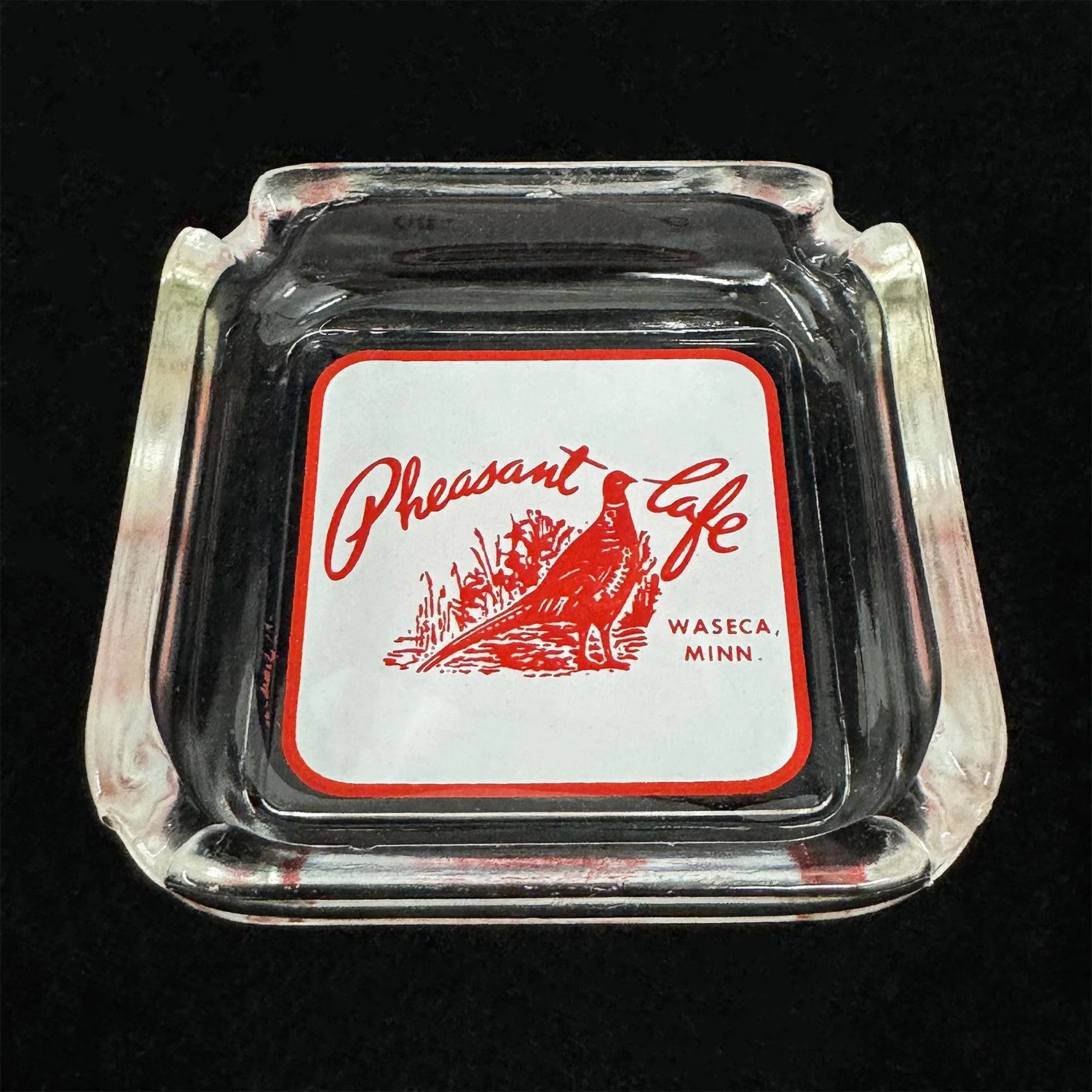
Flushing Fascism Fleet - Detail Pheasant Café Ashtray. From Vector Sector, NE Sculpture Gallery, Minneapolis, MN. Found vintage pheasant figurines & ephemera, pine wood, plywood, ceramic, textile, plastic, metal, glass. Platform 4 feet x 8 feet x 18 inches. Component sizes vary.
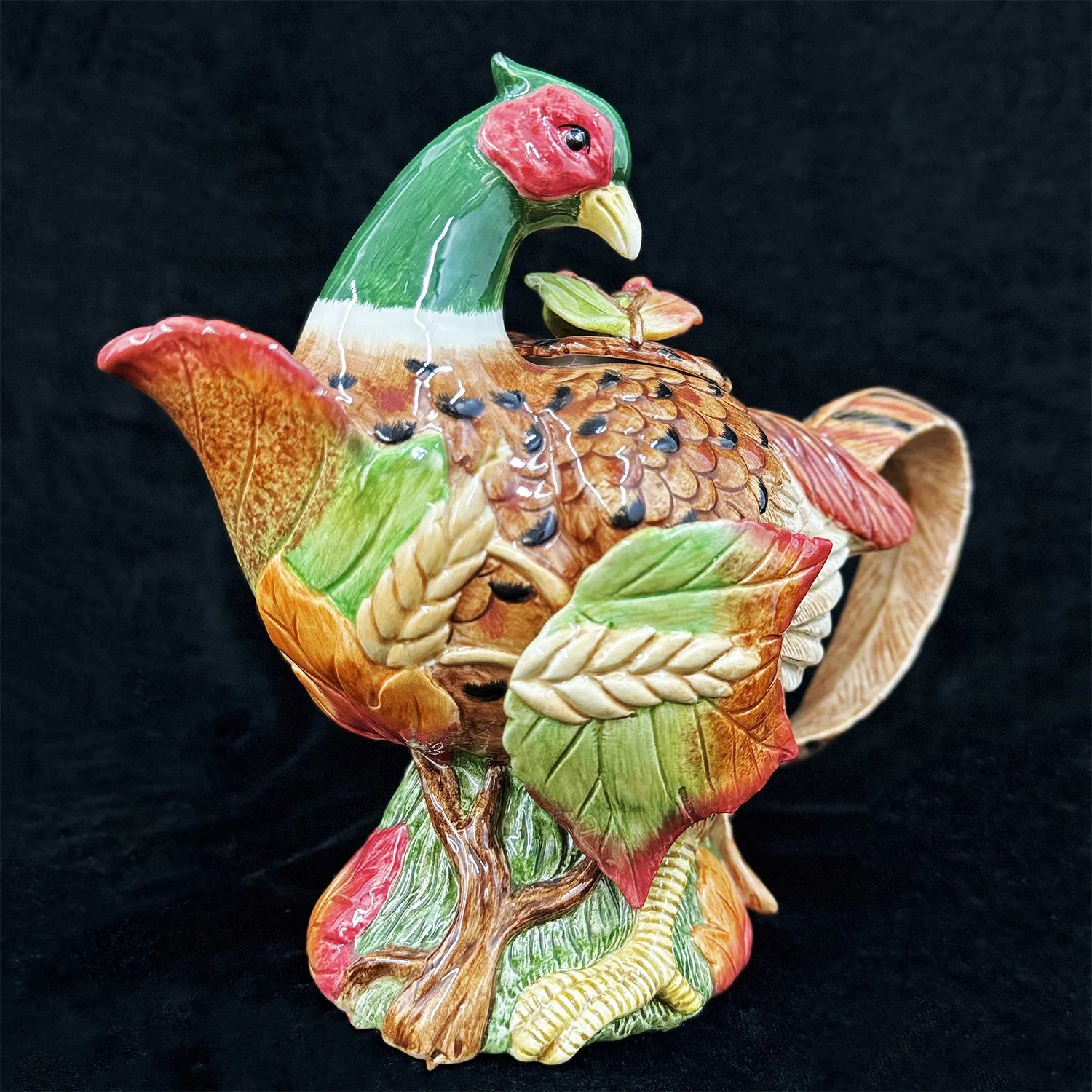
Flushing Fascism Fleet - Detail Tea Pot. From Vector Sector, NE Sculpture Gallery, Minneapolis, MN. Found vintage pheasant figurines & ephemera, pine wood, plywood, ceramic, textile, plastic, metal, glass. Platform 4 feet x 8 feet x 18 inches. Component sizes vary.
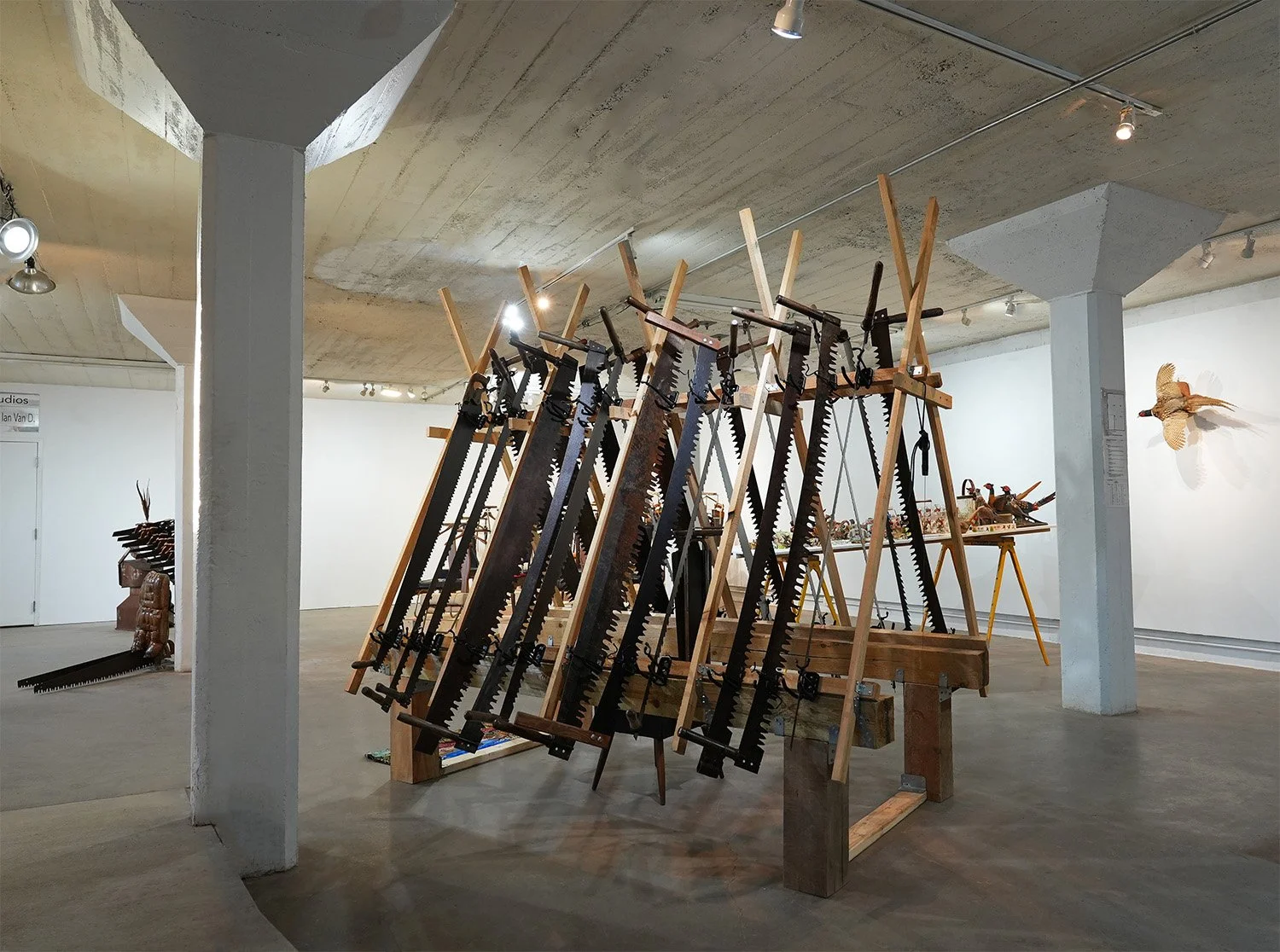
Sit In - Gallery View. From Vector Sector, NE Sculpture Gallery, Minneapolis, MN. Vintage found two man logging saws, vintage gentleman’s butler valet chair, rough sawn pine wood, metal hardware, vintage carpenter saw, leather, found pheasant rug, Various bendable ties. Overall 8 x 8 x 4.5 feet. Saw sizes vary.
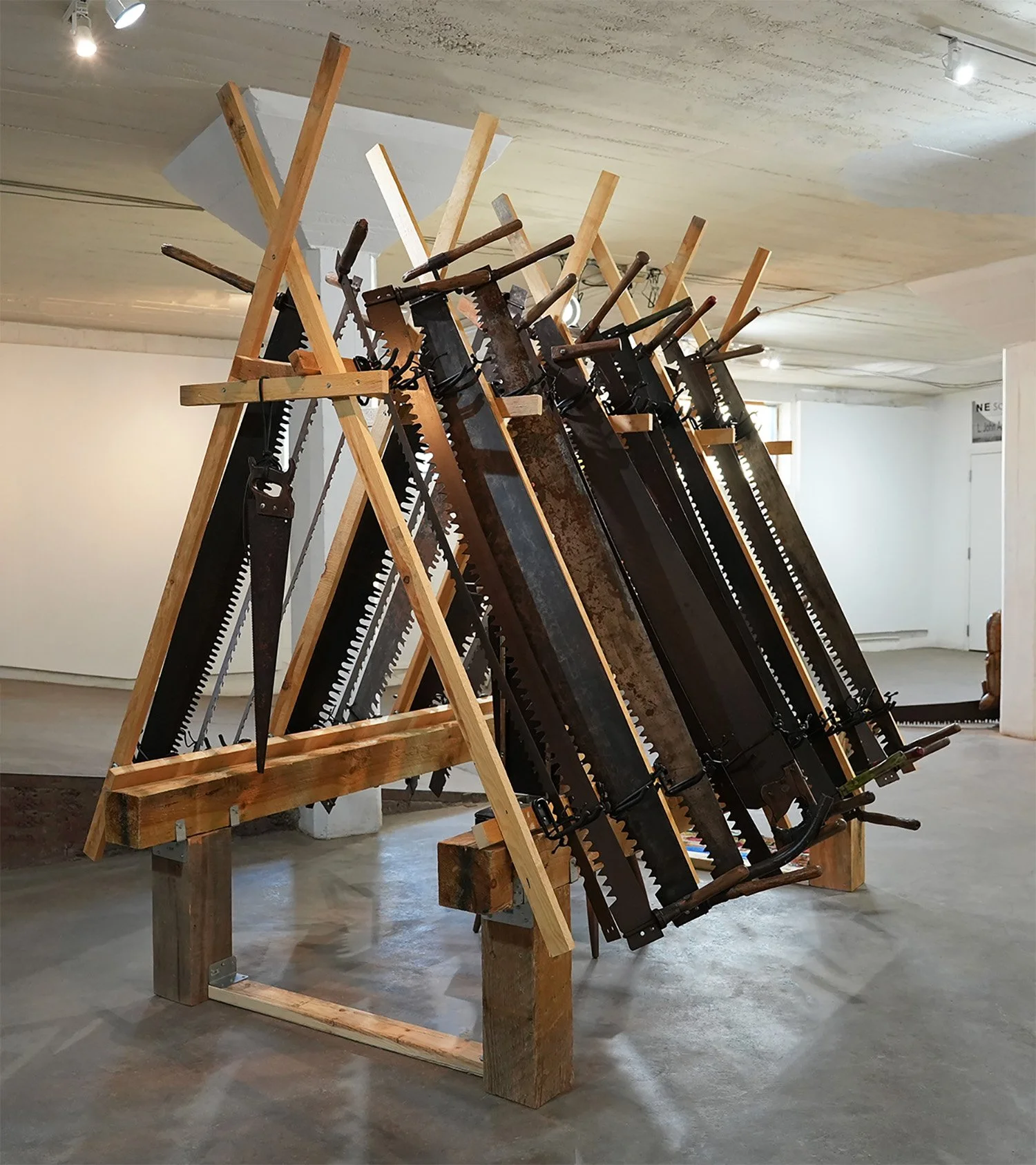
Sit In – Back View. From Vector Sector, NE Sculpture Gallery, Minneapolis, MN. Vintage found two man logging saws, vintage gentleman’s butler valet chair, rough sawn pine wood, metal hardware, vintage carpenter saw, leather, found pheasant rug, Various bendable ties. Overall 8 x 8 x 4.5 feet. Saw sizes vary.
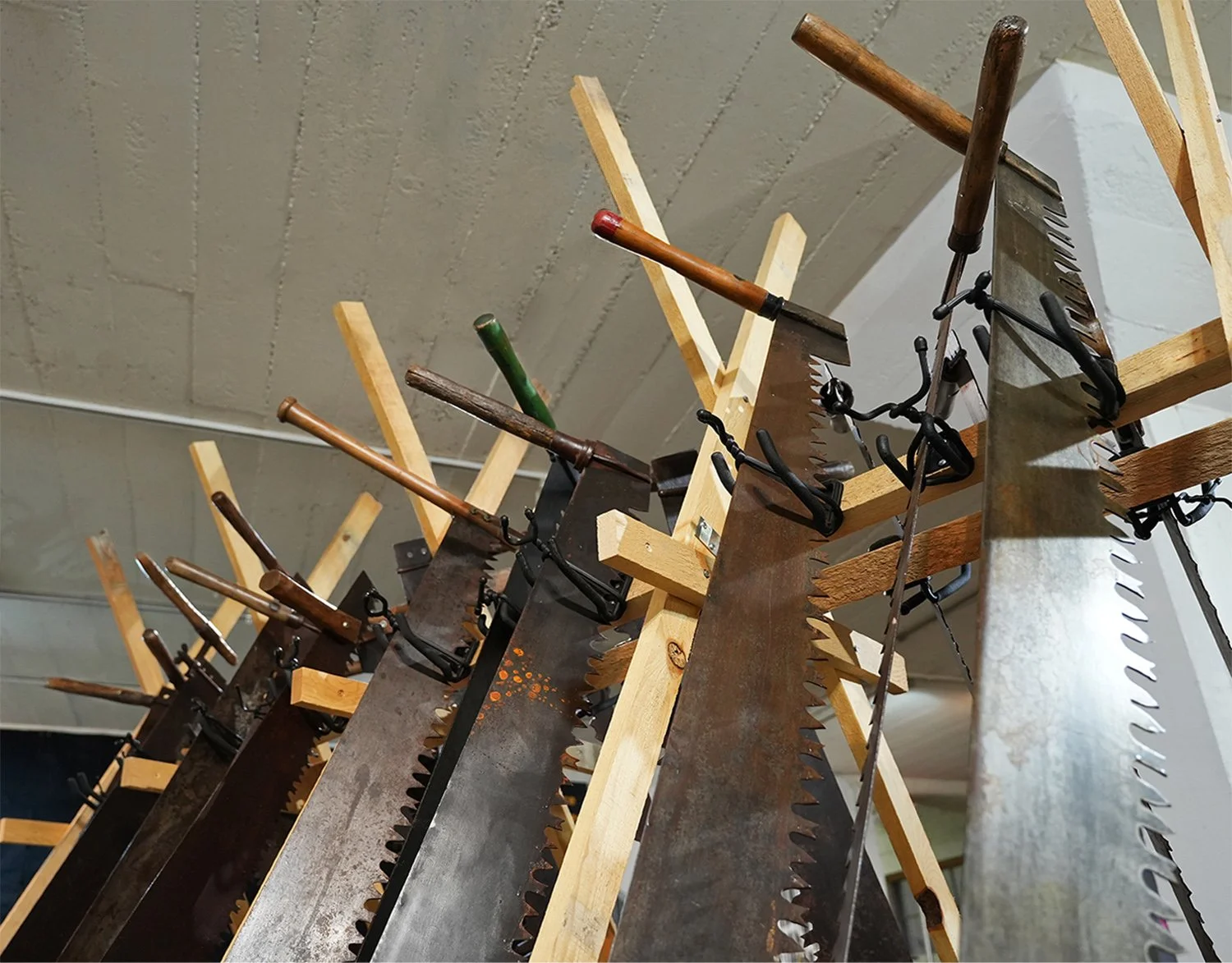
Sit In – Side Detail. From Vector Sector, NE Sculpture Gallery, Minneapolis, MN. Vintage found two man logging saws, vintage gentleman’s butler valet chair, rough sawn pine wood, metal hardware, vintage carpenter saw, leather, found pheasant rug, Various bendable ties. Overall 8 x 8 x 4.5 feet. Saw sizes vary.
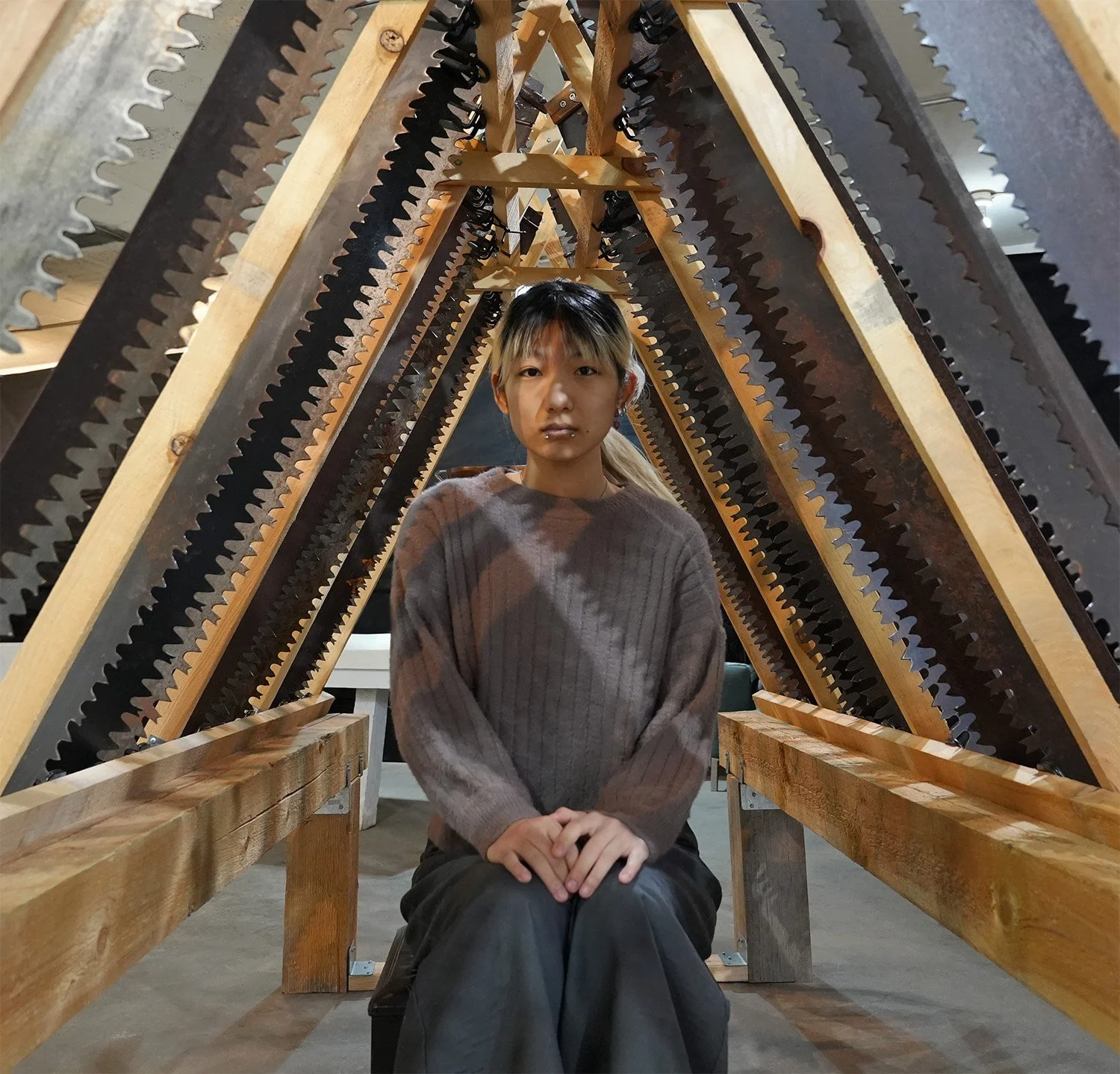
Sit In – Human Scale. From Vector Sector, NE Sculpture Gallery, Minneapolis, MN. Vintage found two man logging saws, vintage gentleman’s butler valet chair, rough sawn pine wood, metal hardware, vintage carpenter saw, leather, found pheasant rug, Various bendable ties. Overall 8 x 8 x 4.5 feet. Saw sizes vary.
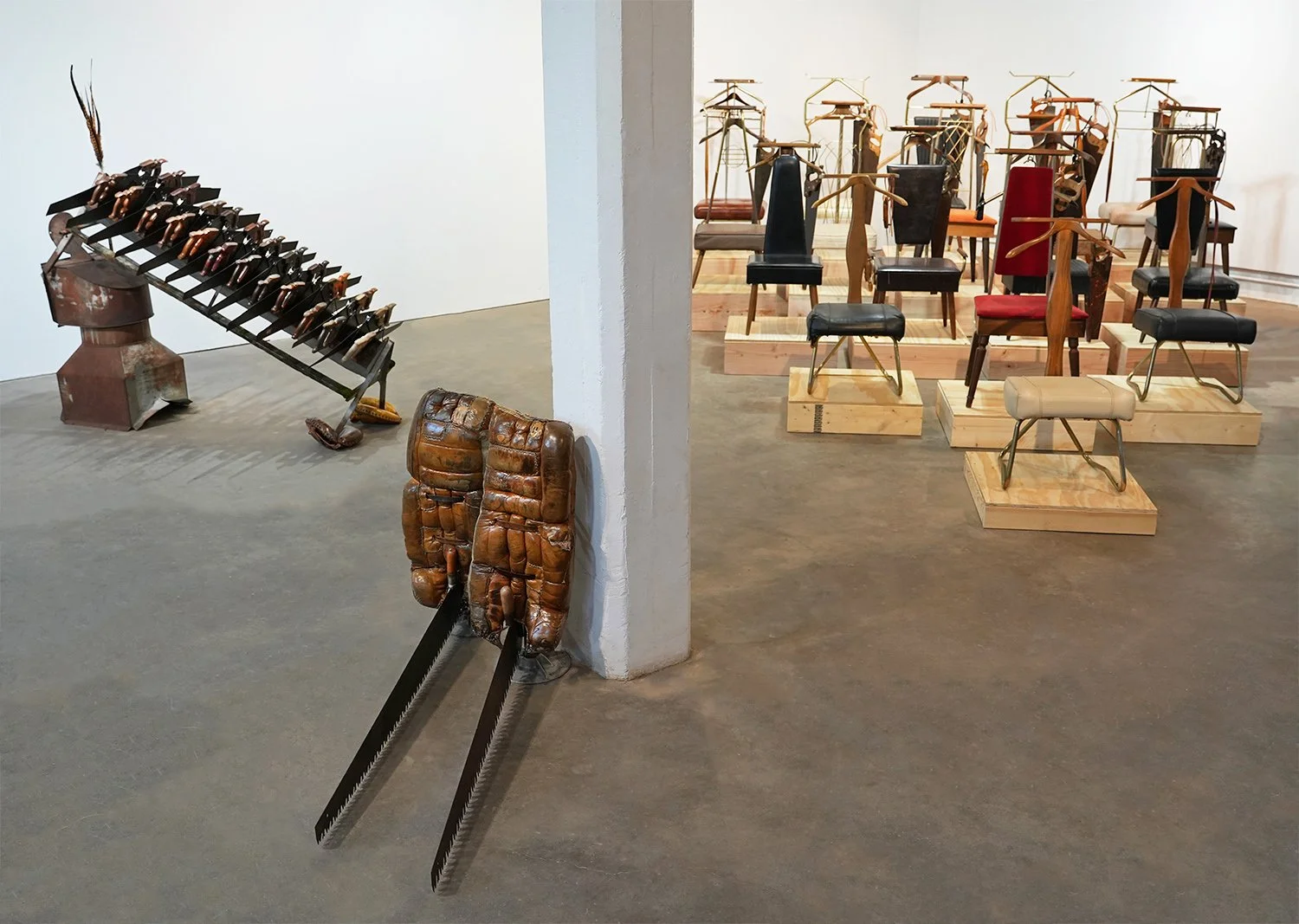
Hockey Practice is Canceled Today - Gallery View. From Vector Sector, NE Sculpture Gallery, Minneapolis, MN. Found vintage hockey goalie pads, one man logging saws, polyurethane, metal dock pipes with bases. 32 x 57 x 20 Inches.
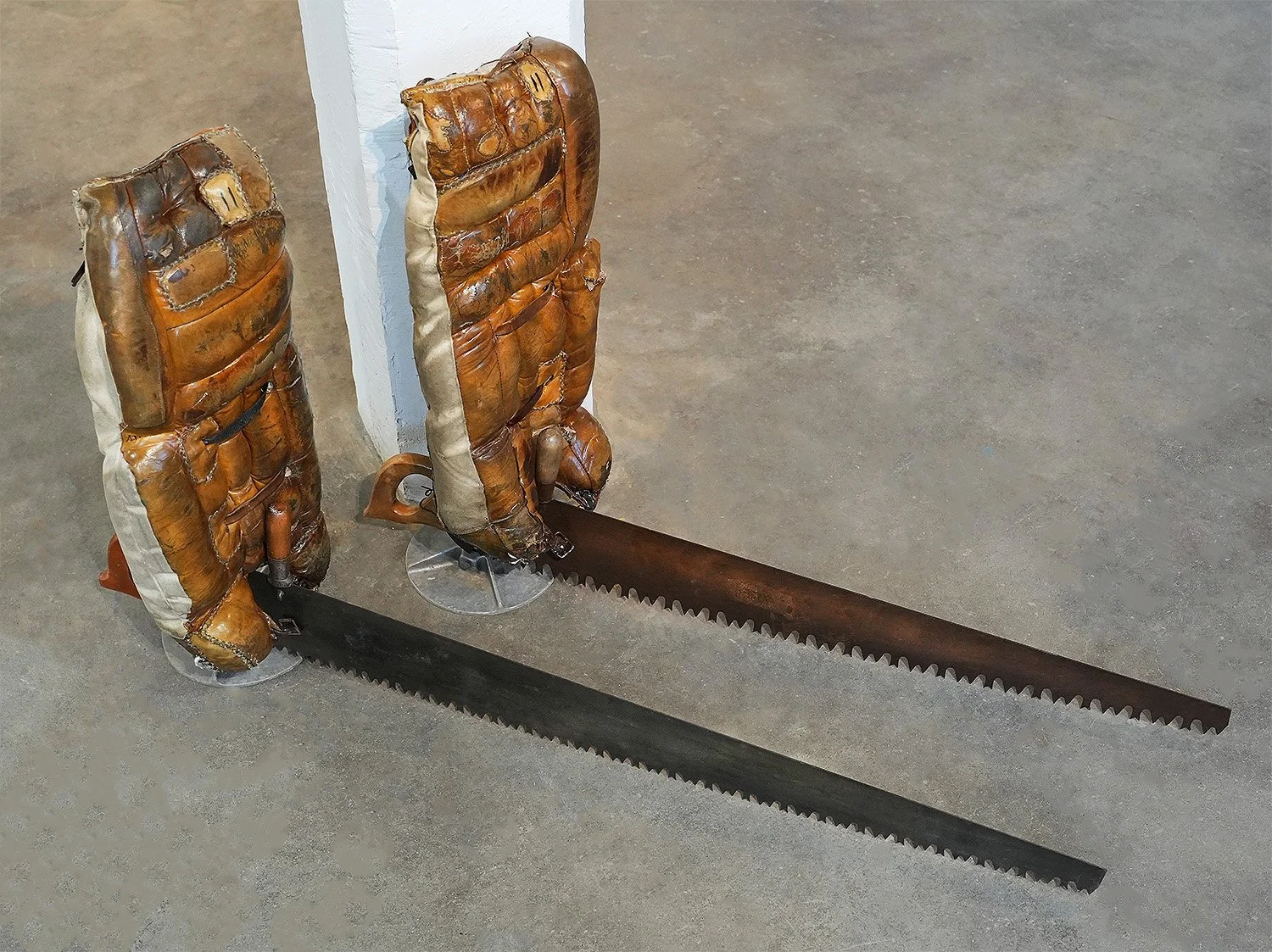
Hockey Practice is Canceled Today. From Vector Sector, NE Sculpture Gallery, Minneapolis, MN. Found vintage hockey goalie pads, one man logging saws, polyurethane, metal dock pipes with bases. 32 x 57 x 20 Inches.
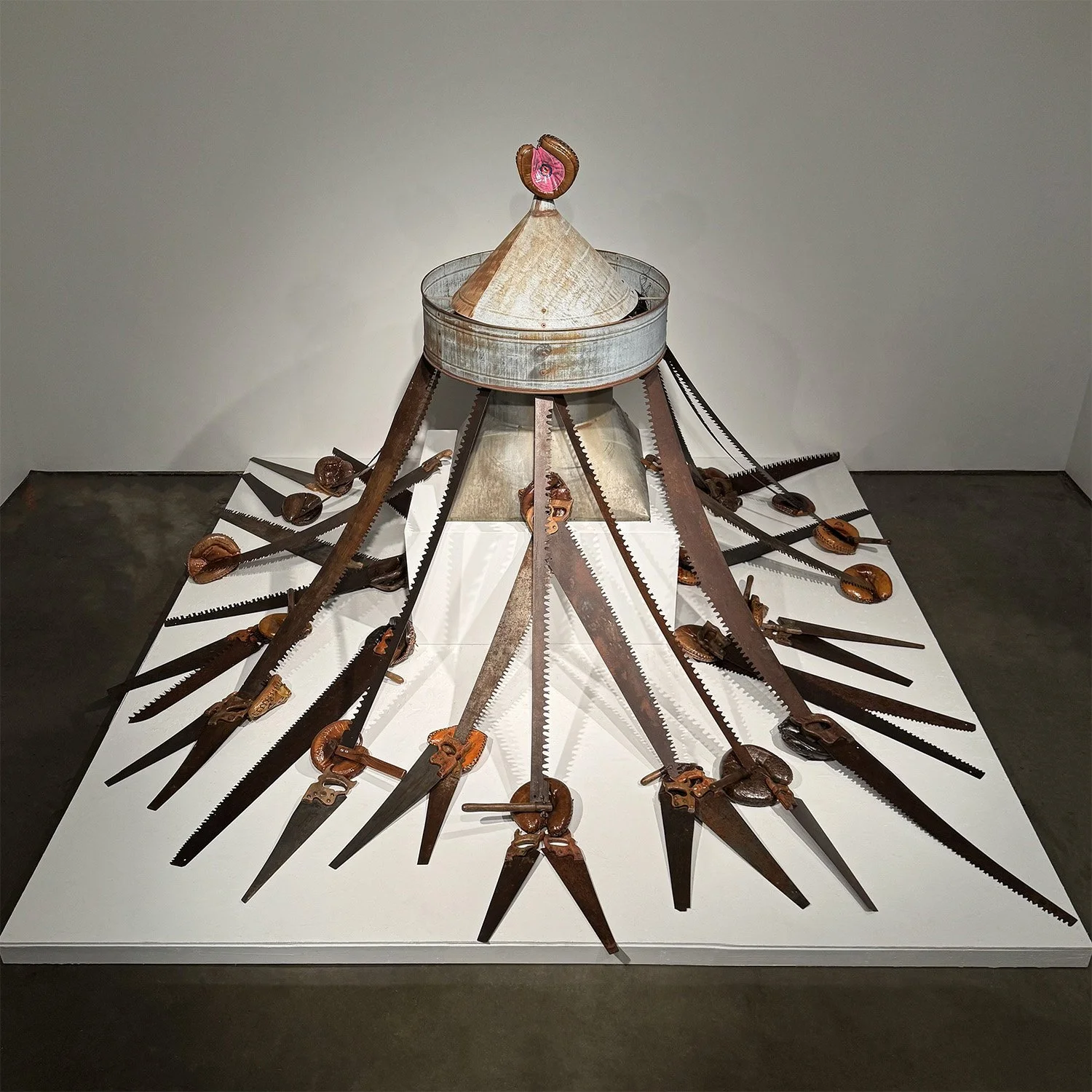
Cupola Venting North. From Vector Sector, NE Sculpture Gallery & Casket Arts, Minneapolis, MN. Vintage metal barn cupola, found vintage two & one-man logging & carpenter saws, vintage catchers mitt, metal hardware, rough sawn pine, acrylic paint & gel medium, house paint, choreographed audio loop with works via Justin McGrath & Nine-Inch Nails. North platform 10 x 12 x 13 feet.
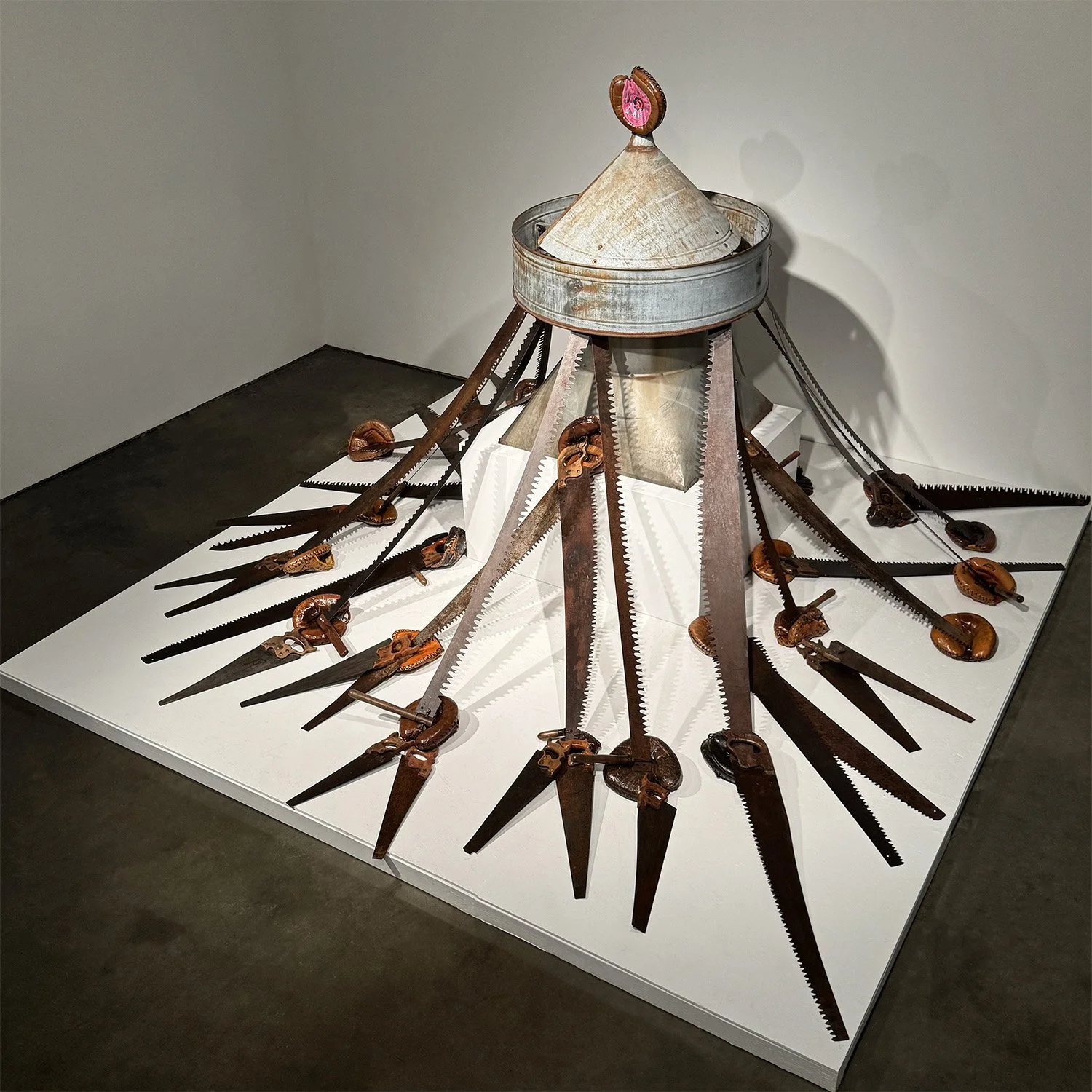
Cupola Venting North. From Vector Sector, NE Sculpture Gallery & Casket Arts, Minneapolis, MN. Vintage metal barn cupola, found vintage two & one-man logging & carpenter saws, vintage catchers mitt, metal hardware, rough sawn pine, acrylic paint & gel medium, house paint, choreographed audio loop with works via Justin McGrath & Nine-Inch Nails. North platform 10 x 12 x 13 feet.
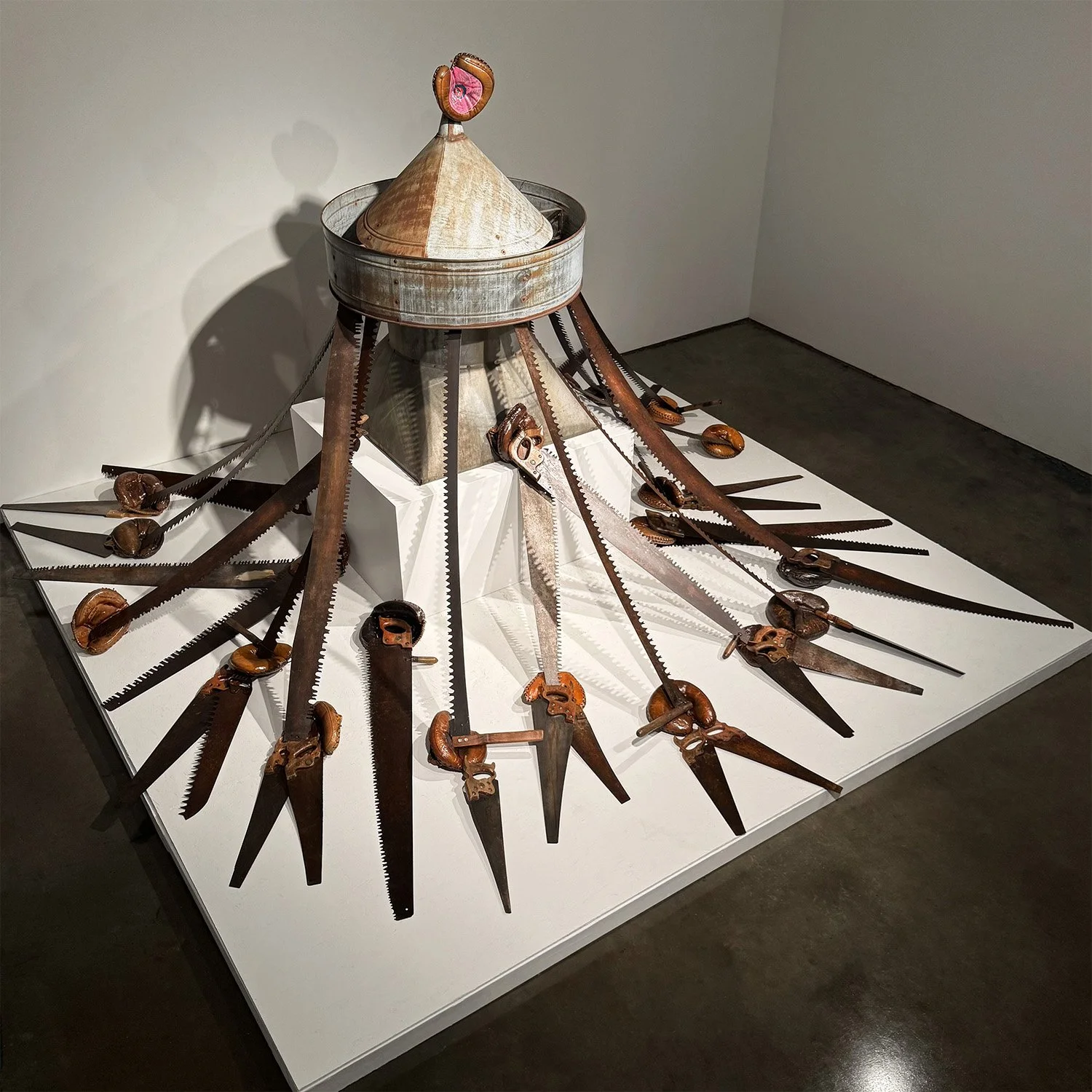
Cupola Venting North. From Vector Sector, NE Sculpture Gallery & Casket Arts, Minneapolis, MN. Vintage metal barn cupola, found vintage two & one-man logging & carpenter saws, vintage catchers mitt, metal hardware, rough sawn pine, acrylic paint & gel medium, house paint, choreographed audio loop with works via Justin McGrath & Nine-Inch Nails. North platform 10 x 12 x 13 feet.
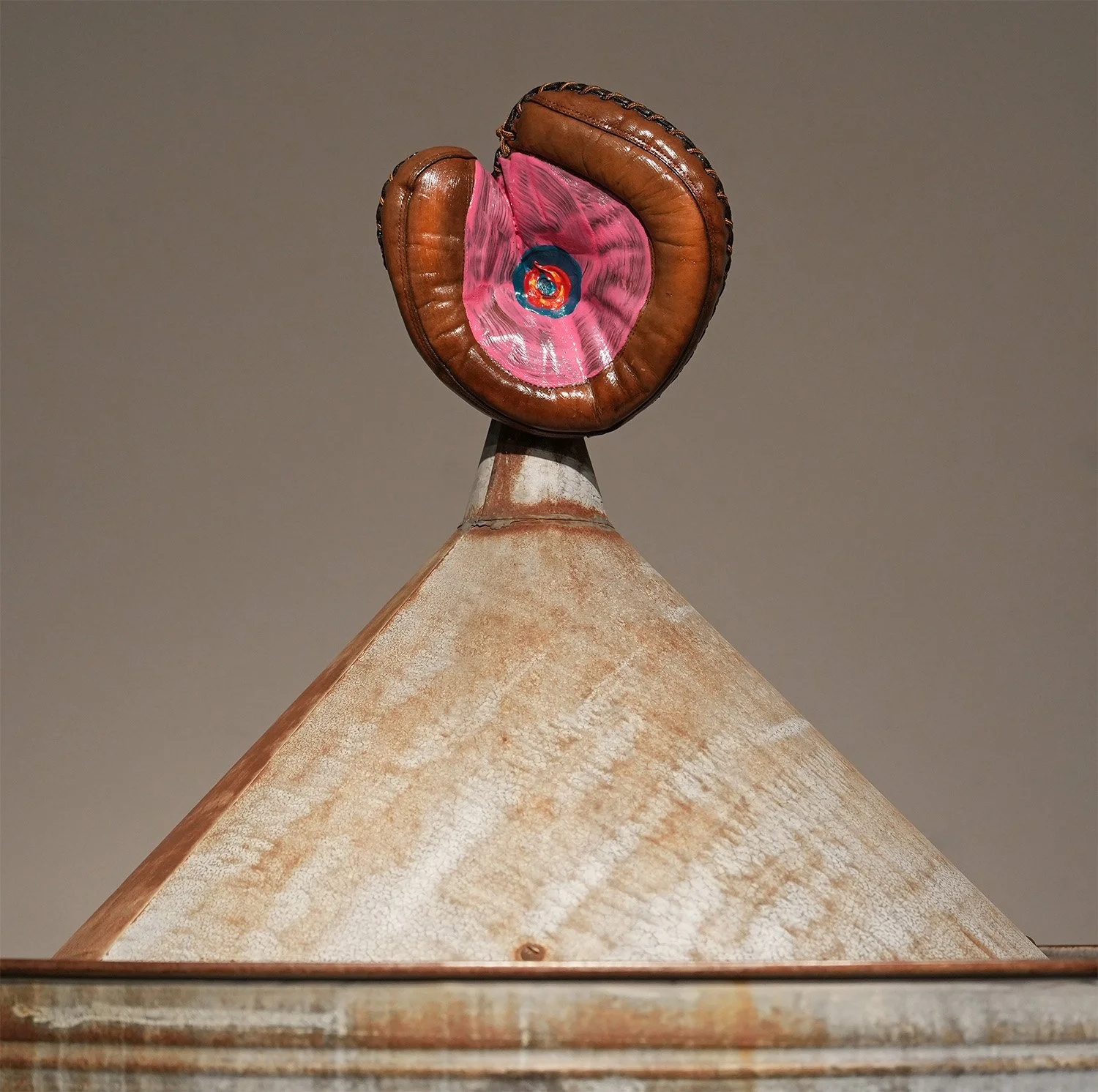
Cupola Venting North - Detail Glove. From Vector Sector, NE Sculpture Gallery & Casket Arts, Minneapolis, MN. Vintage metal barn cupola, found vintage two & one-man logging & carpenter saws, vintage catchers mitt, metal hardware, rough sawn pine, acrylic paint & gel medium, house paint, choreographed audio loop with works via Justin McGrath & Nine-Inch Nails. North platform 10 x 12 x 13 feet.
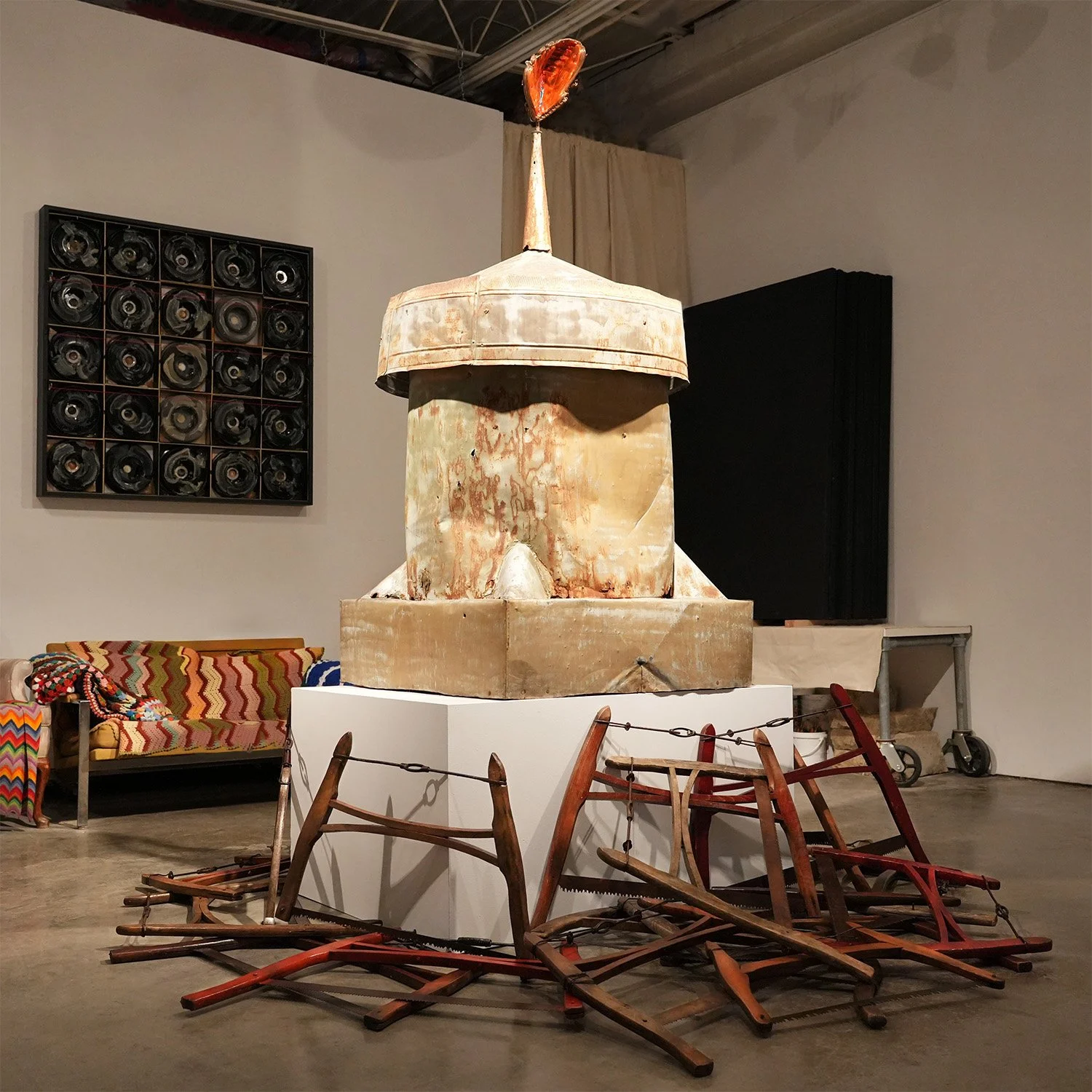
Cupola Venting South. From Vector Sector, NE Sculpture Gallery & Casket Arts, Minneapolis, MN. Vintage metal barn cupola, found vintage buck saws, vintage baseball mitt, metal hardware, acrylic paint & gel medium, taxidermy mink. Choreographed audio loop with works via Justin McGrath & Nine-Inch Nails. South platform 8 x 4 x 3 feet.
In Vector/Sector: A Dispoitif in Studio, Field, & Gallery, visual artist Pete Driessen situates his sculptural works in three distinct spatial vectors each with a different set of conditions: artist’s studio/ideation space, NE Sculpture field/creation site, and NE Sculpture Gallery/presentation arena. Driessen investigates these site vectors with several material sectors centering on car parts, barn cupolas, logging saws, pheasant figurines, and gentleman’s valet chairs. The presentation of these large tools, industrial components, and agricultural detritus appear ominous yet assembled as fragile and delicate works expressing human risk, danger and vulnerability.
The title Vector/Sector and the work Driessen presents moves beyond the standard homogenous mathematical forms for visualizing a typical aerodynamic vector or computerized digital pie chart sector. Driessen emphasizes socio political and economic variants on the academic meaning of vector modeling, via the science of waves and frequency, rugged tinkering production methods, and the postcolonial behaviors of idiosyncratic collecting, individualized disconnection, and separatist categorization. Questions arise: Who gets to define what interdisciplinary vectors and transitory sectors look like? Where do nontraditional vectors or hybridic sectors begin or end? What are the hidden modes of socio political and socio-economic power located within invisible vectors or covert sectors?
Dispositif Defined: Driessen begins with Michel Foucault’s broad notion of the dispositif as an overarching working apparatus to define various creative working sites and their intertwined physical, behavioral, and psychological infrastructures and spatiality. Together, the three dispositif sites-- field, studio, and gallery, form relational links and networks of power which influence the creative output, and which coexist in constant states of becoming and unbecoming, exchange and modification, and orchestration and transposition. The tripartite exhibit effects within the three sites gather what Von Bismark calls, “entanglements of the curatorial.” (Von Bismark, The Curatorial Condition, pg. 30.)
Within the working field outside the gallery, Driessen has fashioned a large wooden found car parts sculpture, Joe’s Auto Parts, along the wall of the NE Gallery Factory building. The public sculpture stands as requiem to a living rural Minnesota junk yard dealer that specialized in Ford auto parts, one of Minnesota’s first U-pull yards, in business for over 60 years, and still working after 80 years of age. The slotted frame & cubby form reflect a smaller portion of a larger traditional corn crib rack that the tinkering entrepreneur modified for car doors, hoods, & fenders. The fifteen cubbies housing 27 car doors and 3 fenders ranging from the years 1953 to 1975, all still retain original elements with their idiosyncratic identifying language scribbled by the auto salvager still visible. Included amongst the sedans, wagons, hardtops, and two and four door parts are the common Ford Fairlane, Fairmont, Falcon, Galaxie 500, LTD, Mustang, Torino, Grand Torino, Mercury Marquis, and more.
In the NE Sculpture Gallery, Driessen has conceived a selection of graphic narrative vignettes probing current dystopian matters, authoritarianism, resistance and violence. A platform containing a bouquet of diverse pheasant figurine ephemera, Flushing Fascism Fleet, depicts a role reversal scenario where the hunted become the hunter. In this case, the bouquet of pheasants calls to collective action to root out Fascism within our local and global society. A series of vintage gentleman’s butler valet chairs, Marching Stewards, illuminates the romantic resistance deploying a ragtag bunch to counter authoritarian forces. In Saw Feeding Trough, an alignment of 24 vintage carpenter saws awaits their duty call while resting on a vintage metal chicken feeder and small rotational copula. And in Sit In, features a large logging saw-roofed shed, teetering on four cupolas, protecting an isolated gentleman’s butler chair. Conceptually and collectively under the veneer of normalcy, the works form an obscure fragmented narrative of mysterious tension and darkness underlying an unstable, mundane surface. With jarring physical juxtapositions, the artist seeks potential safety, security, and resolve within our unsettled and vulnerable political ecosystem.
In his Casket Arts studio the artist has installed, Cupola Venting, engaging a pair of large found barn cupolas, one venting out a wide array of logging and craftsman saws, the other standing alone on approach. Driessen has sourced from rural homesteads, farm auctions, & vintage sites to collect multiple barn cupolas and more than 150 logging and carpenter saws. Both the cupola vents, with their inhale/exhale air exchange capacity, and the saws, with their long repetitive cutting blades, slicing and severing motions, are both emblematic of vector waves and frequencies. An alluring sound composition accompanying the space, choreographed by the artist and his son, conjoins a short series of his nephew’s technical sound scores for films, concerts and graphic novel.
Along with exhibit opening of all three dispositif sites, the show included a series of community engagement including a national Fall of Freedom community dialogue, a Pheasant Cafe artist talk with art curator Sheila Dickinson and closing saw performance with musician Adam Wirtzfeld. The artist credits the McKnight Foundation, Metropolitan Regional Arts Council, NE Sculpture Gallery Factory, California Bldg. Co., Casket Arts, John Hock, Sal Xu, Flora Ranis, Elise Gersky, Sheila Dickinson, Tessa Wick, Masami Kawazato, Joe Kummer, Joe’s Auto Sales, Max & Chloe Driessen, Justin McGrath, LaVigne Leather, Netvrrk Exhibit Group, Quality Equipment, SignMinds, Simpson StrongTies, TuckUnder Projects, Fall of Freedom, and many generous individuals for their support of this site specific project. Photos by Sal Xu & Pete Driessen.
Links:
Vector/Sector Artist Statement